Version 2.0
Home
Info
Splash
TextTree
A1. Nonmotile algae without chloroplasts:
Cyanobacteriophyta
B1. Vegetative cells usually solitary
B2. Vegetative cells united into colonies or agglomerations
B3. Vegetative cells aligned end-to-end forming filaments or pseudofilaments
C1. Trichomes with heterocytes at one or both ends (basal) or along the trichome (intercalary)
C2. Trichomes lack heterocytes at all stages of development
D1. Trichomes are attached to aquatic plants (epiphytic), aquatic animals (epizoic), or found in mucilage surrounding algae, aquatic plants, or zooplankton (endogloeic)
D2. Trichomes are not epiphytic, epizoic, or endogloeic. This group contains many taxa that are difficult to identify correctly
E1. Trichomes are spiraling or coiled and usually highly motile:
Arthrospira
and
Spirulina
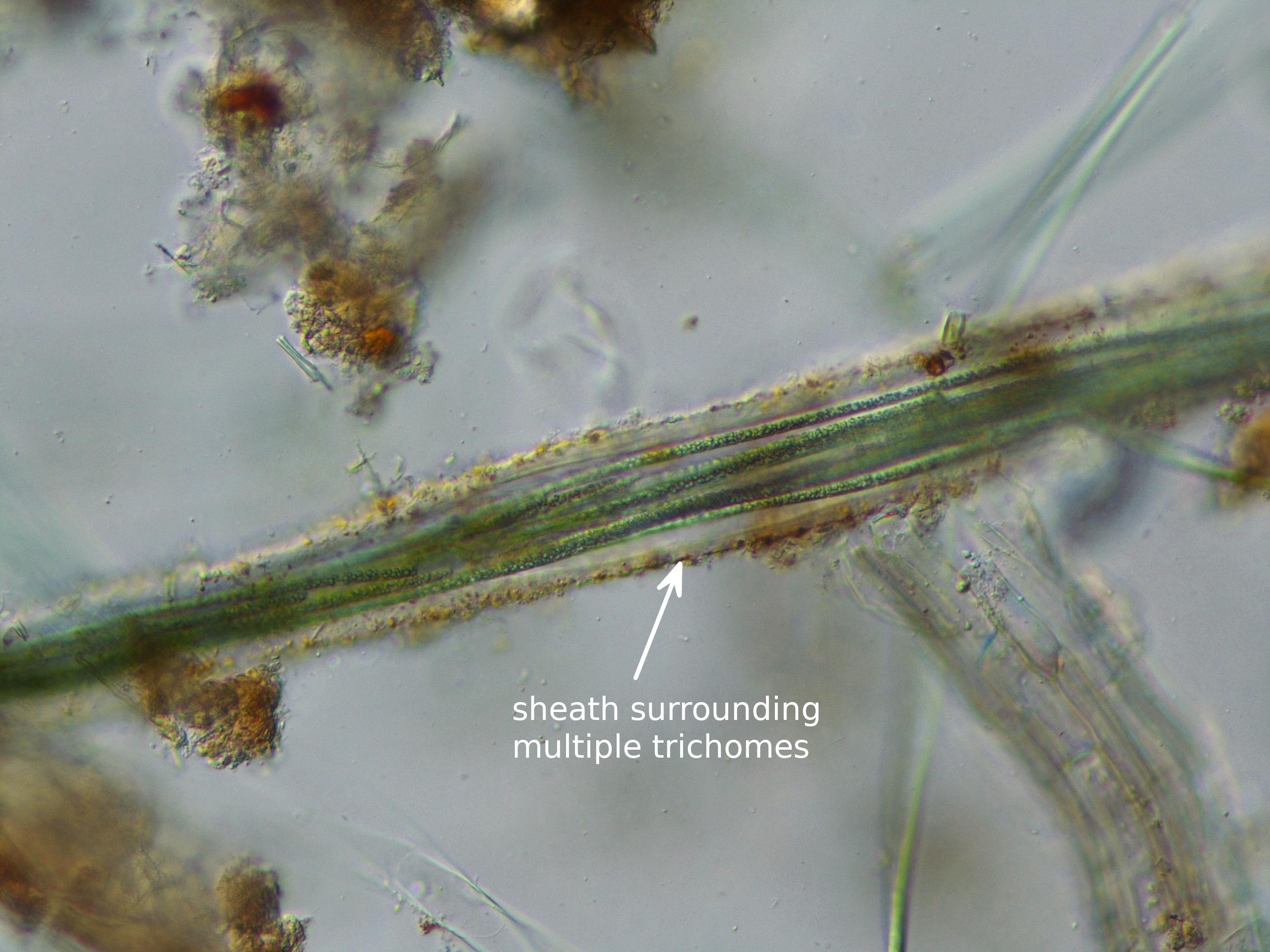
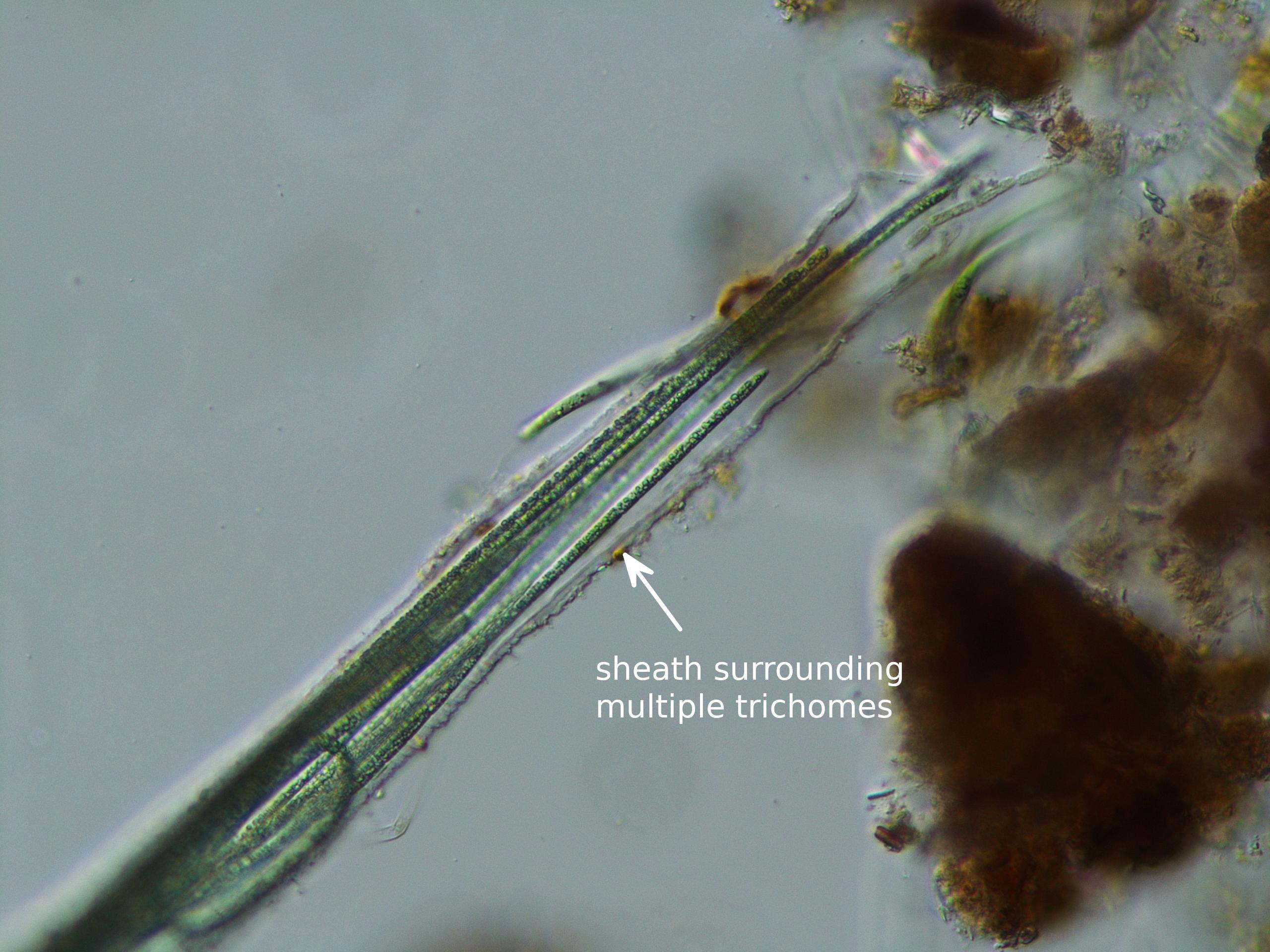
E2. Multiple trichomes enclosed in a wide, common mucilage; live specimens actively motile:
Microcoleus
group (in part)
E3. Trichomes with fewer than 10 cells (usually 3); no visible sheath; cells compressed (W>L) with constricted cross-walls:
Borzia
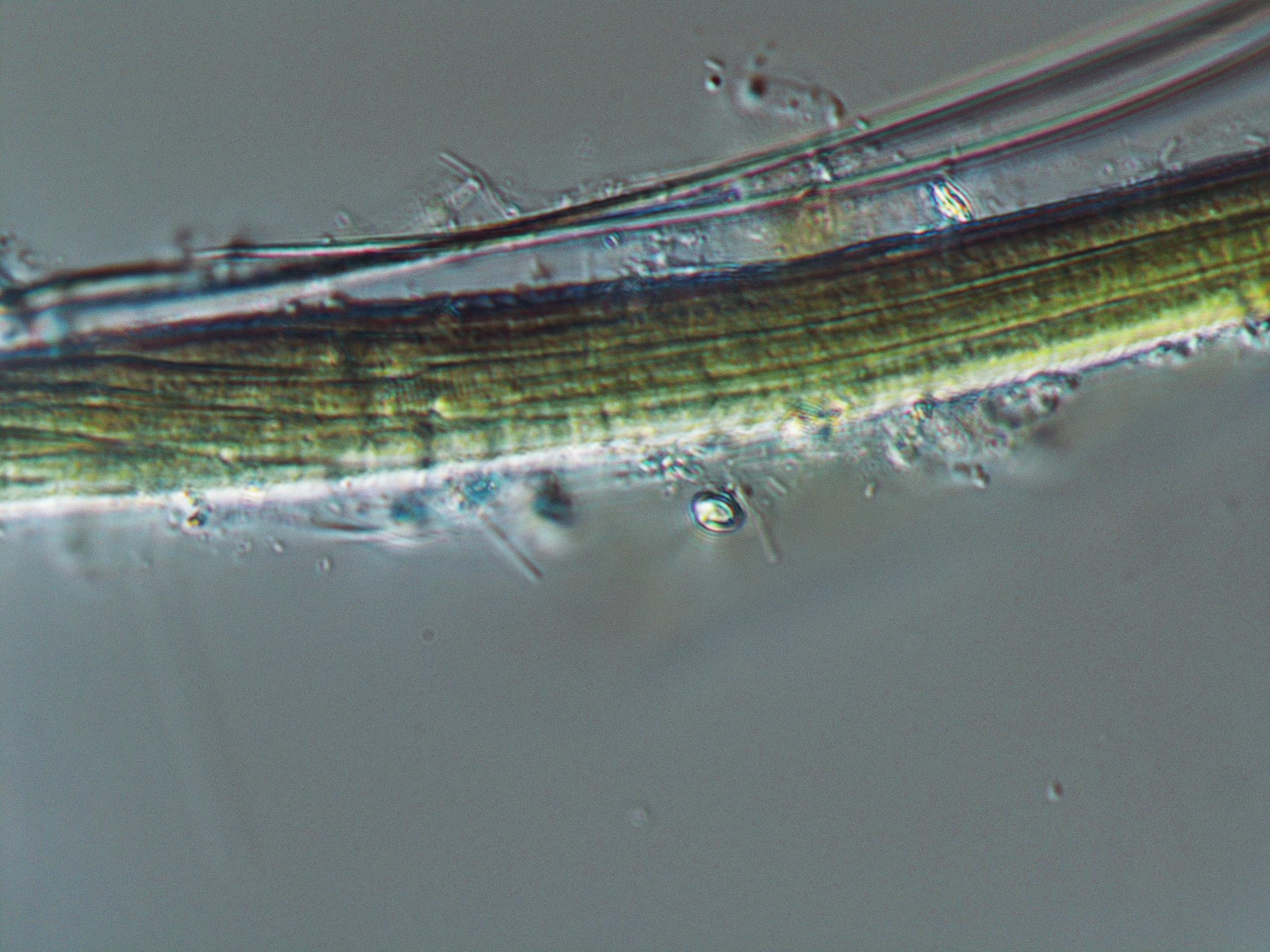
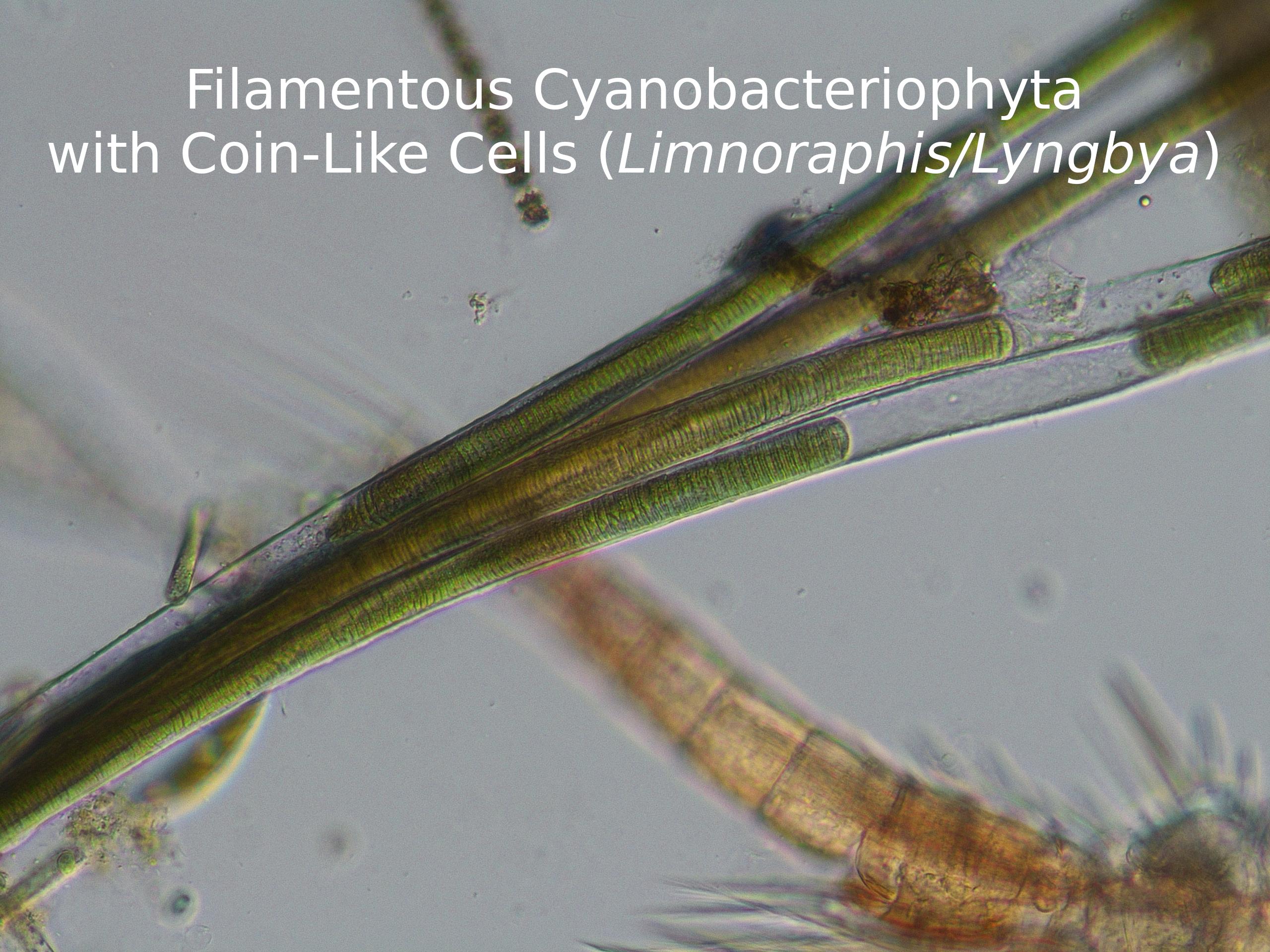
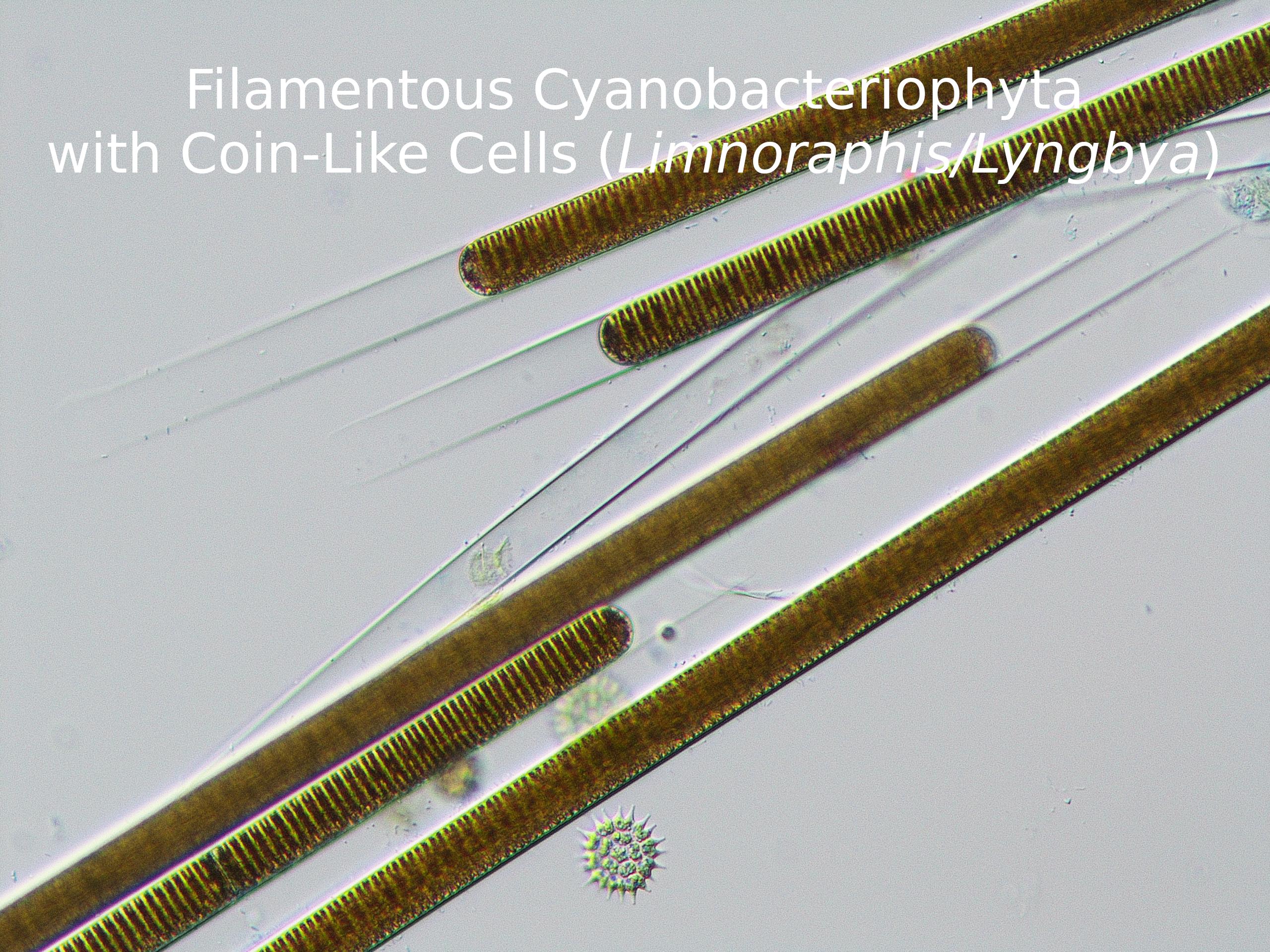
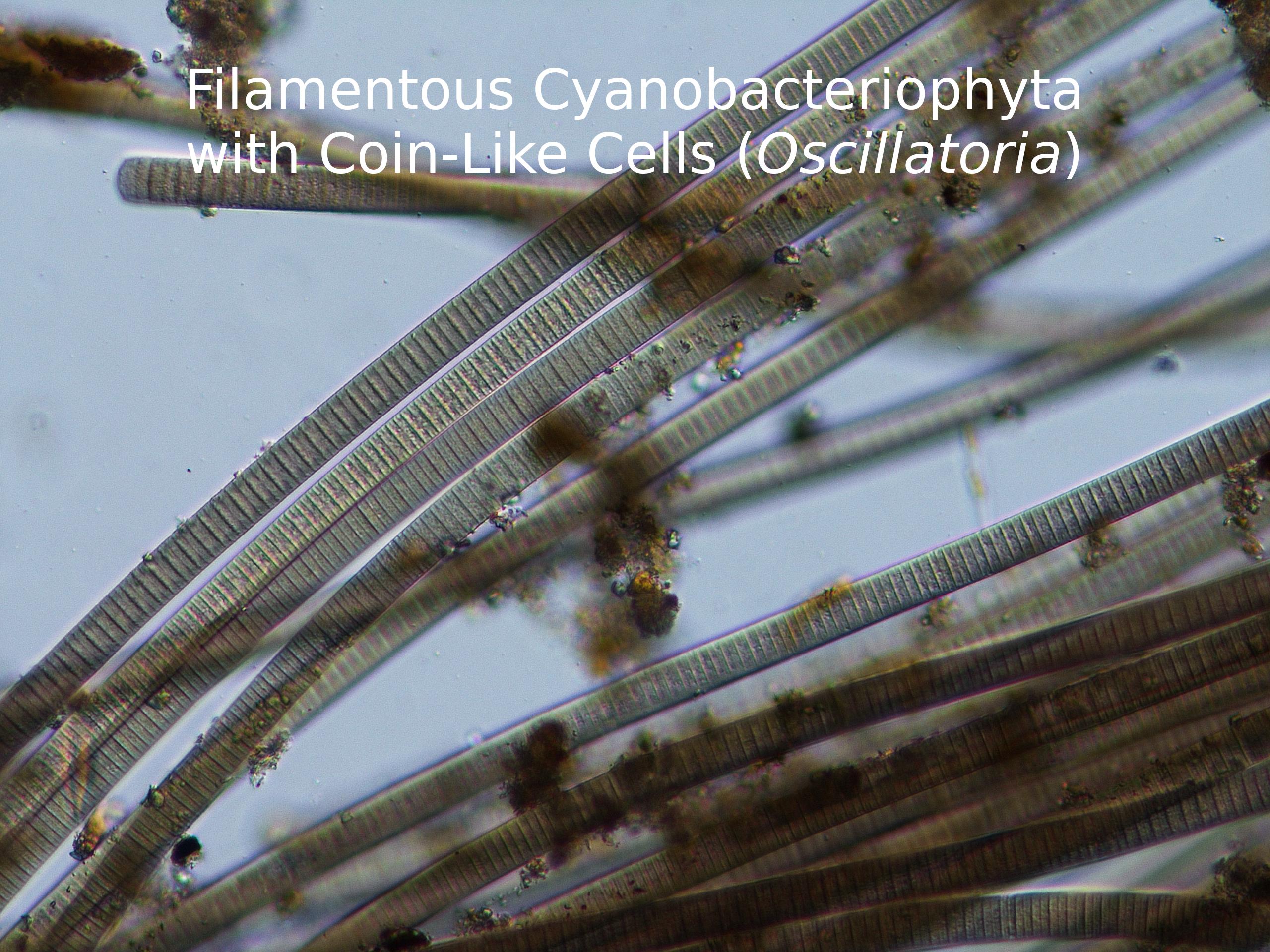
E4. Cell width considerably shorter than length; cells often coin-like
E5. Cells cubical, cylindrical, or oval; isodiametric (L=W) or slightly shorter or longer than wide (not coin-like)
A2. Motile algae with chloroplasts and flagella
A3. Nonmotile algae with chloroplasts but without flagella
A4. Cells with paired, symmetric semi-cells:
Desmids
A5. Cells enclosed in glassy, ornamental frustules:
Diatoms