Version 2.0
Home
Info
Splash
TextTree
A1. Nonmotile algae without chloroplasts:
Cyanobacteriophyta
A2. Motile algae with chloroplasts and flagella
A3. Nonmotile algae with chloroplasts but without flagella
B1. Cells usually epiphytic, epizoic, or endozoic
B2. Nonmotile solitary and colonial algae; cells not (or usually not) epiphytic, epizoic, or endozoic
B3. Nonmotile algae that form filaments or pseudofilaments
C1. Unbranched filamentous algae
D1. Cells very large; filaments coarse, unbranched, very sparsely branched; one genus lacks cellular crosswalls
D2. Cells spherical, lens-shaped, oval, or elliptical
D3. Cells cylindrical or narrowly elliptical
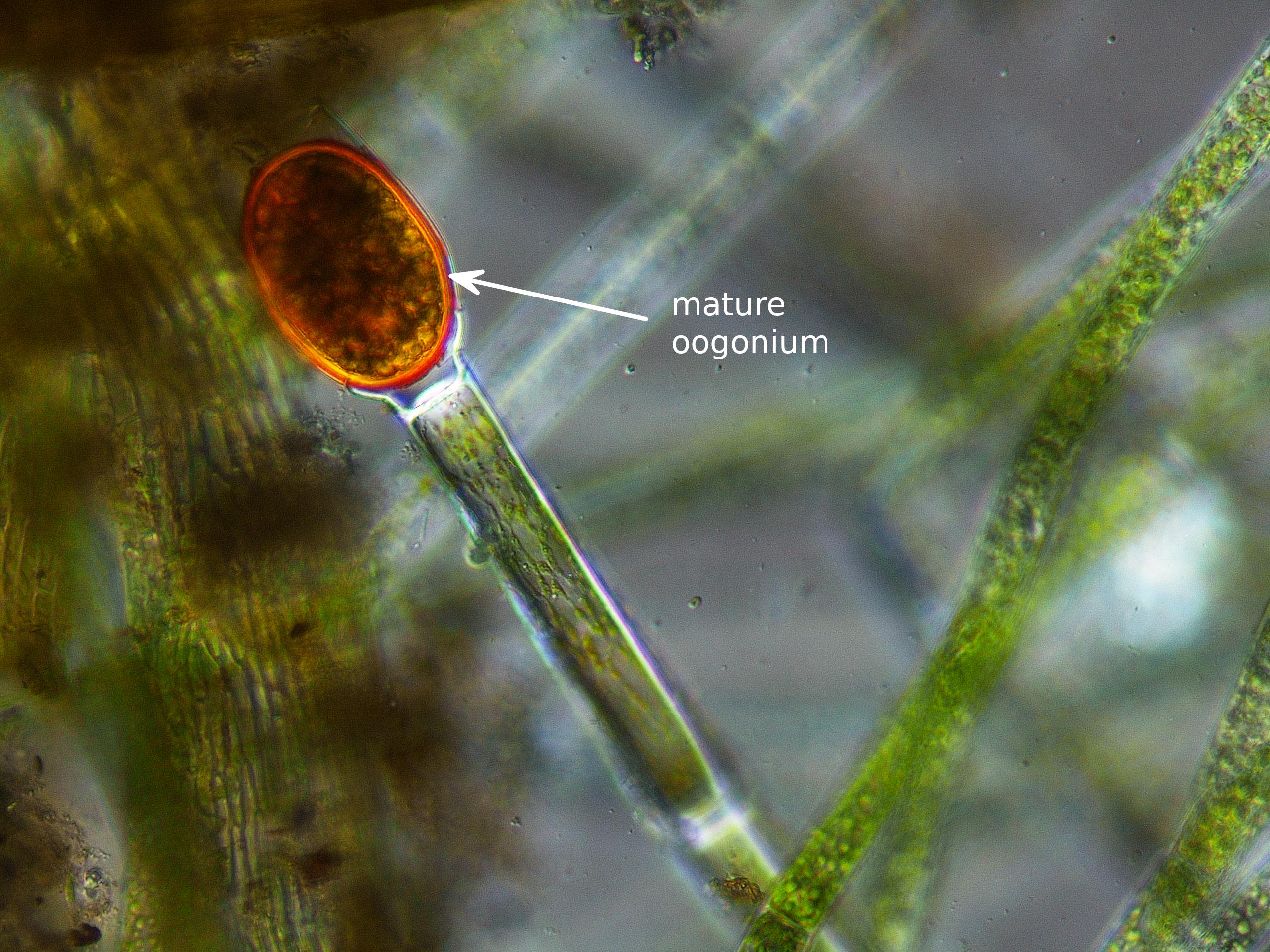
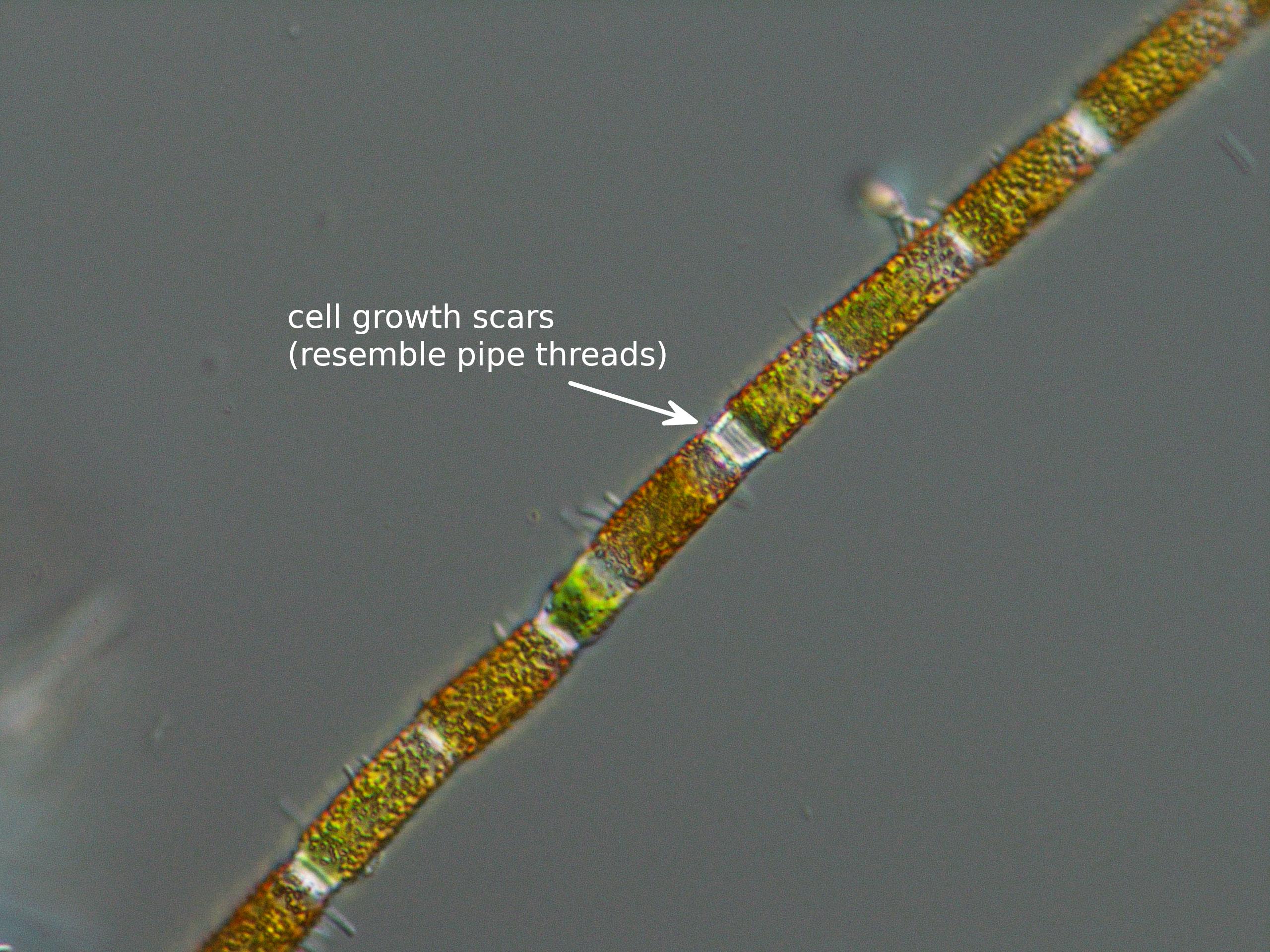
E1. Cells cylindrical, mostly longer than wide; some cells with ring-like cell division scars that resemble pipe threads:
Oedogonium
E2. Cells cylindrical or oval, often paired; cell wall becoming increasinly thick and stratified, especially at crosswalls:
Binuclearia
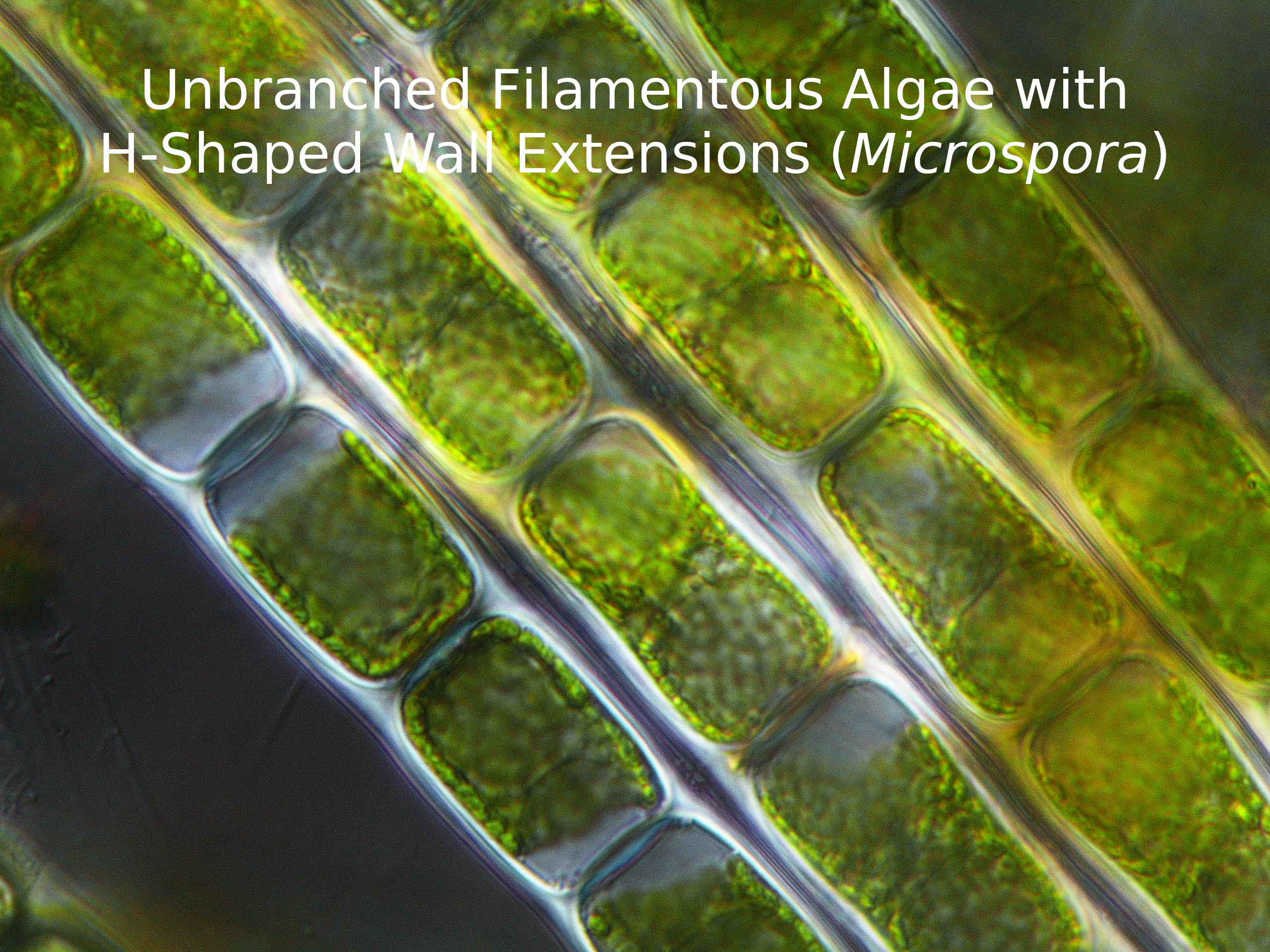
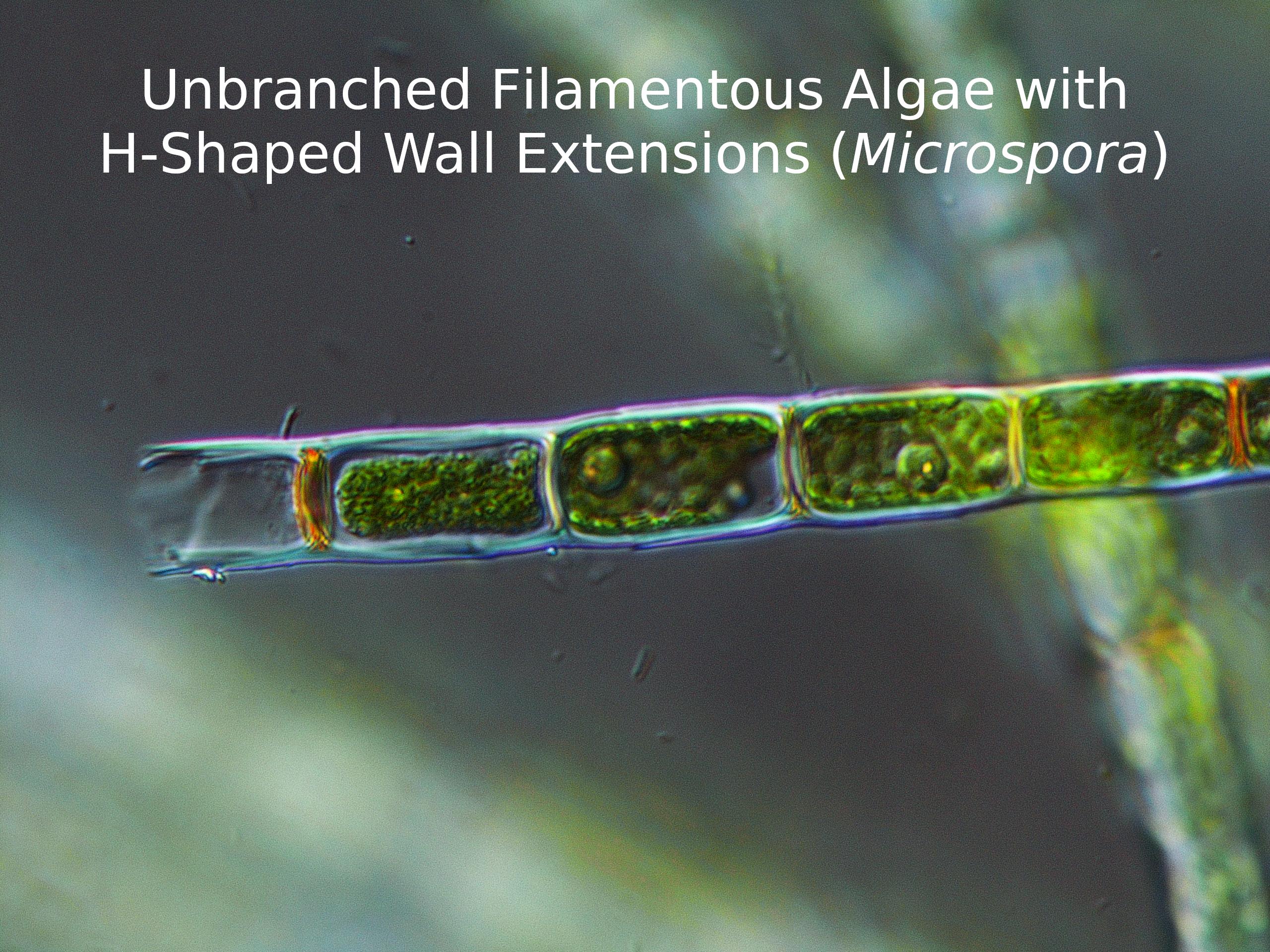
E3. Cells with H-shaped endwall extensions
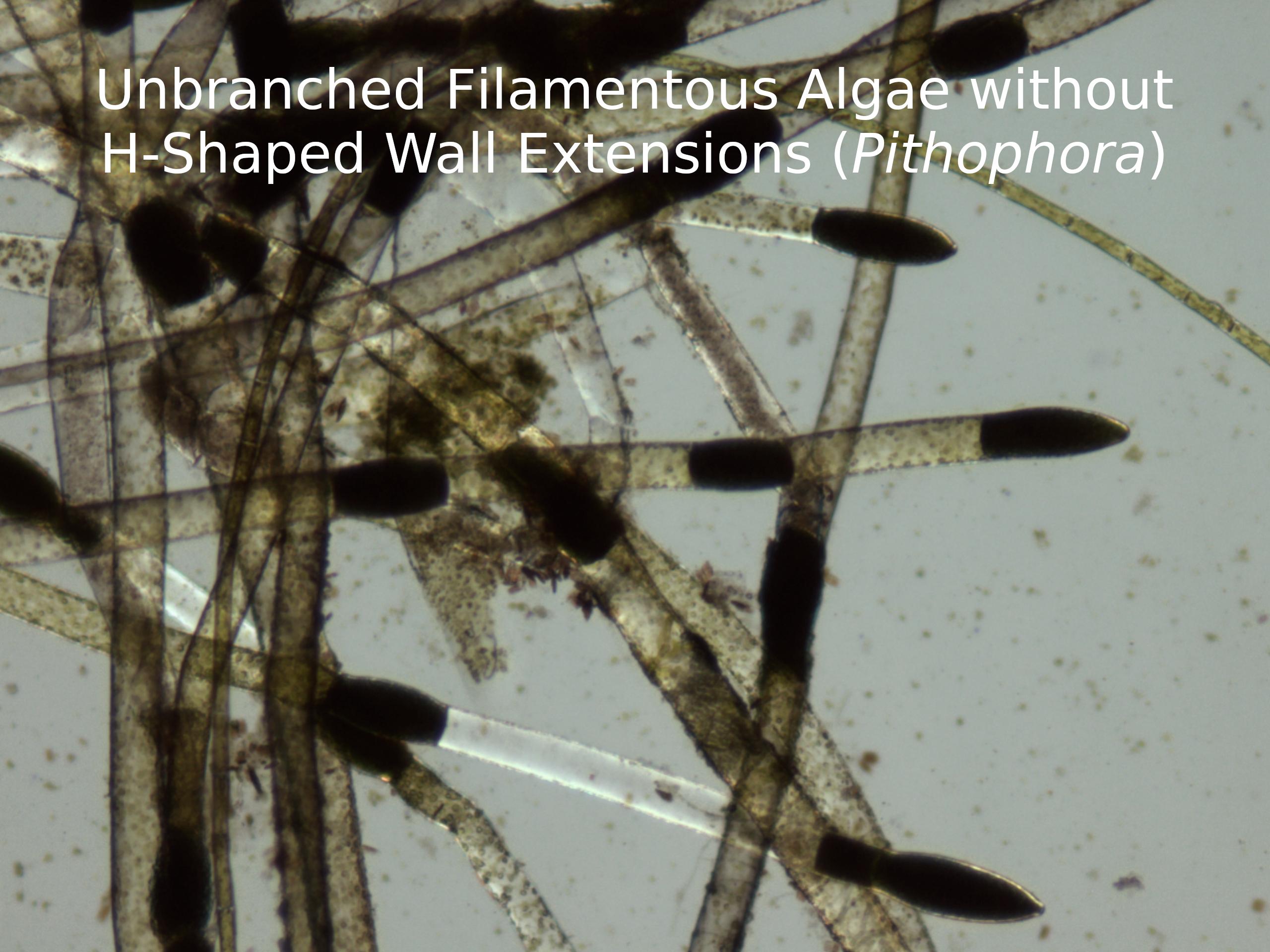
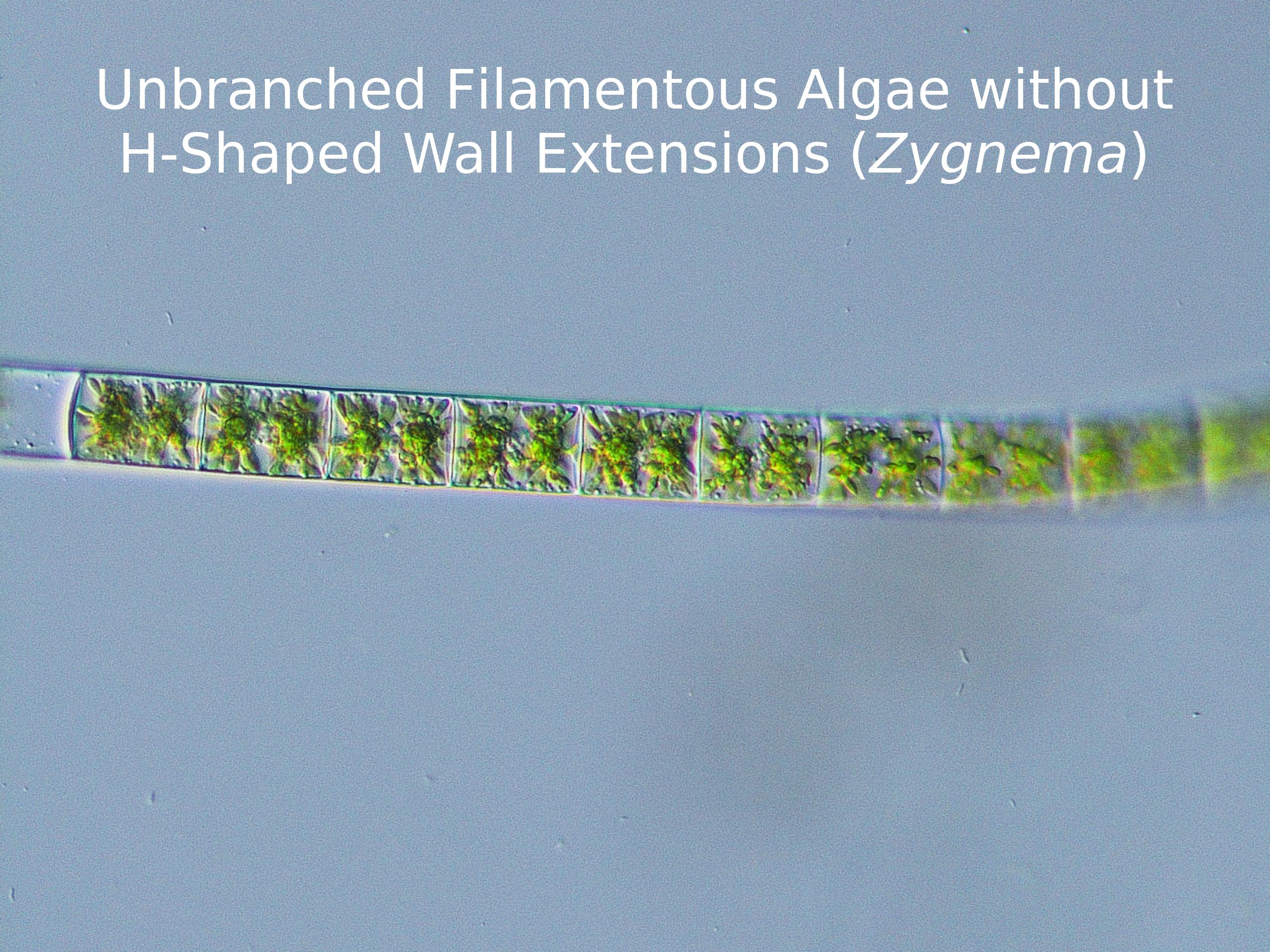
E4. Cell wall without growth rings or H-shaped extensions
C2. Branched filamentous algae
A4. Cells with paired, symmetric semi-cells:
Desmids
A5. Cells enclosed in glassy, ornamental frustules:
Diatoms