Home
Info
Splash
TextTree
A1. Nonmotile algae without chloroplasts: Cyanobacteriophyta
B1. Vegetative cells usually solitary
B2. Vegetative cells united into colonies or agglomerations
C1. Cells arranged in a single layer to form flat colonies
C2. Colonies comprised of cubical, four-cell subgroups
C3. Colonies approximately spherical
D1. Cells form tangled filaments enclosed in spherical or nearly spherical mucilage:
Nostoc
D2. Cells appear mottled brown when viewed under the microscope
D3. Cells various colors but not mottled brown when viewed under the microscope
E1. Cells form cubical or irregular subgroups surrounded by bright red mucilage:
Gloeocapsopsis magma
E2. Cells spherical or nearly spherical
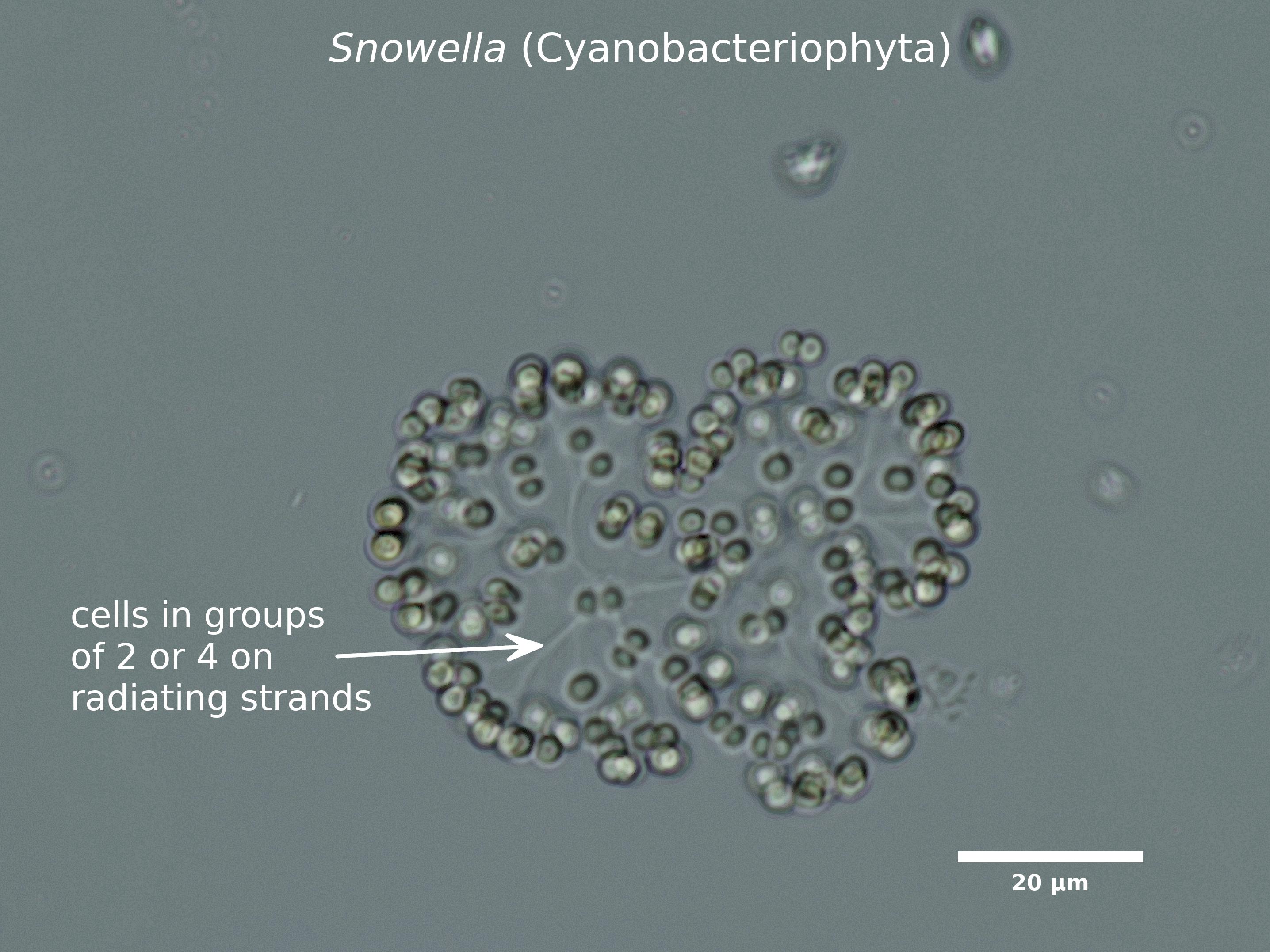
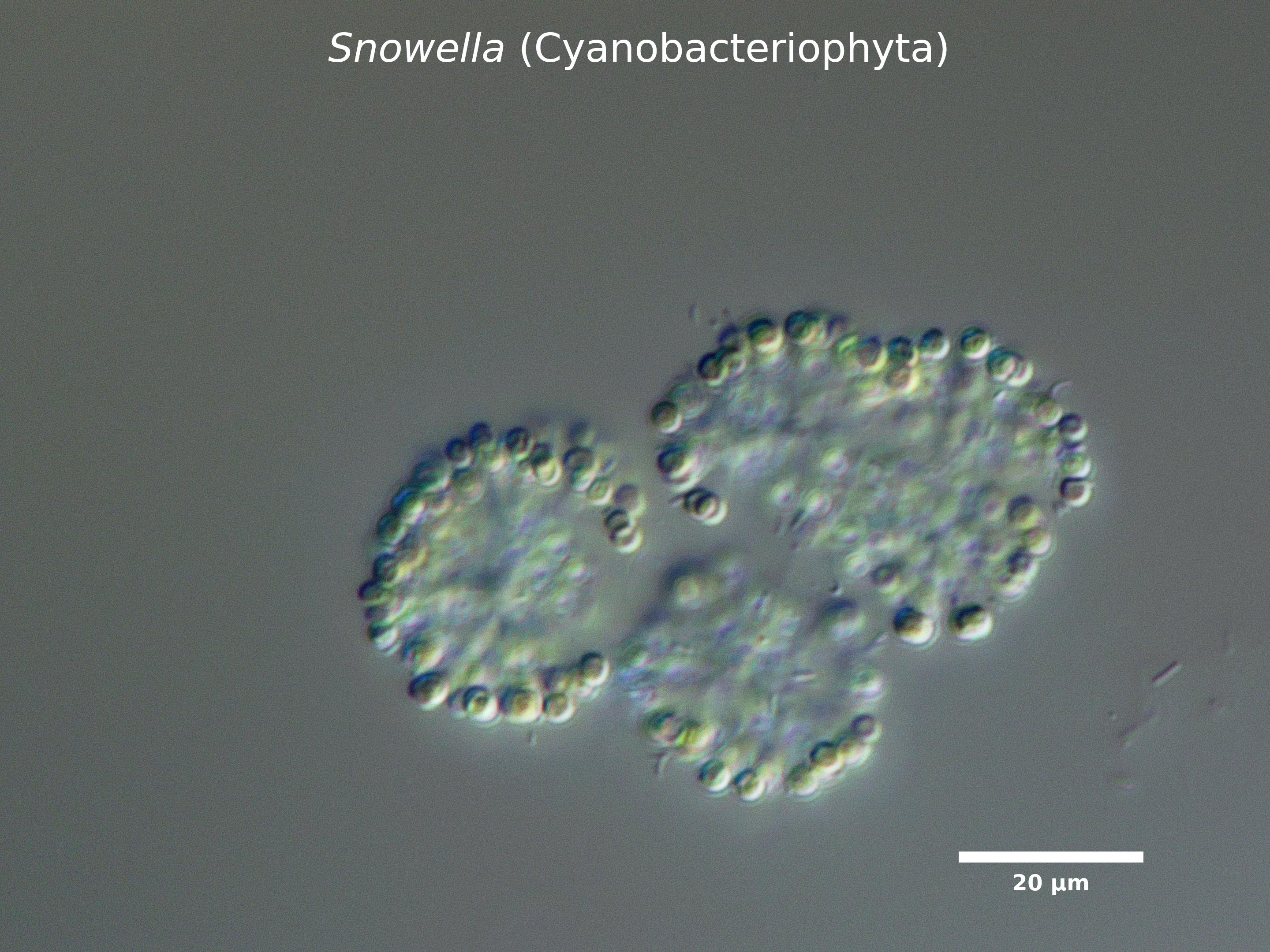
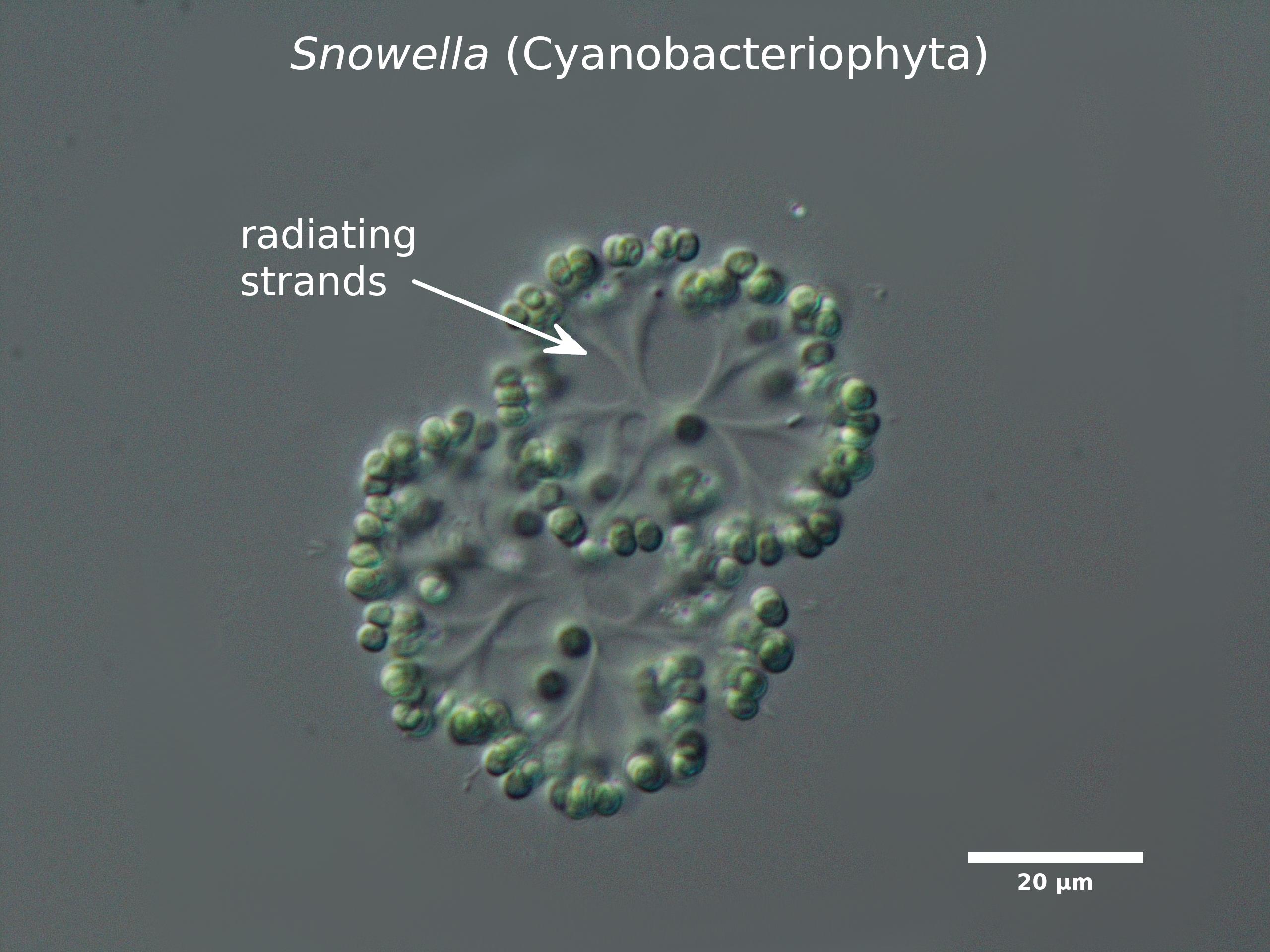
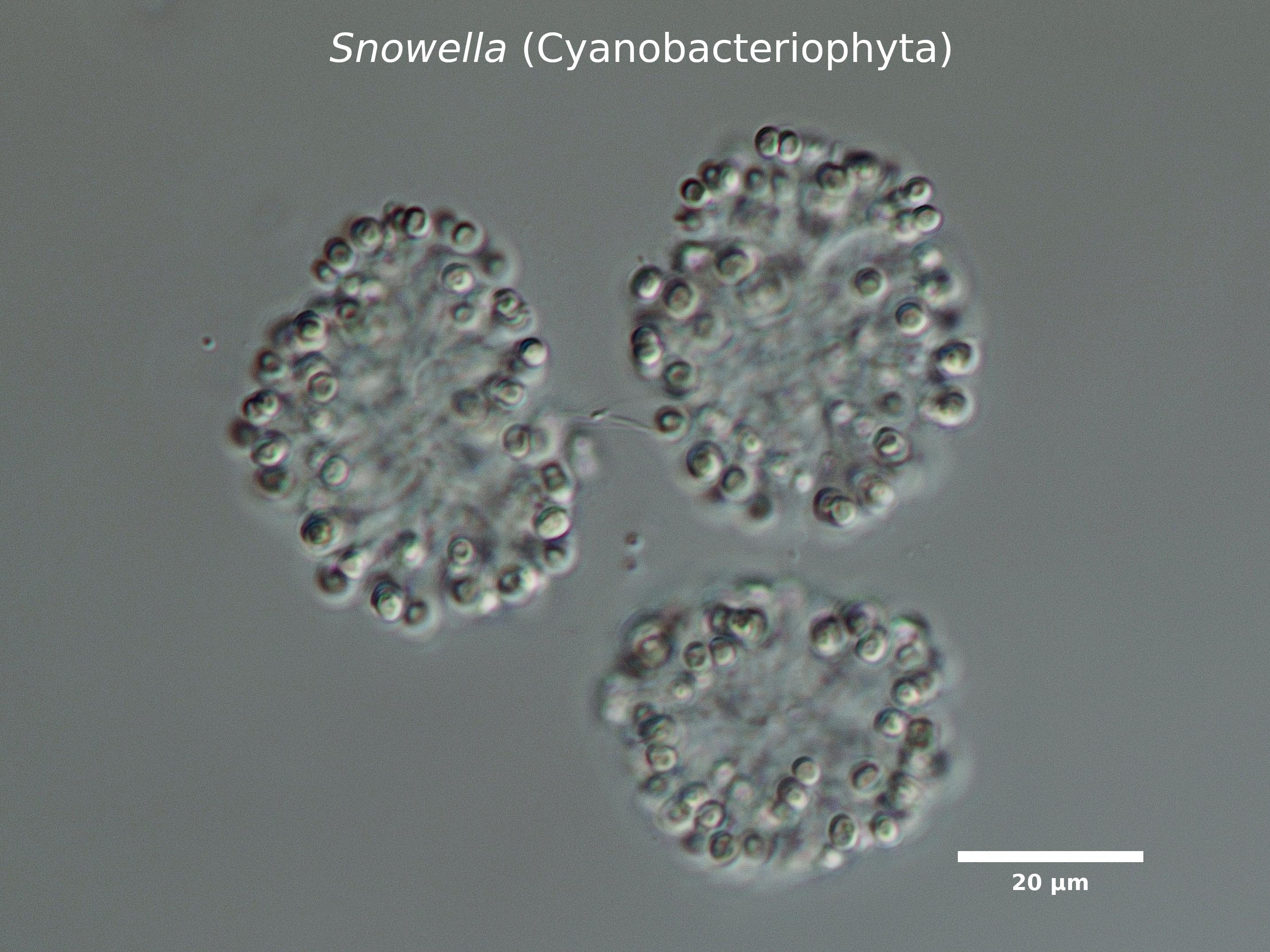
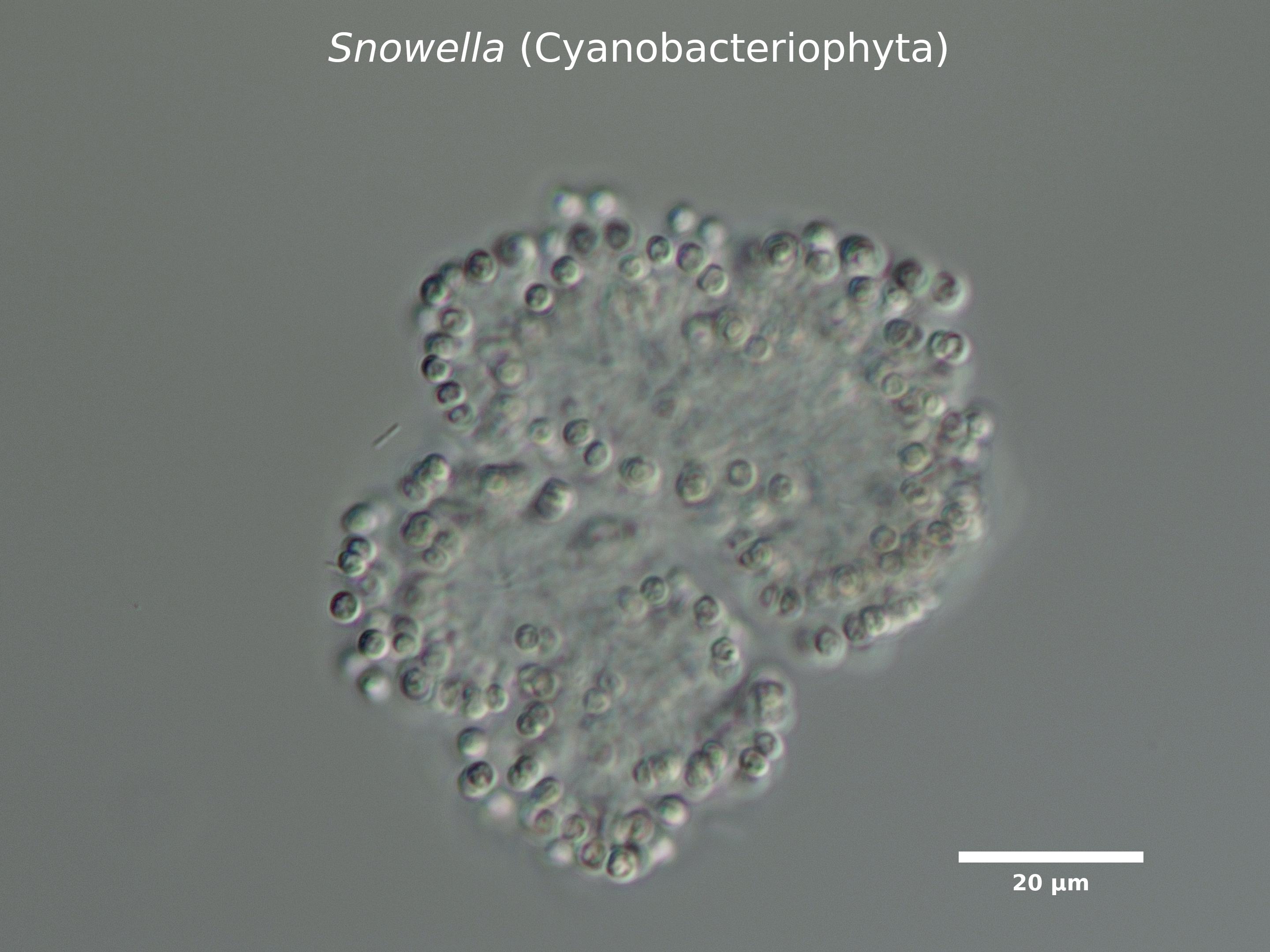
F1. Cells spherical, in groups of 2 or 4 at end of thin, radiating mucilage strands:
Snowella
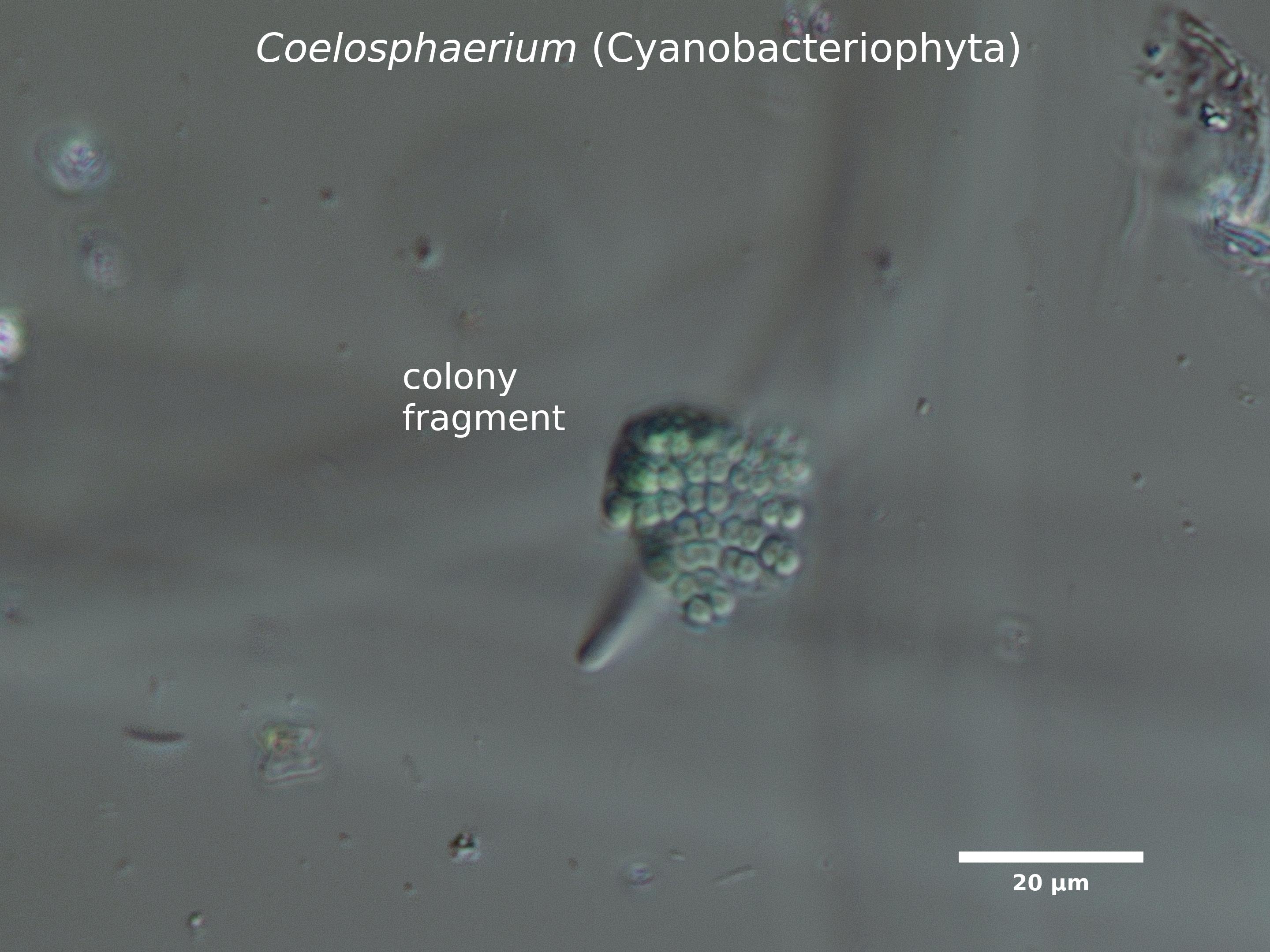
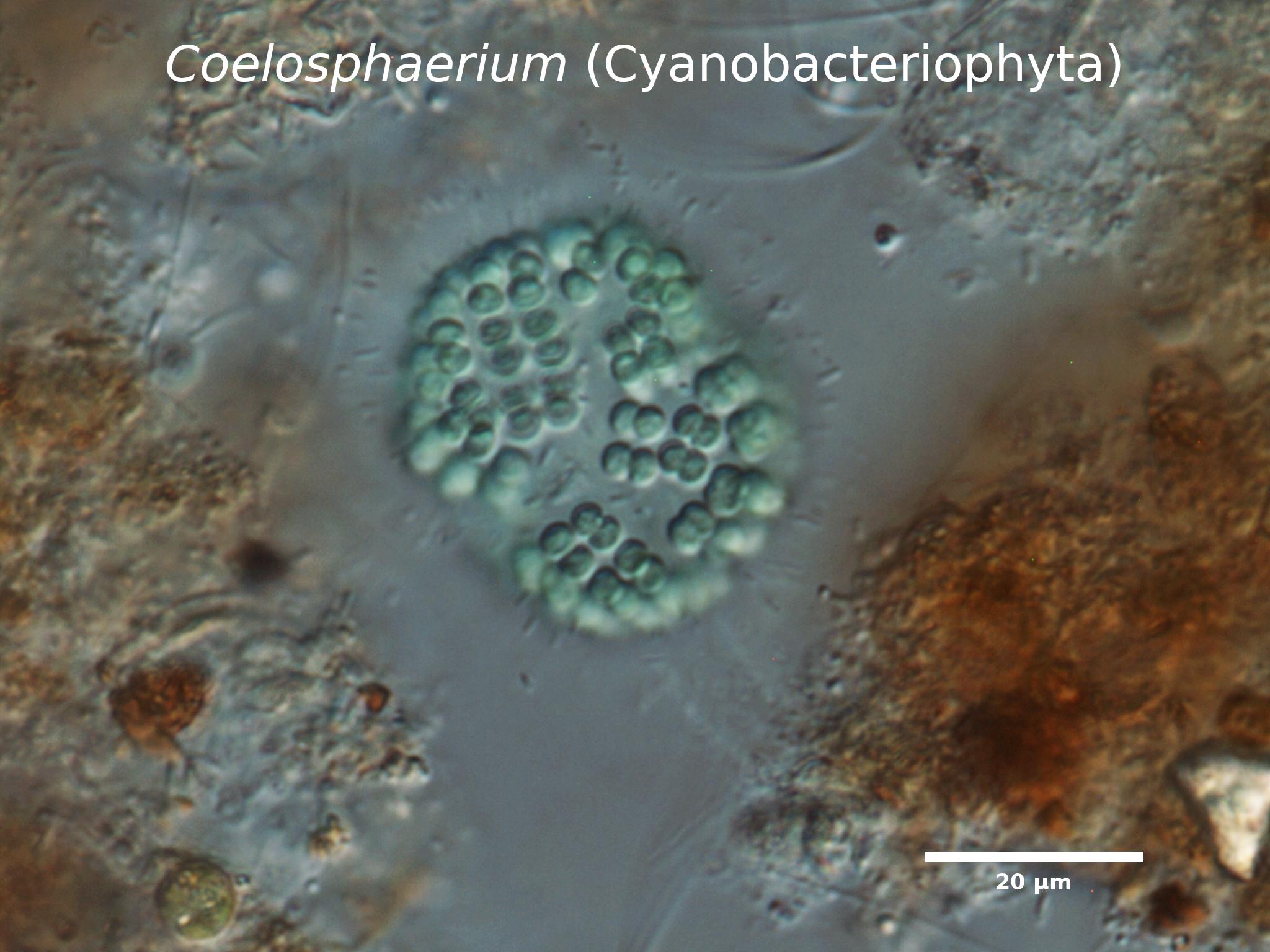
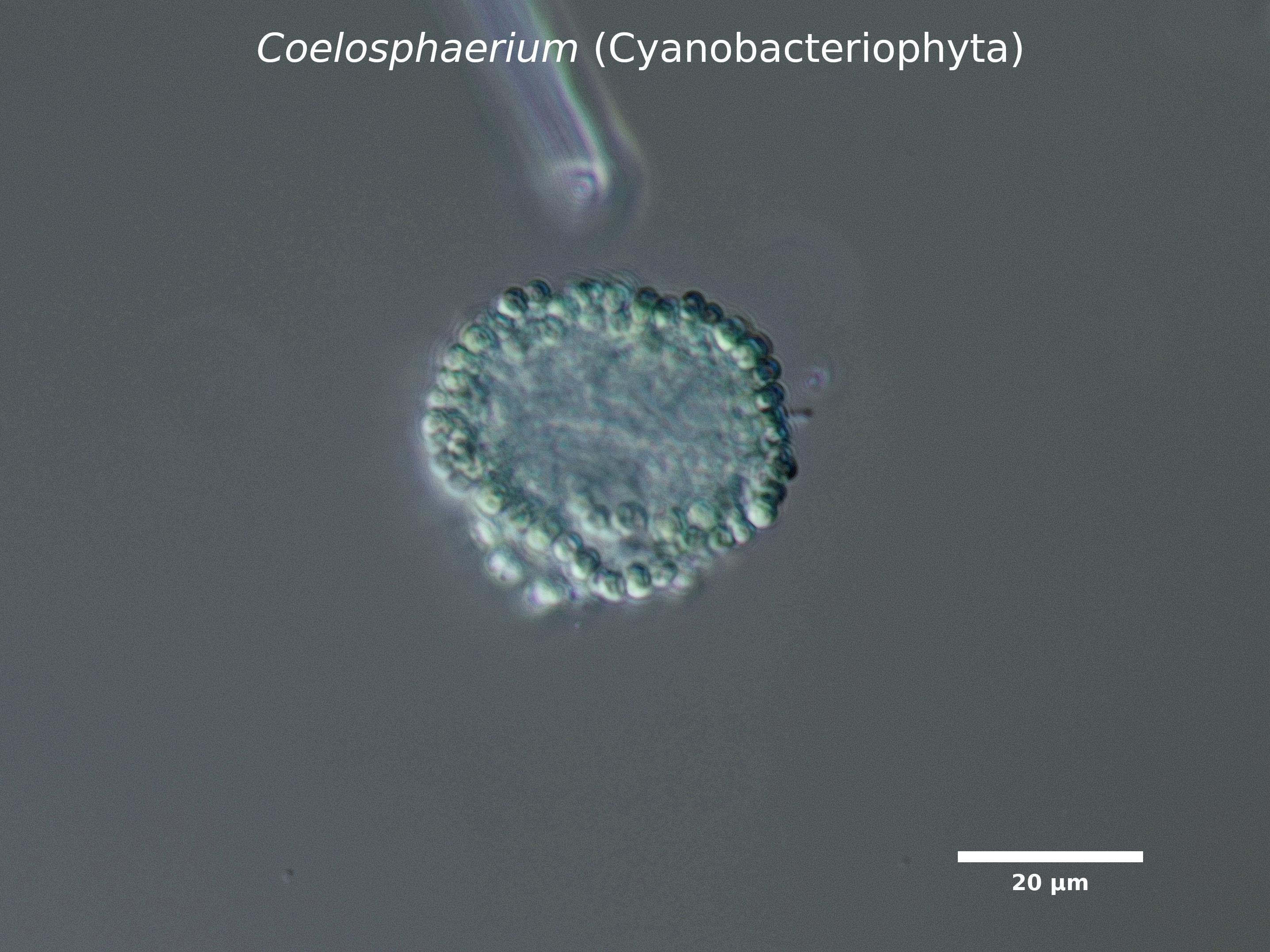
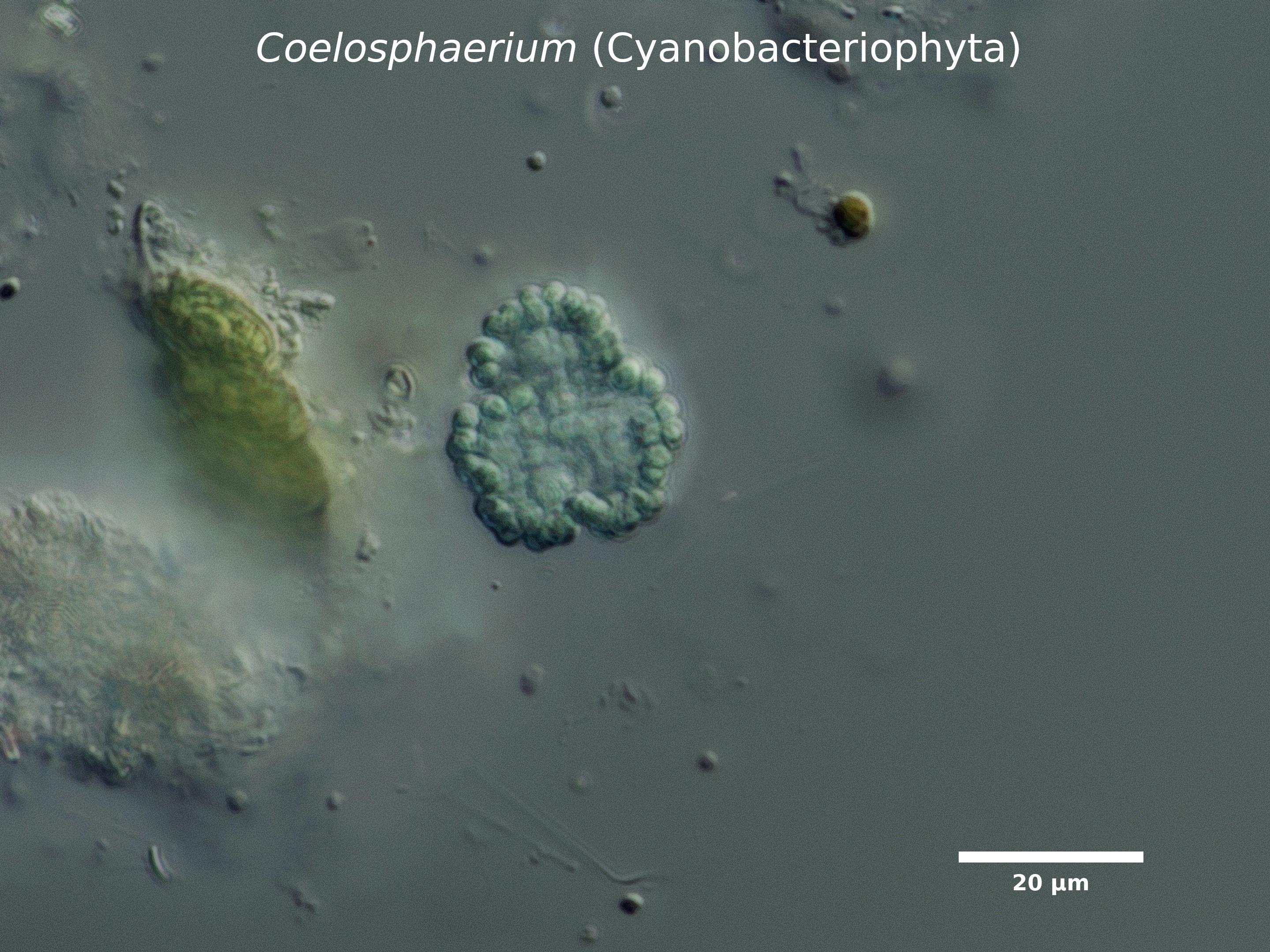
F2. Cells bright bluegreen, often in groups of 2 or 4, arranged on the outer perimeter of a hollow colony:
COLEOSPHAERIUM
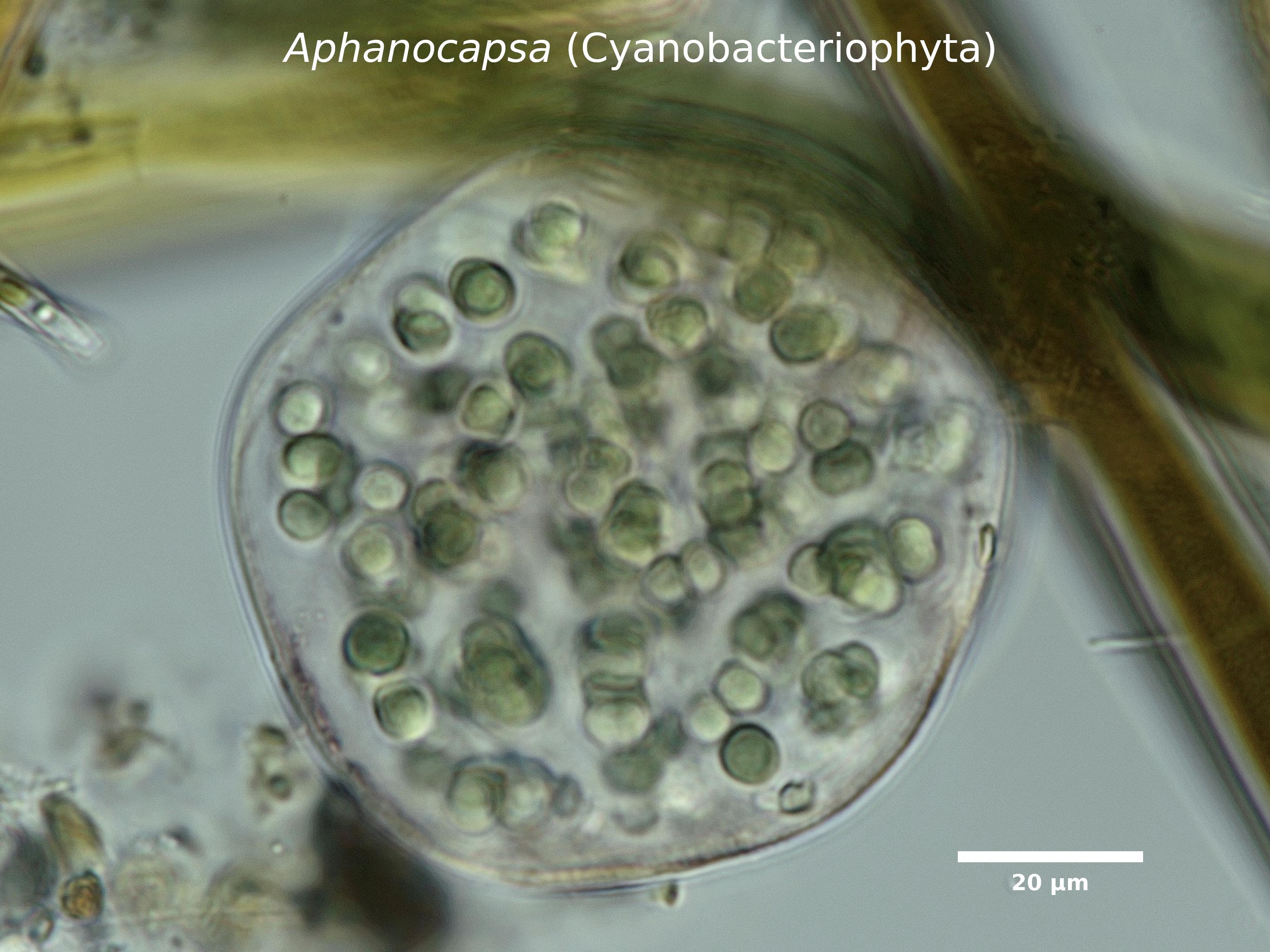
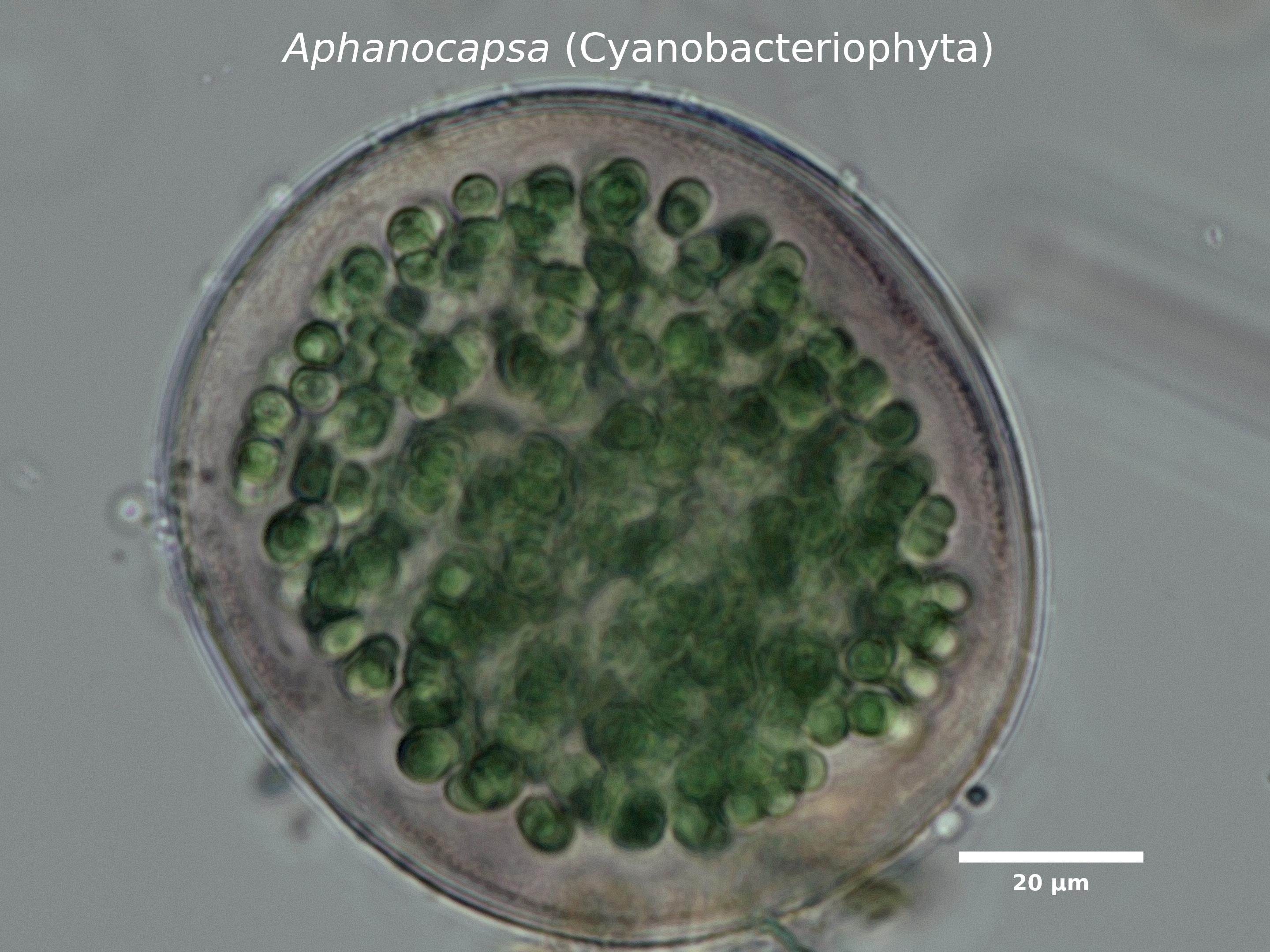
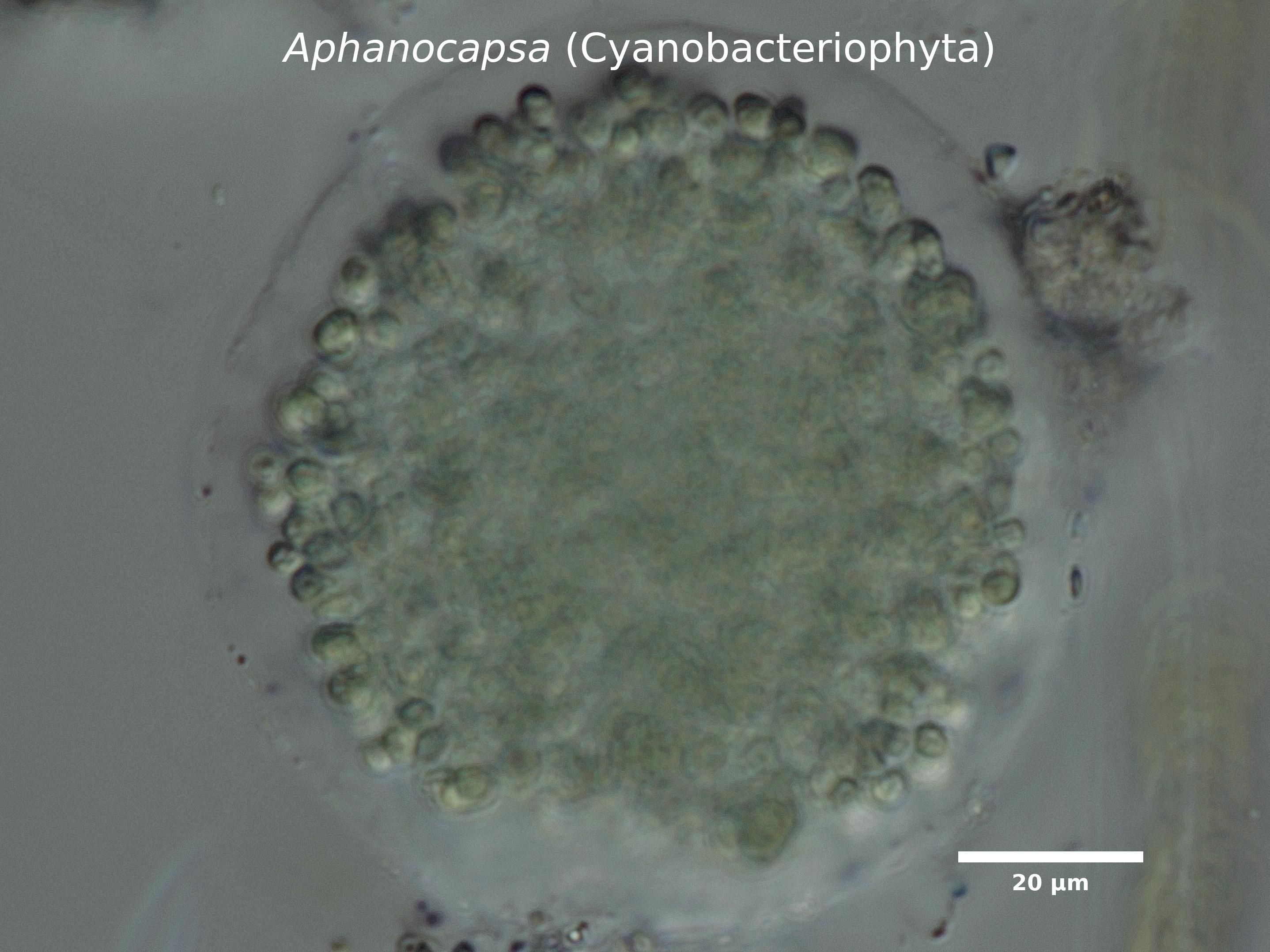
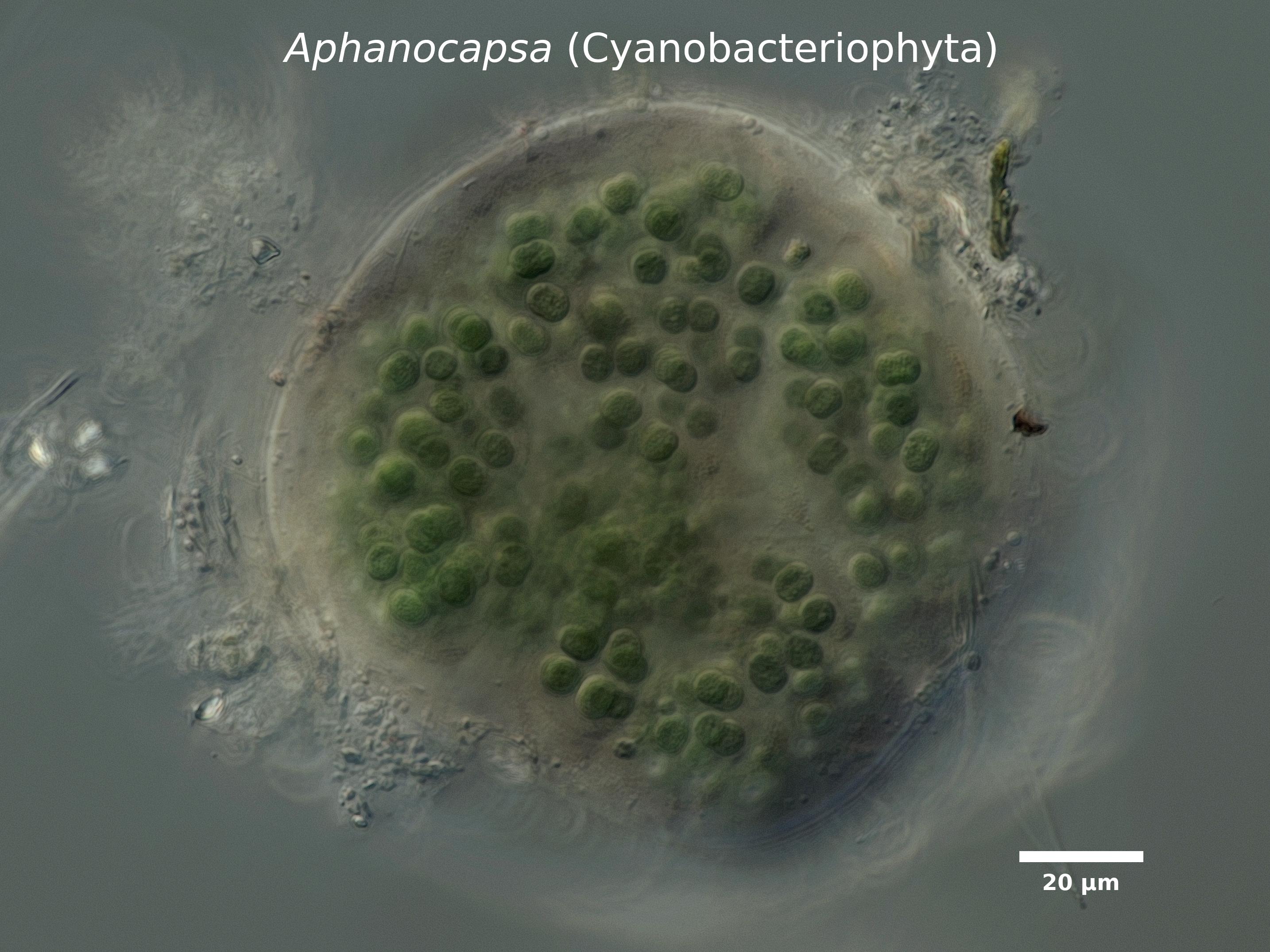
F3. Colony surrounded by unstriated mucilage; individual cells without additional mucilage layers:
Aphanocapsa
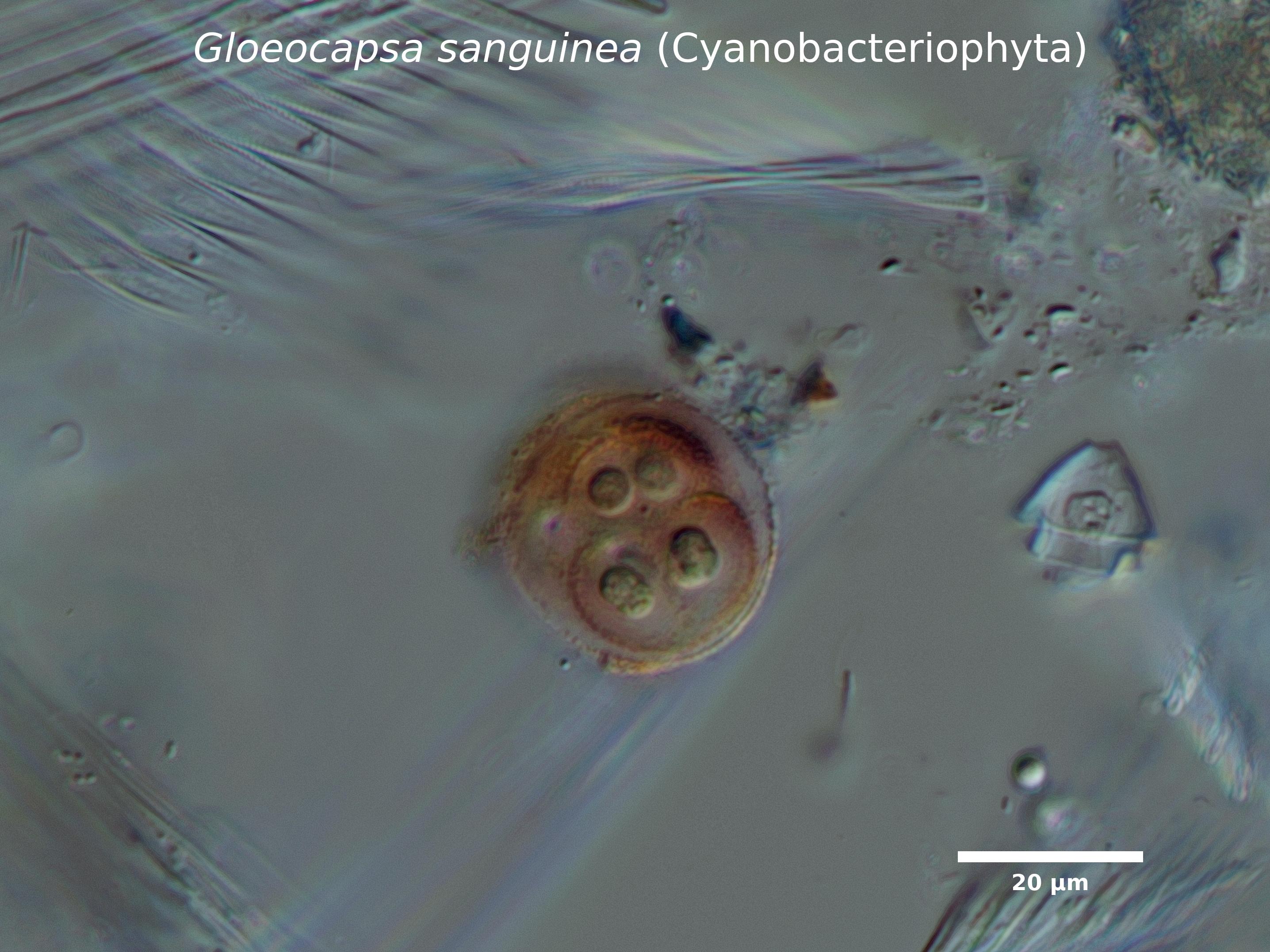
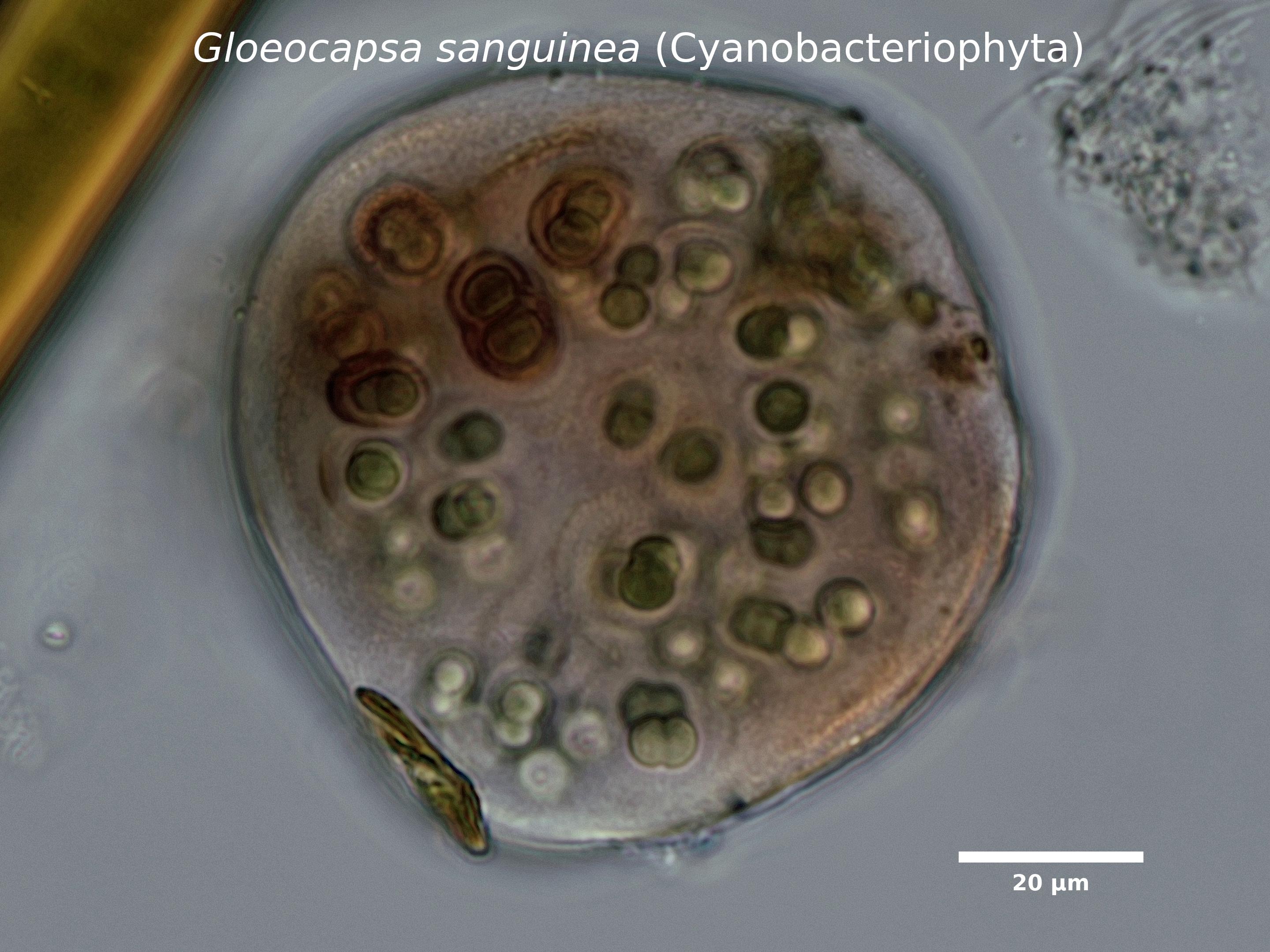
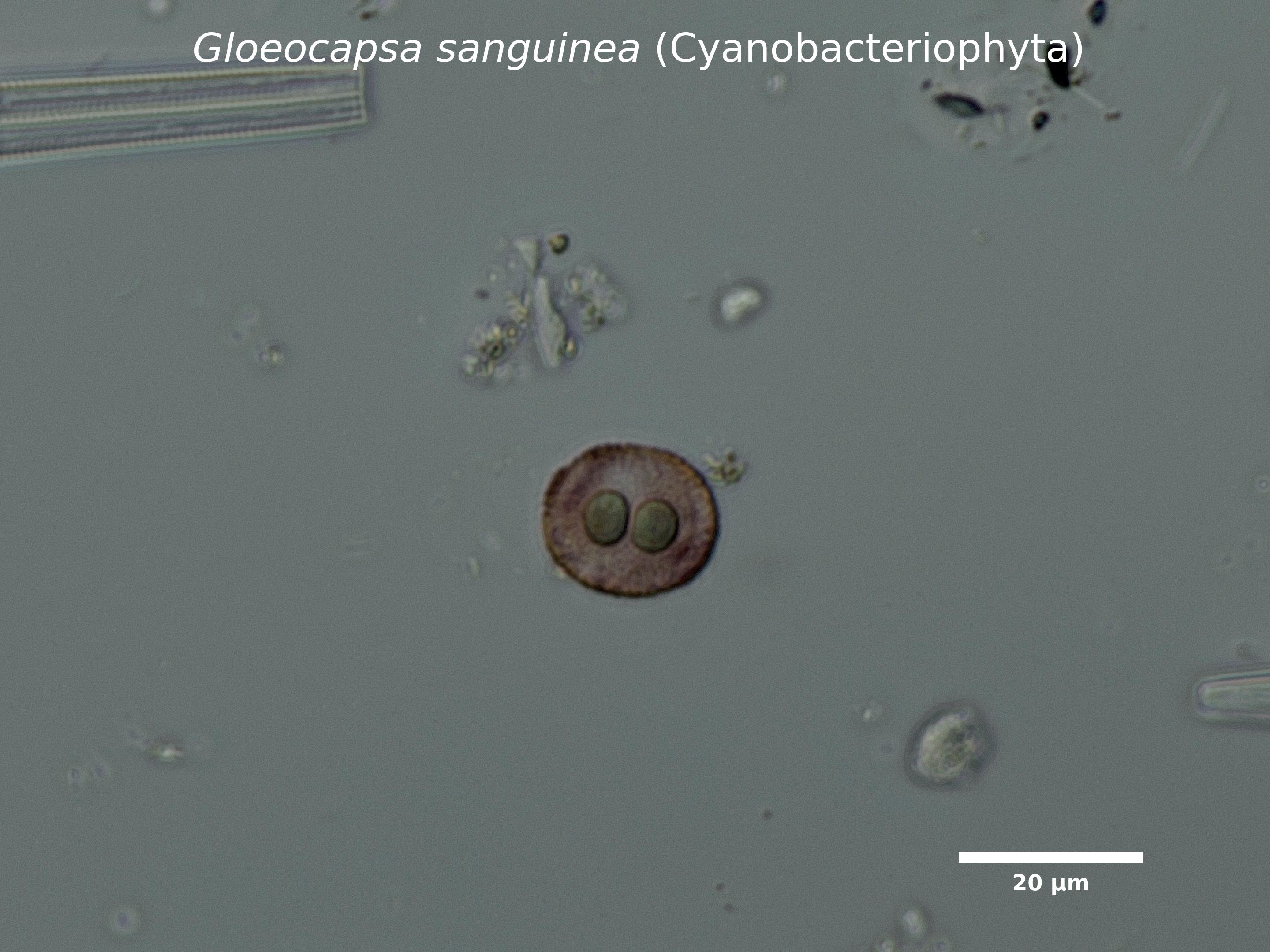
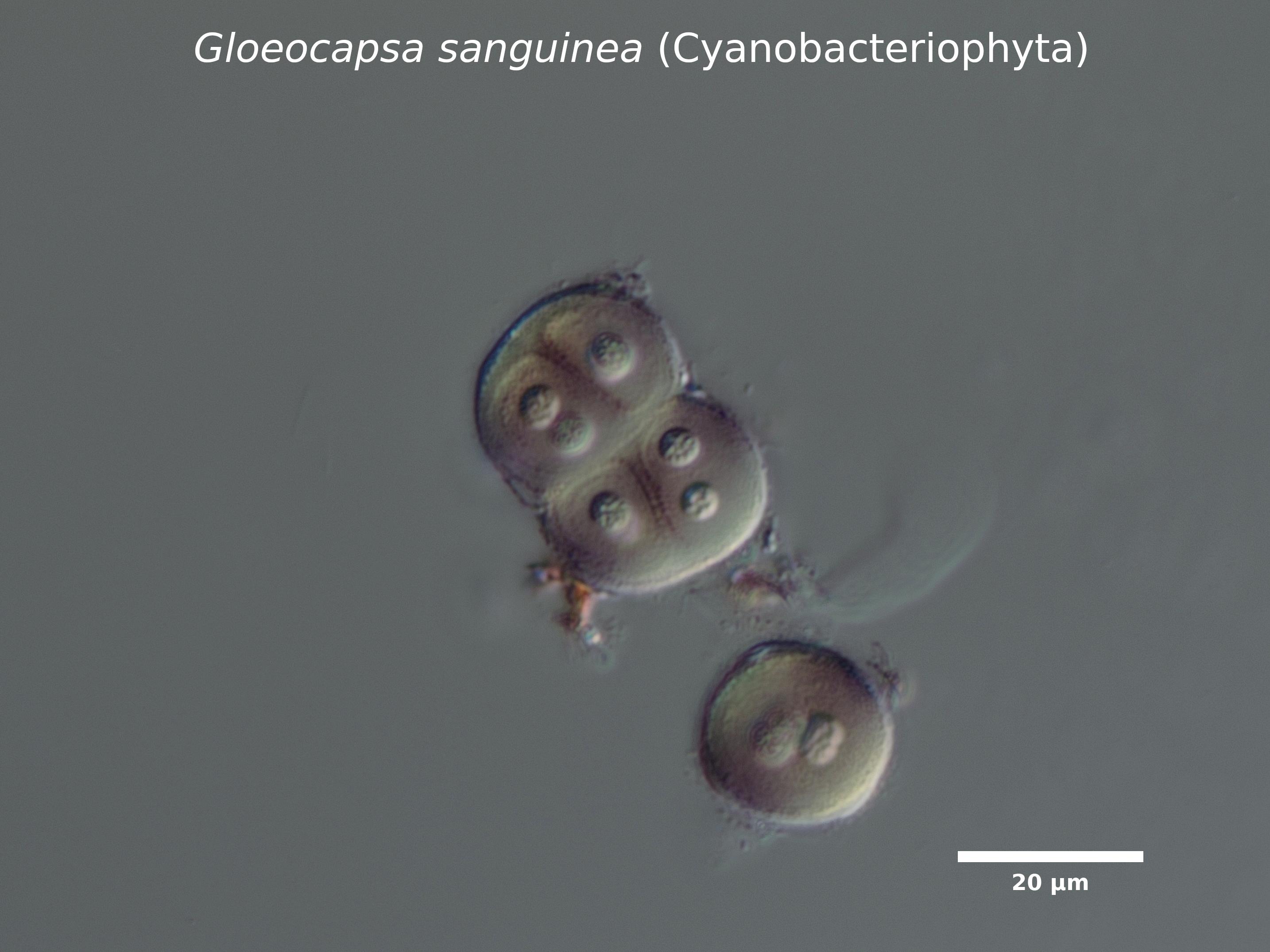
F4. Cells, cell subgroups, and colony surrounded by striated mucilage; mucilage often pale red or pink:
Gloeocapsa
E3. Cells oval or elliptical
E4. Cells wedge-shaped, forming heart-shaped pairs on thick, radiating mucilage strands:
Gomphosphaeria
C4. Cells arranged into irregular, amorphous colonies
B3. Vegetative cells aligned end-to-end forming filaments or pseudofilaments
A2. Nonmotile algae with chloroplasts
A3. Motile algae with chloroplasts and flagella
A4. Cells divided into paired semi-cells that are approximate mirror images of each other:
Desmids
A5. Cells enclosed in glassy, ornamental frustules; many species exhibit gliding movement:
Diatoms