Home
Info
Splash
TextTree
A1. Nonmotile algae without chloroplasts: Cyanobacteriophyta
A2. Nonmotile algae with chloroplasts
B1. Cells usually solitary
B2. Nonmotile colonies with two or more cells
C1. Cells flattened, forming ribbon-like chains, short cylinders, or plate-like groups of cells
D1. Colonies joined on long axis to form flat ribbon-like colonies (singel row) or plate-like colonies (double rows)
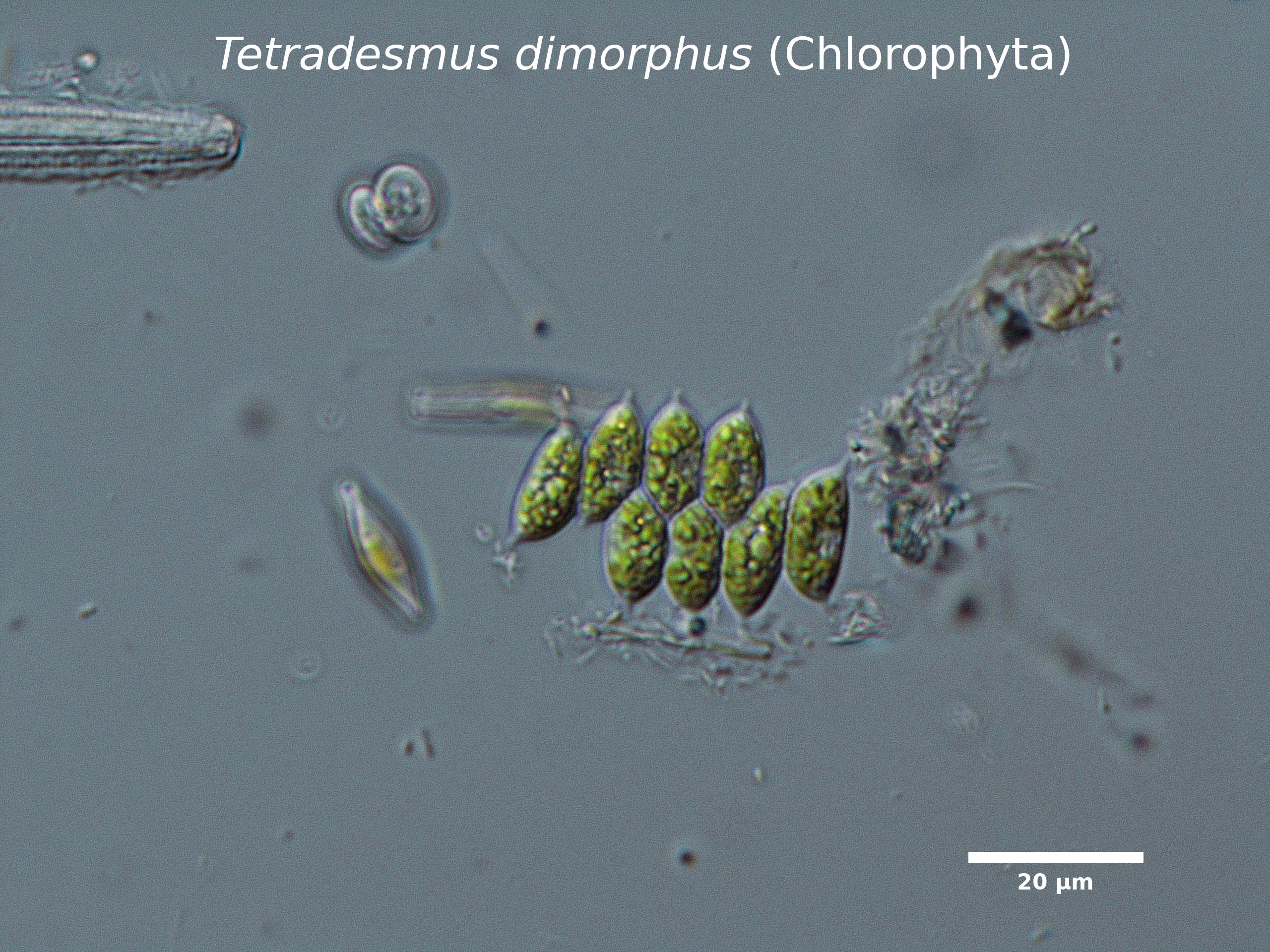
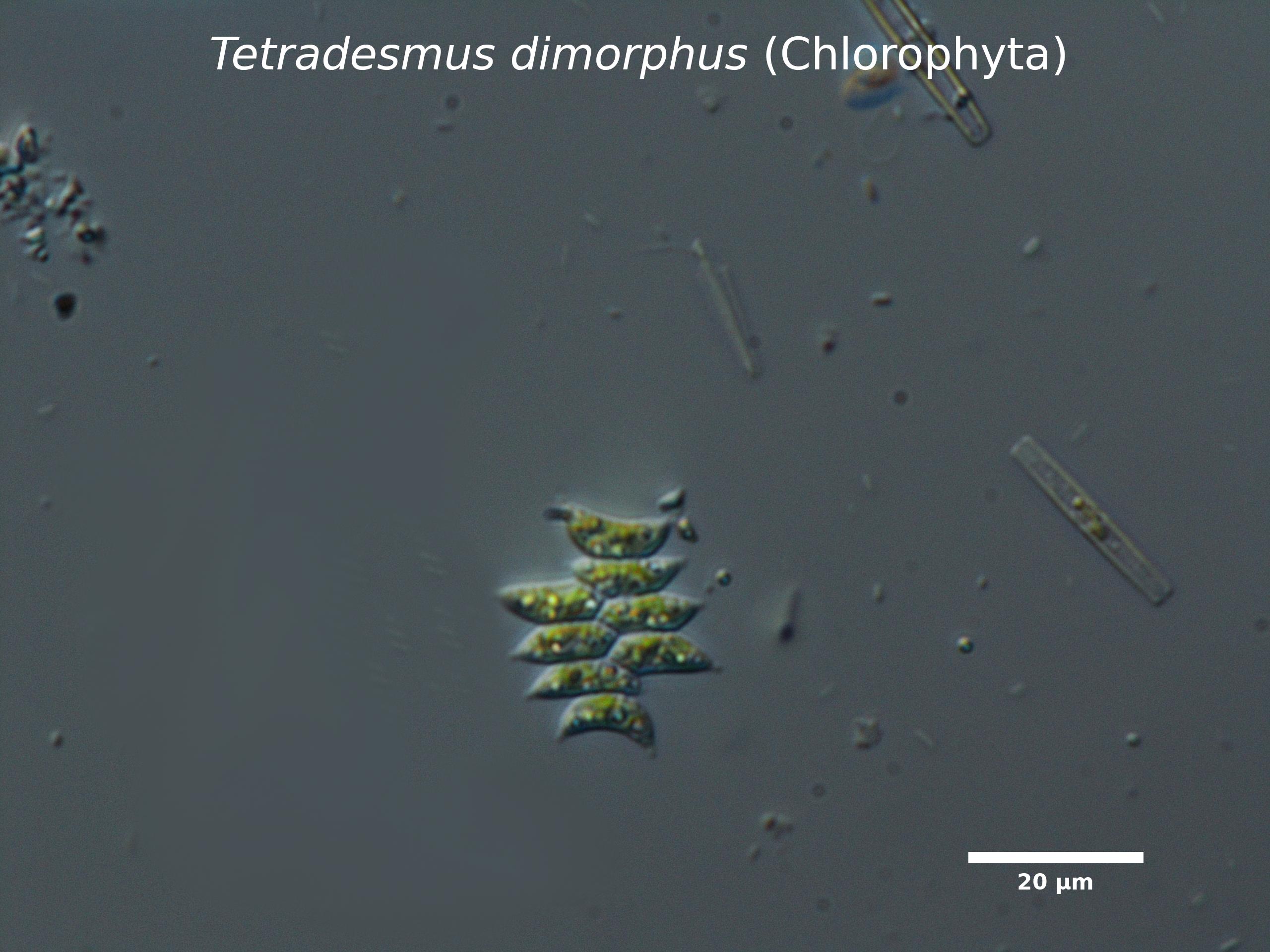
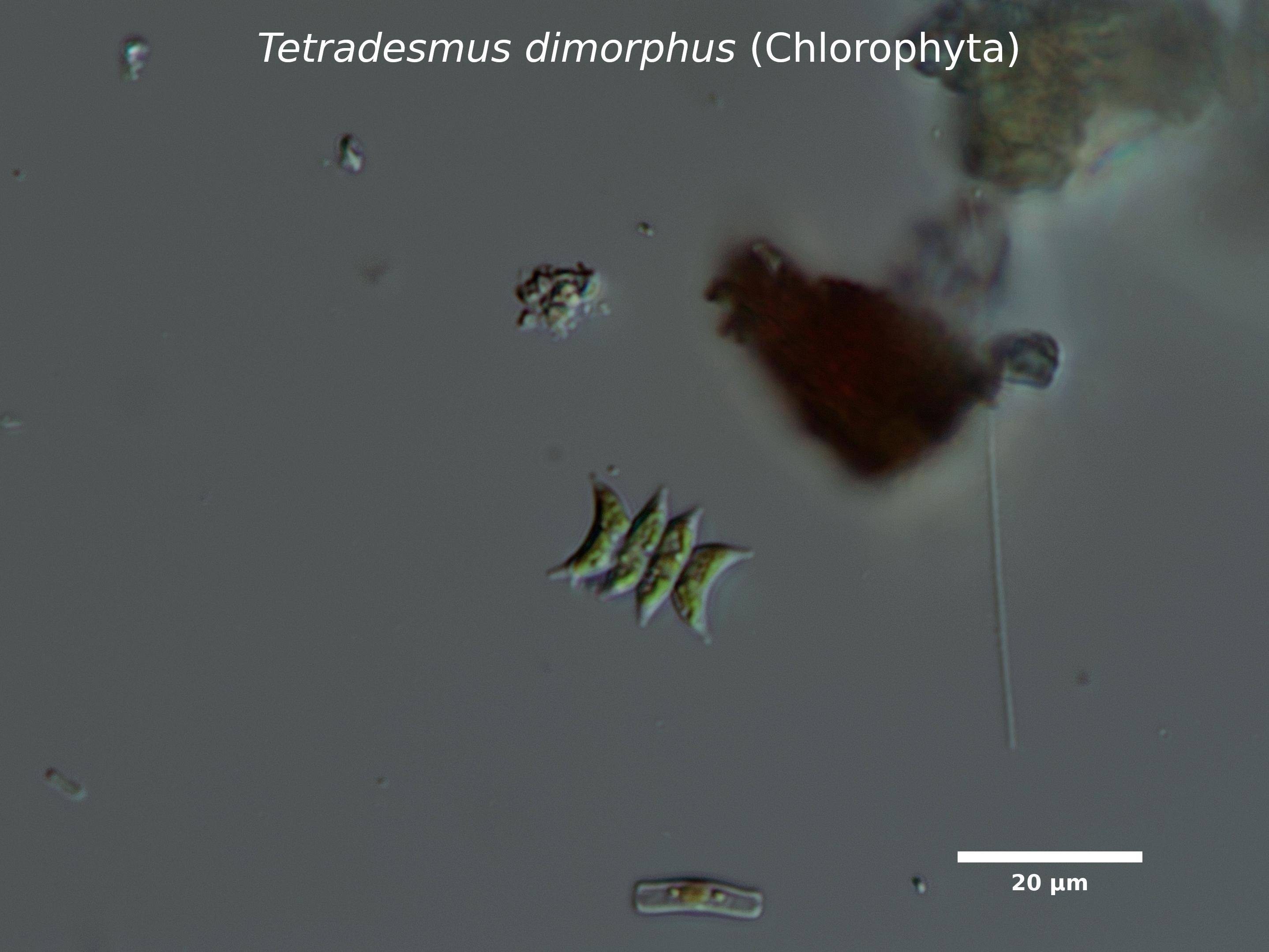
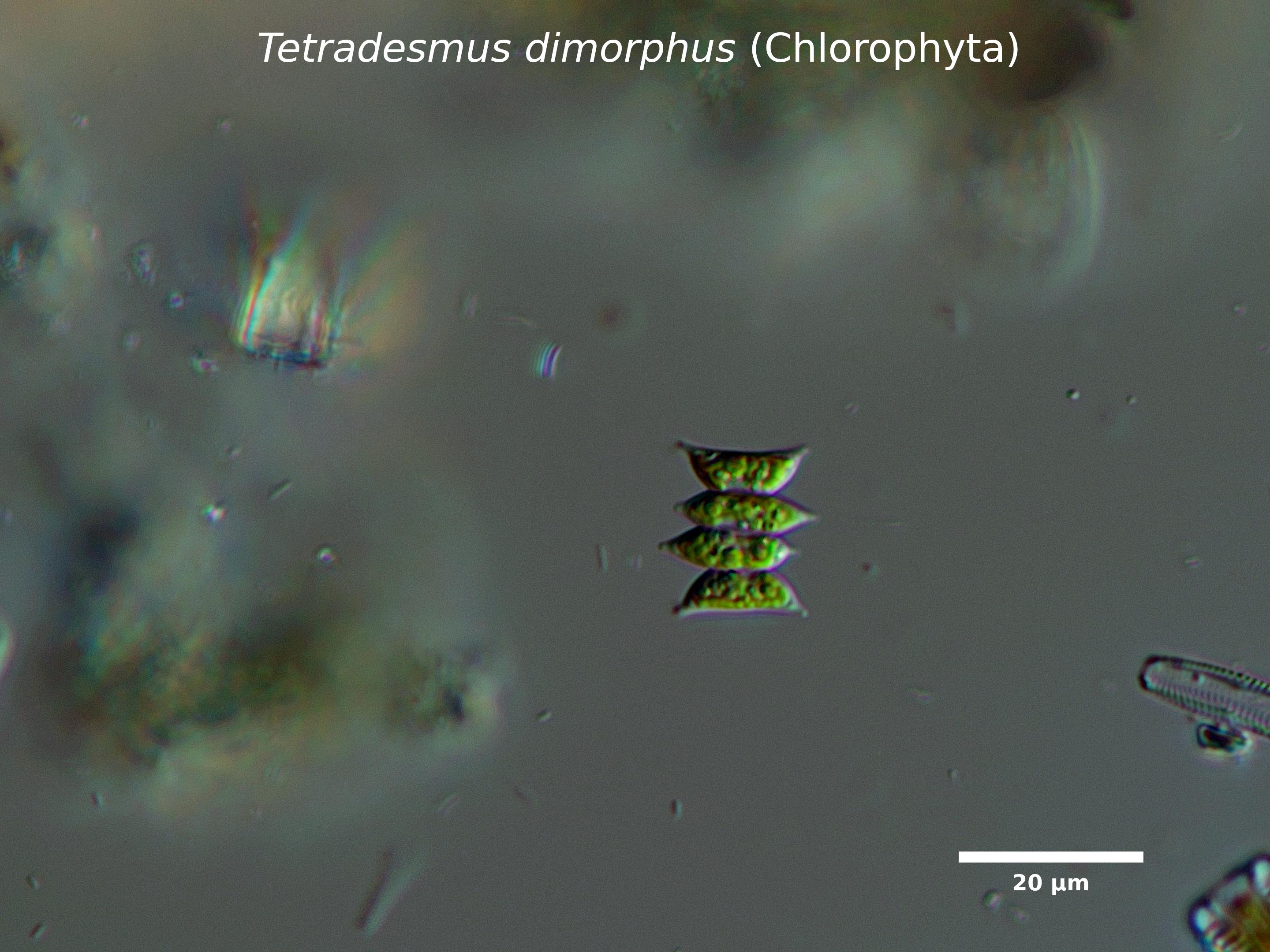
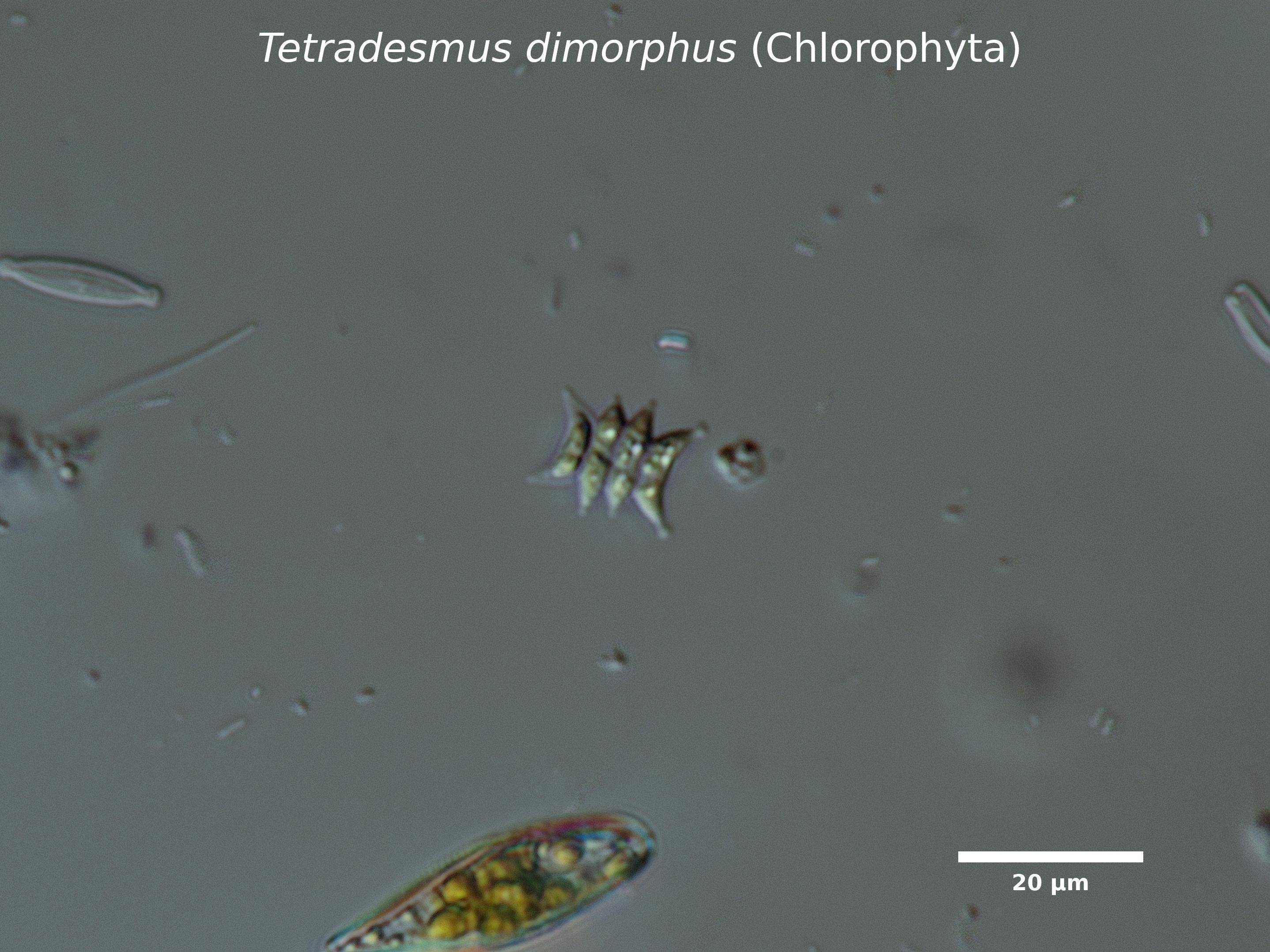
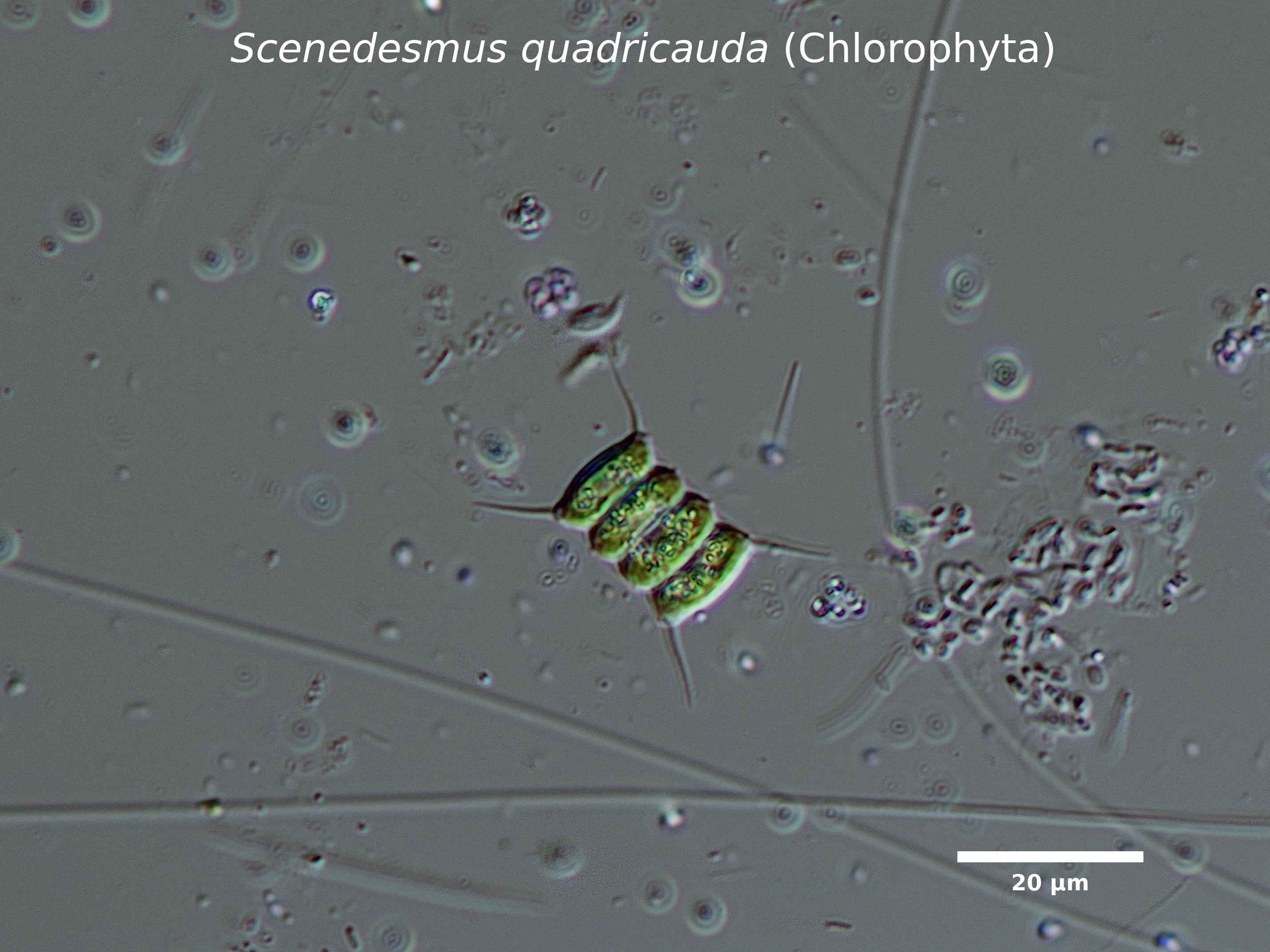
E1. Cells fusiform or crescent-shaped; apex acutely pointed, without spines, but sometimes with rounded knobs; colonies twisted in somes species:
Tetradesmus
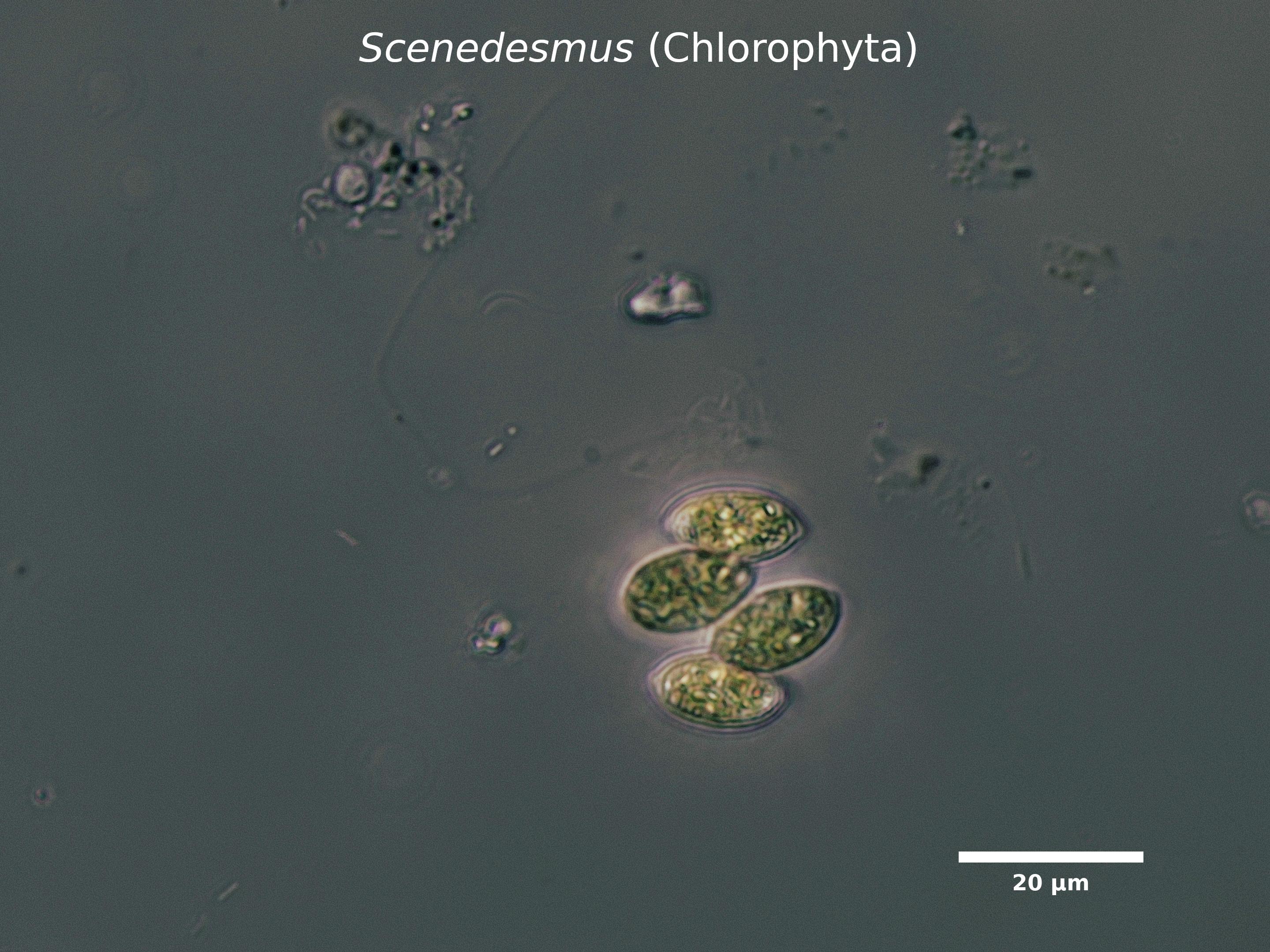
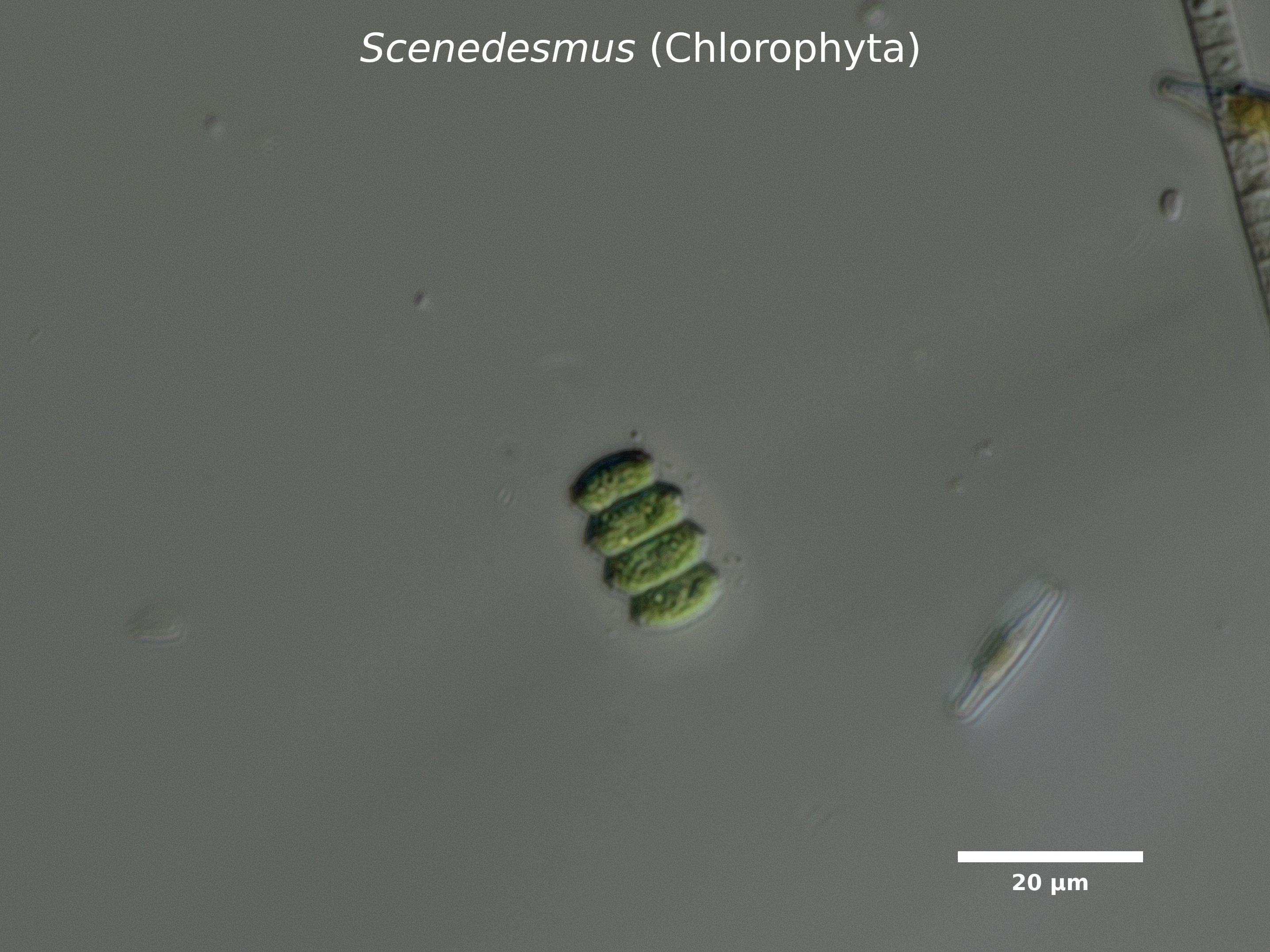
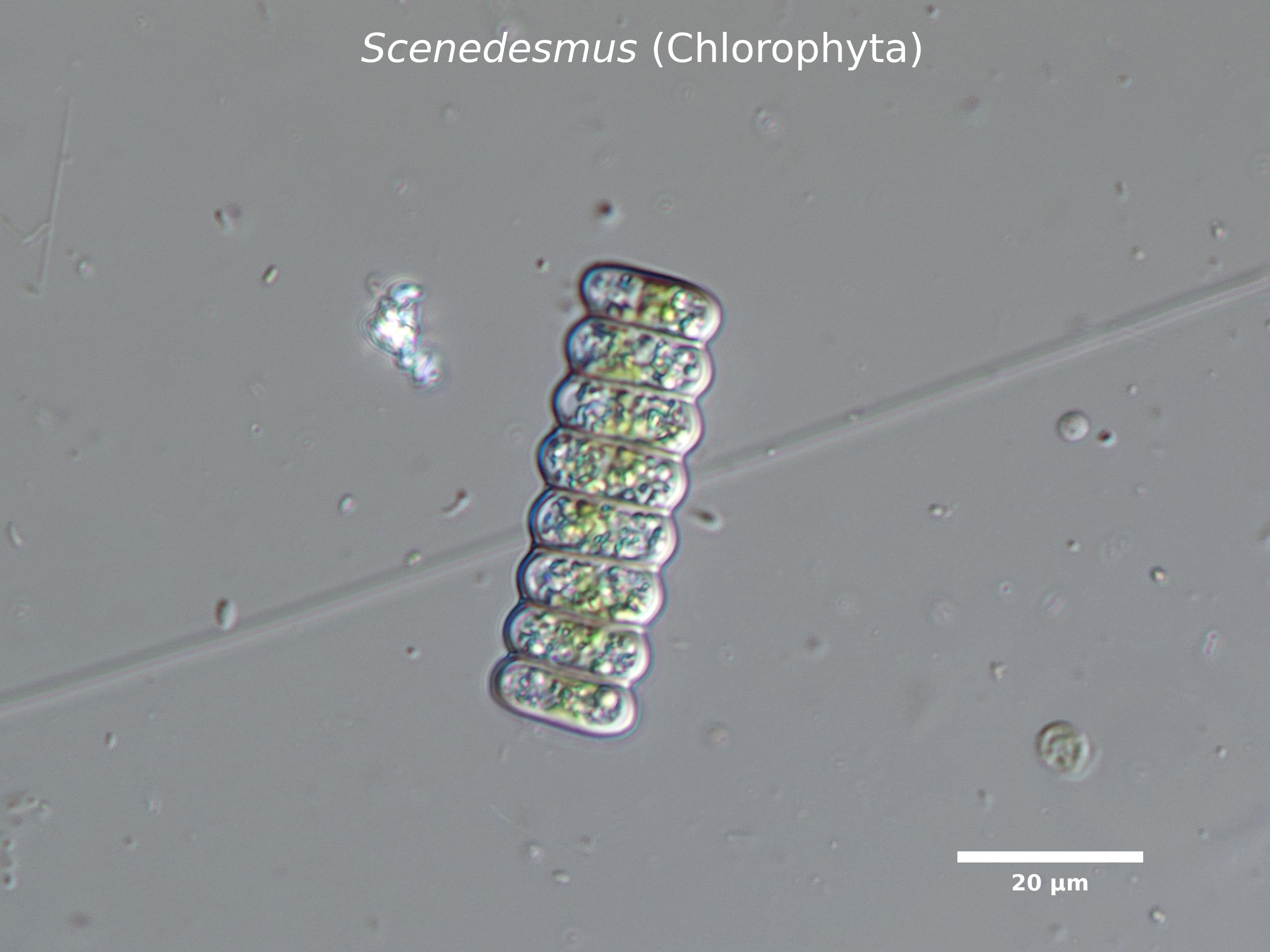
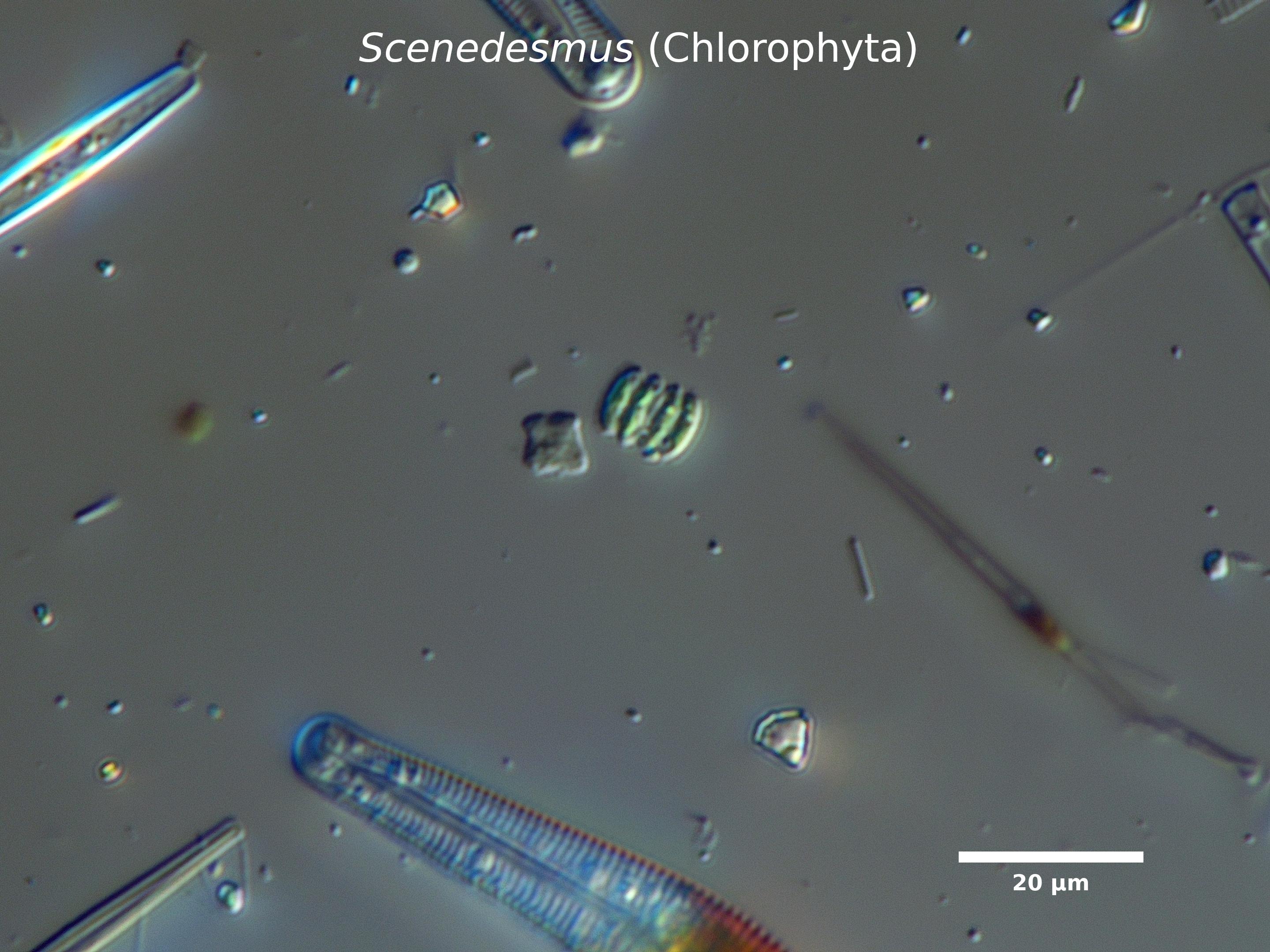
E2. Cells elliptical, cylindrical, or oval; apex rounded, mostly without spines, teeth, or knobs:
Scenedesmus
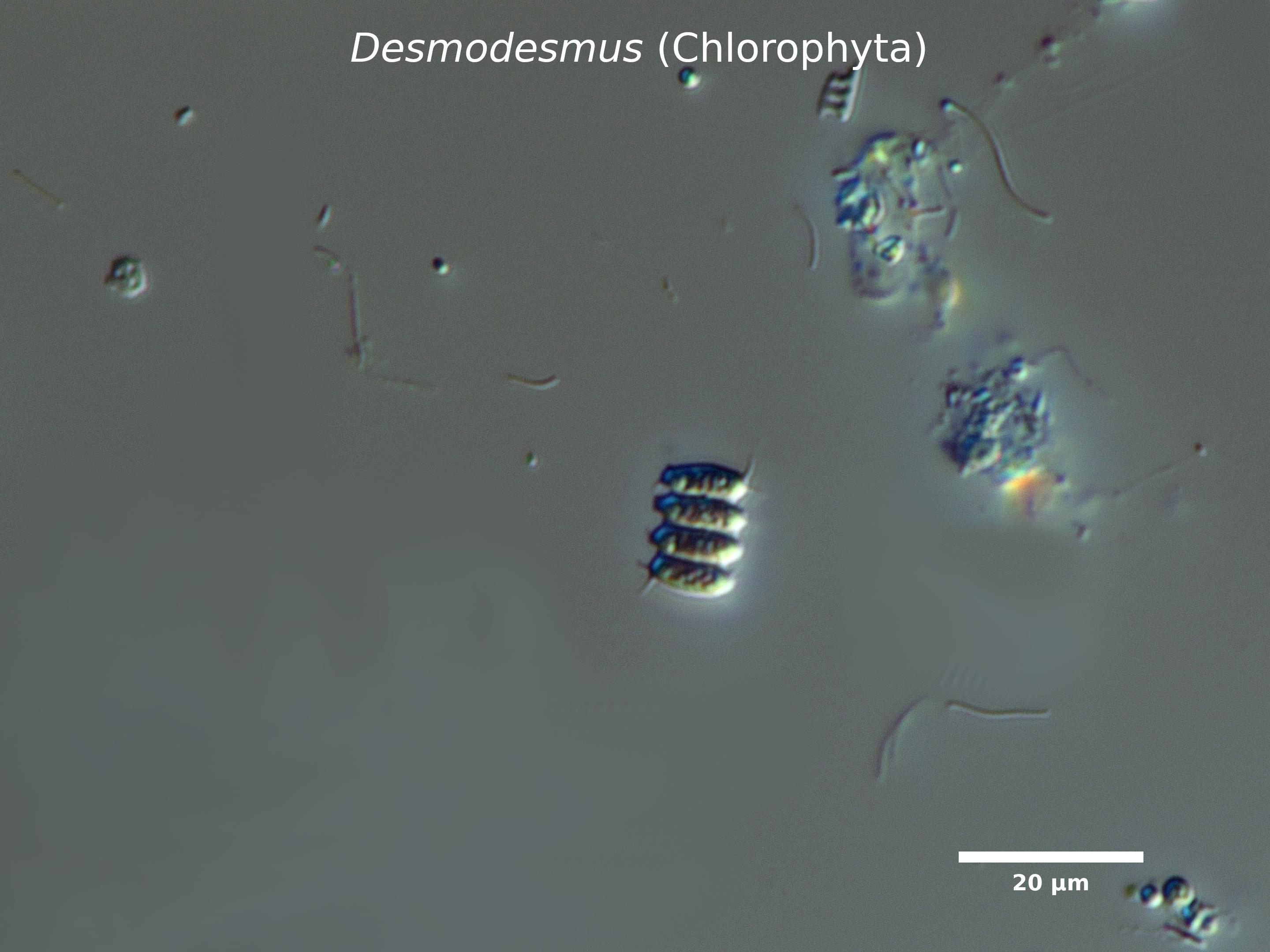
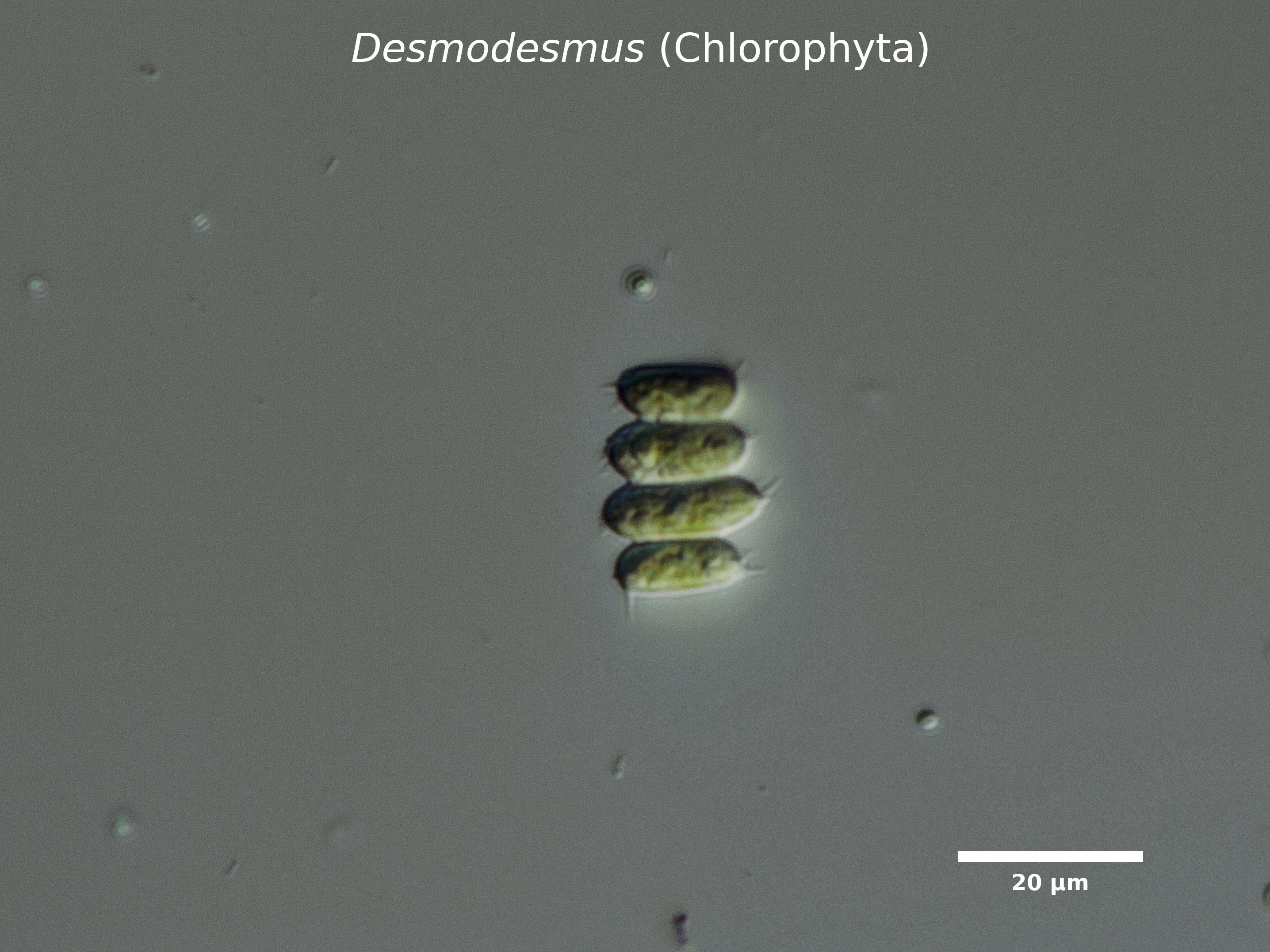
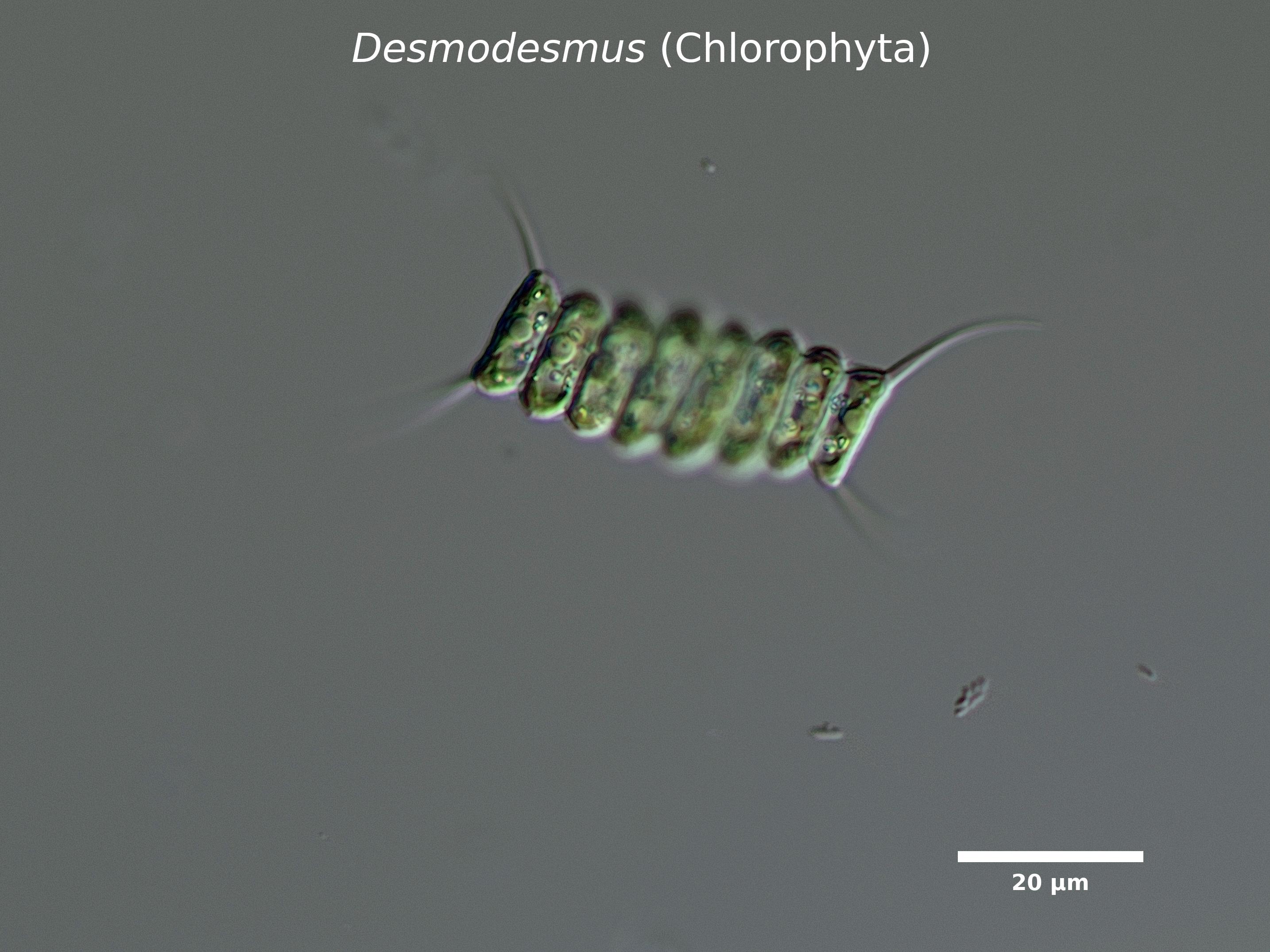
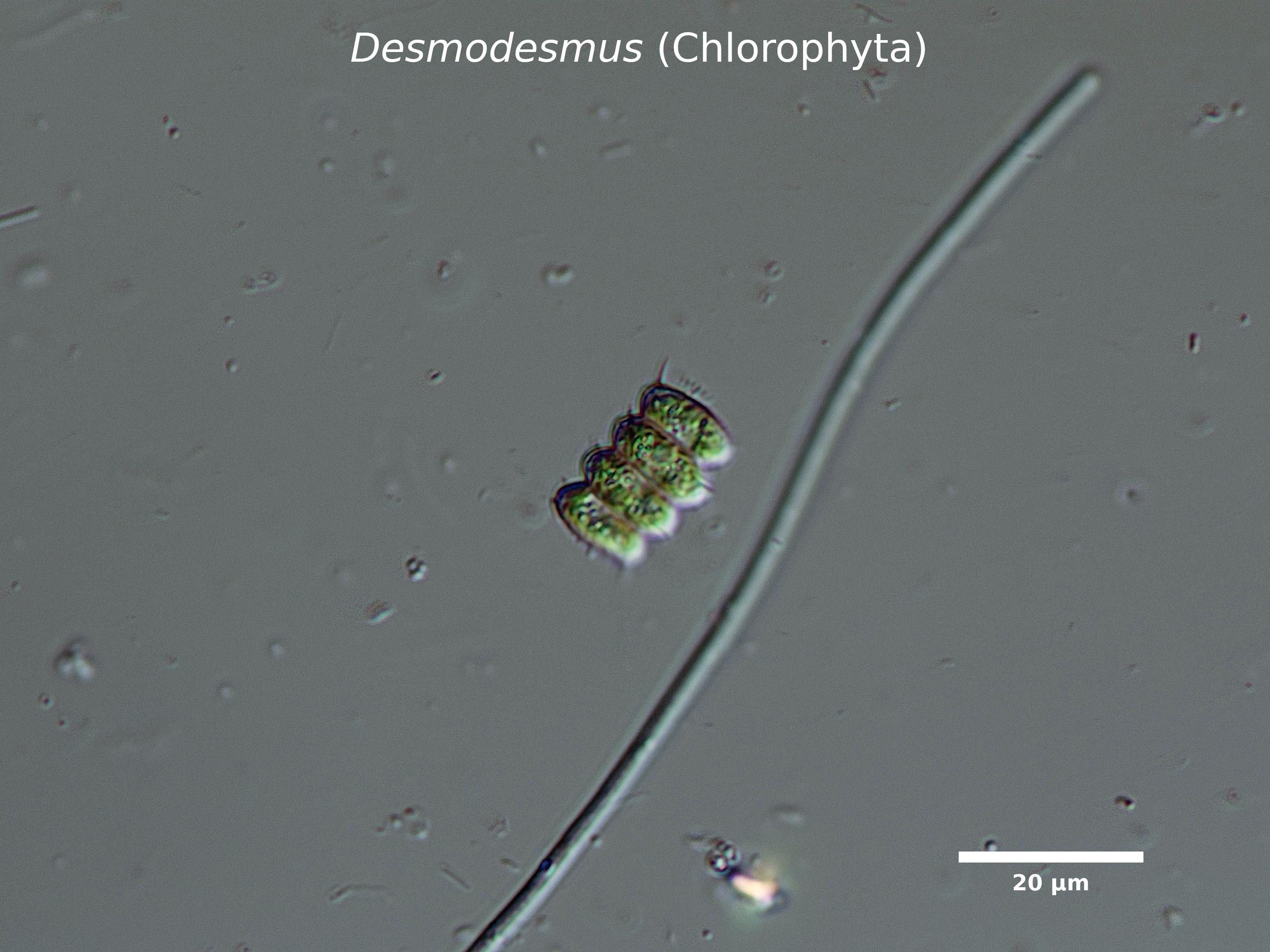
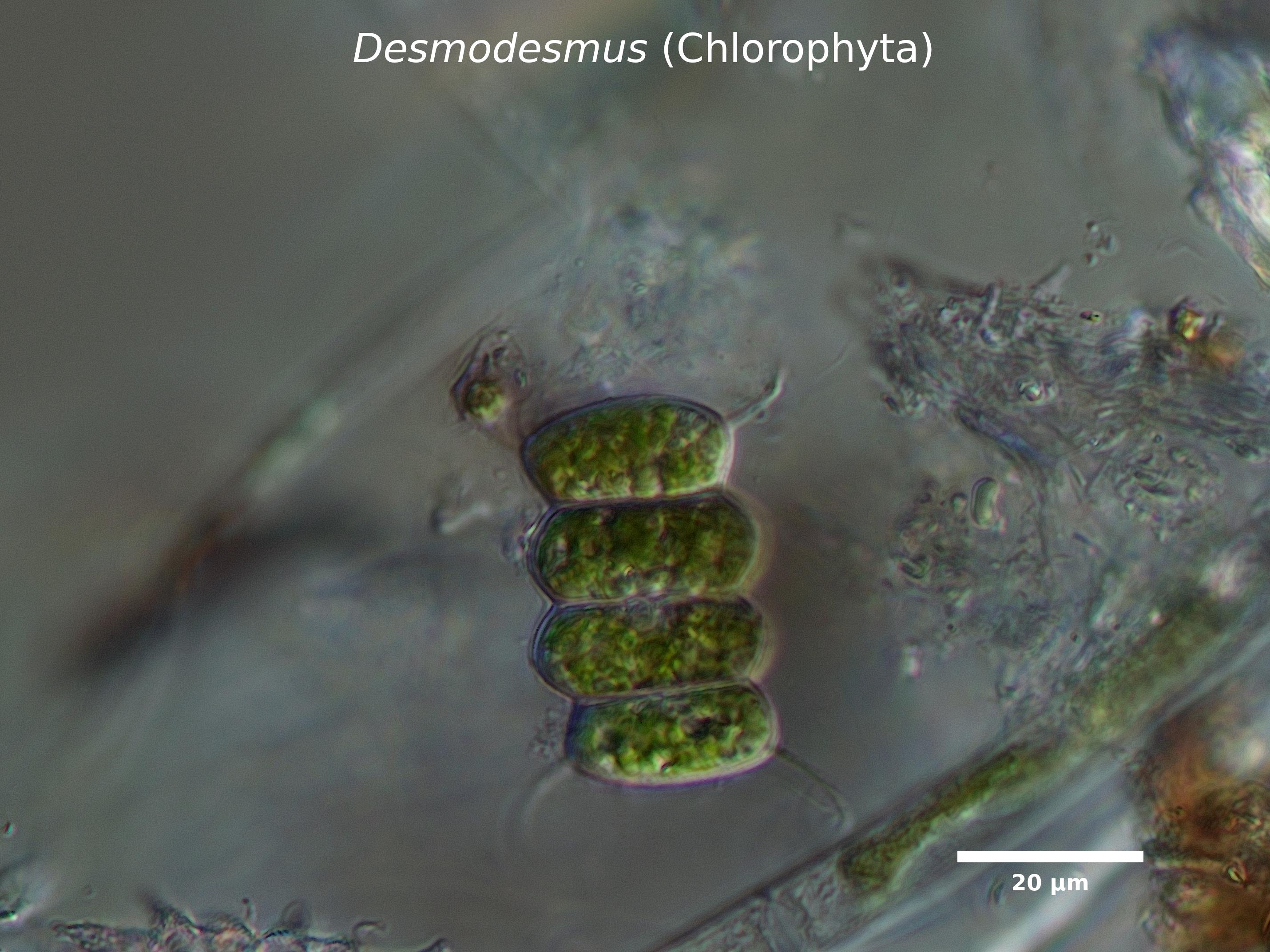
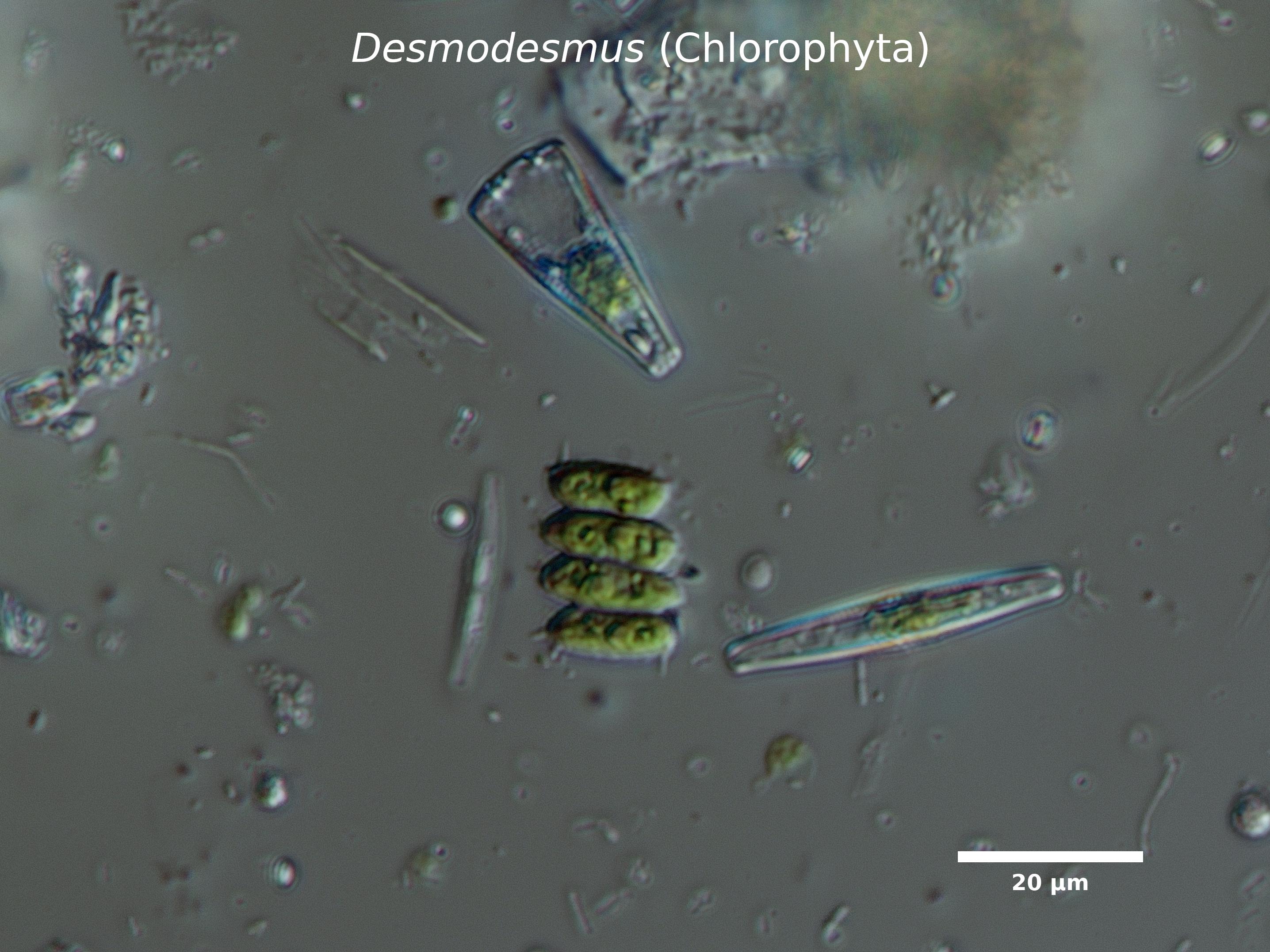
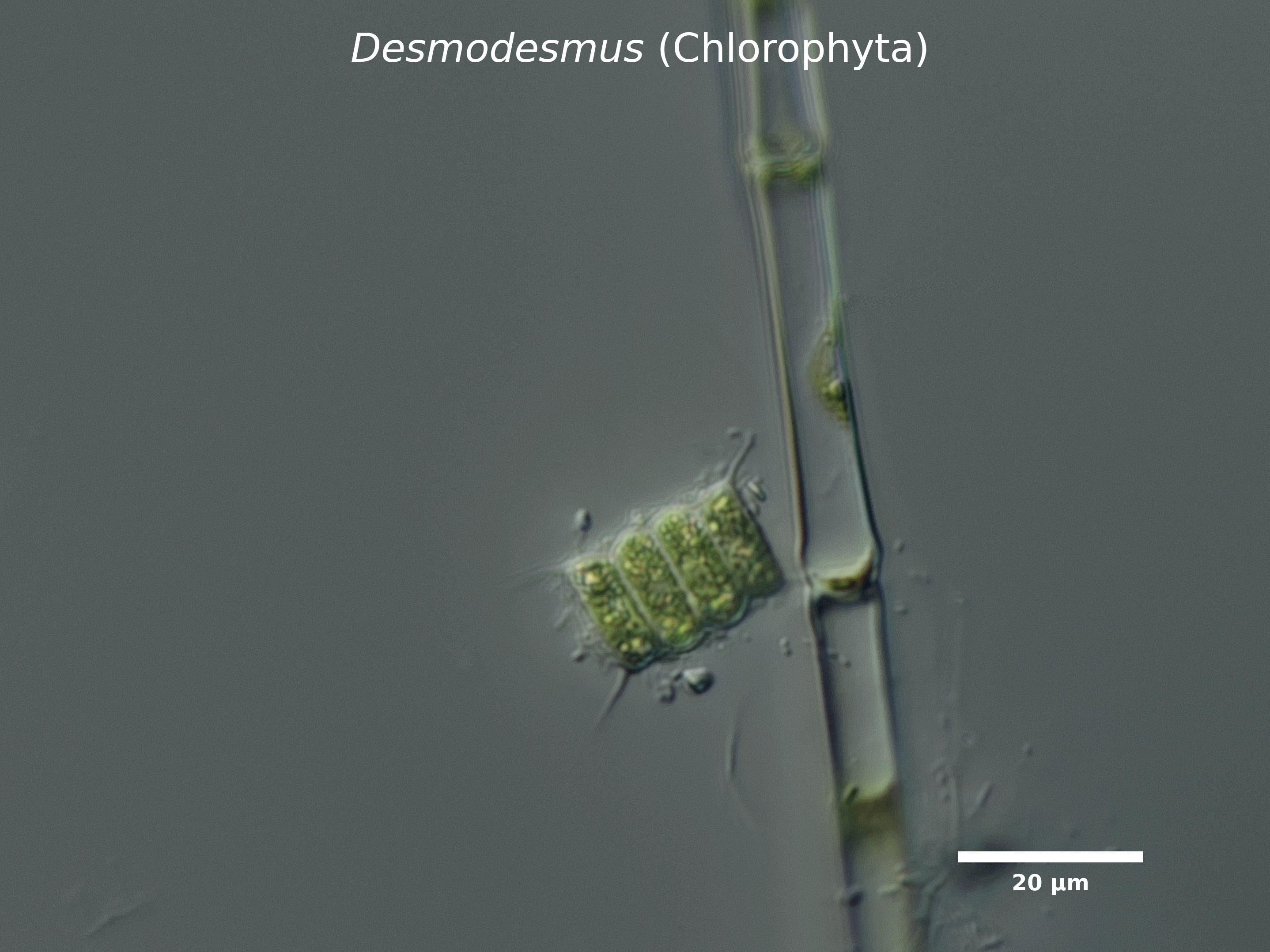
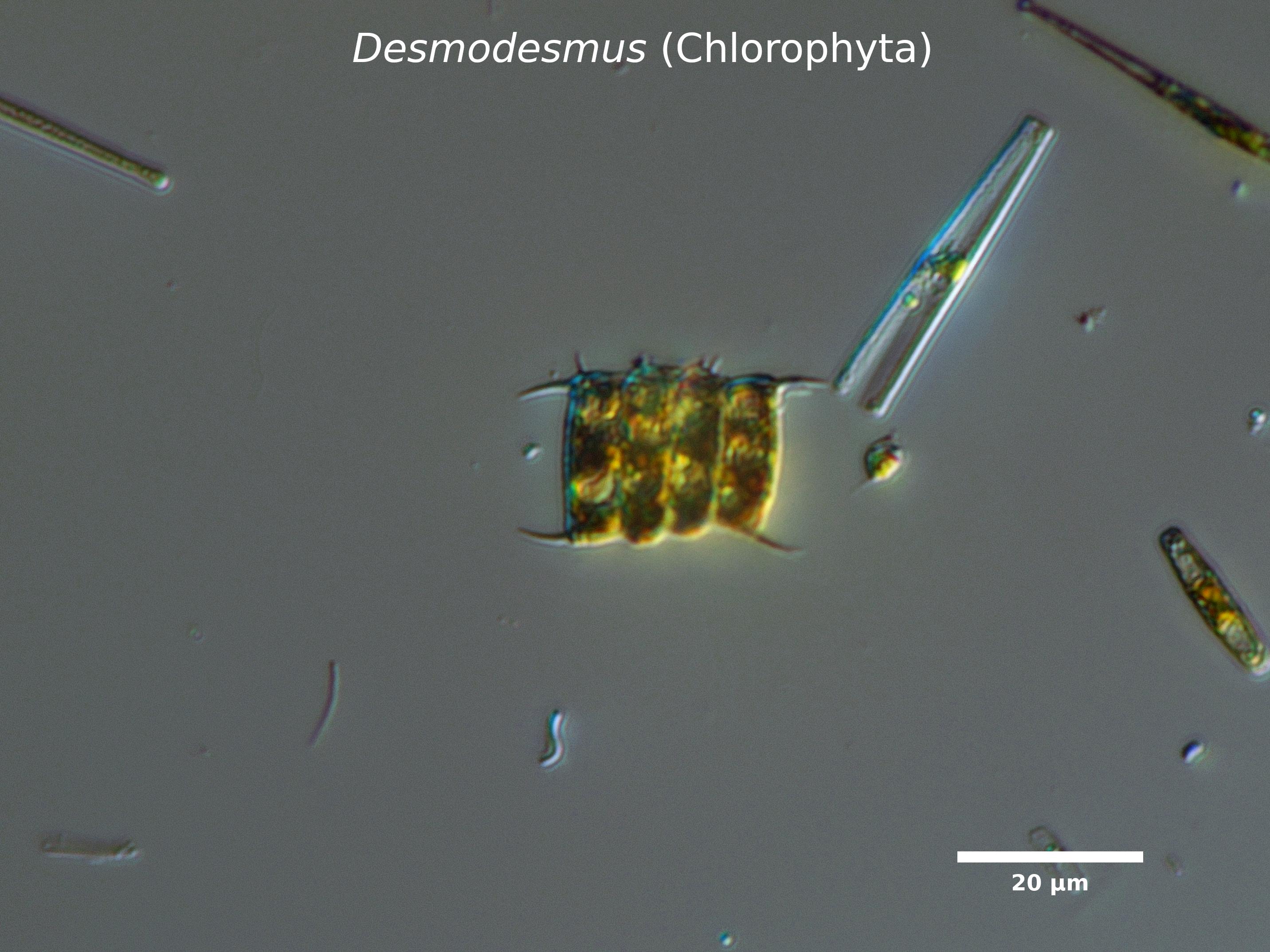
E3. Cells oval, elliptical, cylindrical, or fusiform; cells with spines, teeth, or granulations (not completely smooth):
Desmodesmus
D2. Cells form distinct groups of 4; colonies mostly rectangular in outline
D3. Cells angular and strongly flattened; inner and outer cells dissimilar:
Pediastrum
, and
Pseudopediastrum
C2. Colonies spherical, oval, or elliptical
C3. Colonies various shapes but not flat, spherical, oval, or elliptical
B3. Filamentous algae including pseudofilaments (see epiphyte links for epiphytic filaments)
B4. Cells living inside zooplankton or other aquatic animals (endozoic) or attached to aquatic plants (epiphytic)
A3. Motile algae with chloroplasts and flagella
A4. Cells divided into paired semi-cells that are approximate mirror images of each other:
Desmids
A5. Cells enclosed in glassy, ornamental frustules; many species exhibit gliding movement:
Diatoms