Home
Info
Splash
TextTree
A1. Nonmotile algae without chloroplasts: Cyanobacteriophyta
A2. Nonmotile algae with chloroplasts
A3. Motile algae with chloroplasts and flagella
B1. Solitary motile algae
C1. Cells with one visible flagellum
D1. Cells covered with scales (scaled chrysophytes); most species also have long spines:
Mallomonas
D2. Cell enclosed in a rigid spherical, oval, or elliptical lorica:
Trachemolomas
D3. Cells not covered with scaled or enclosed in a lorica; wall may be rigid or flexible
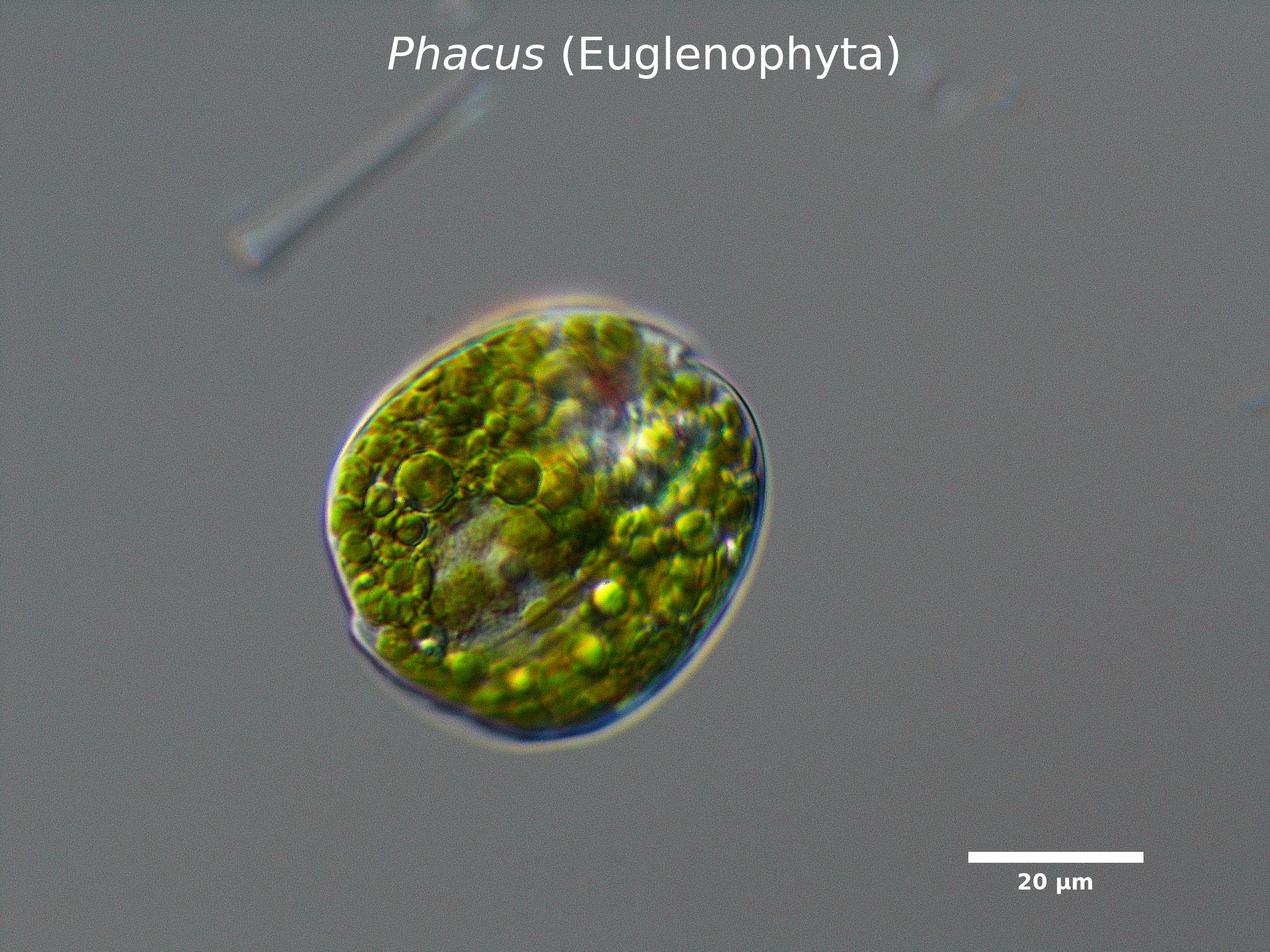
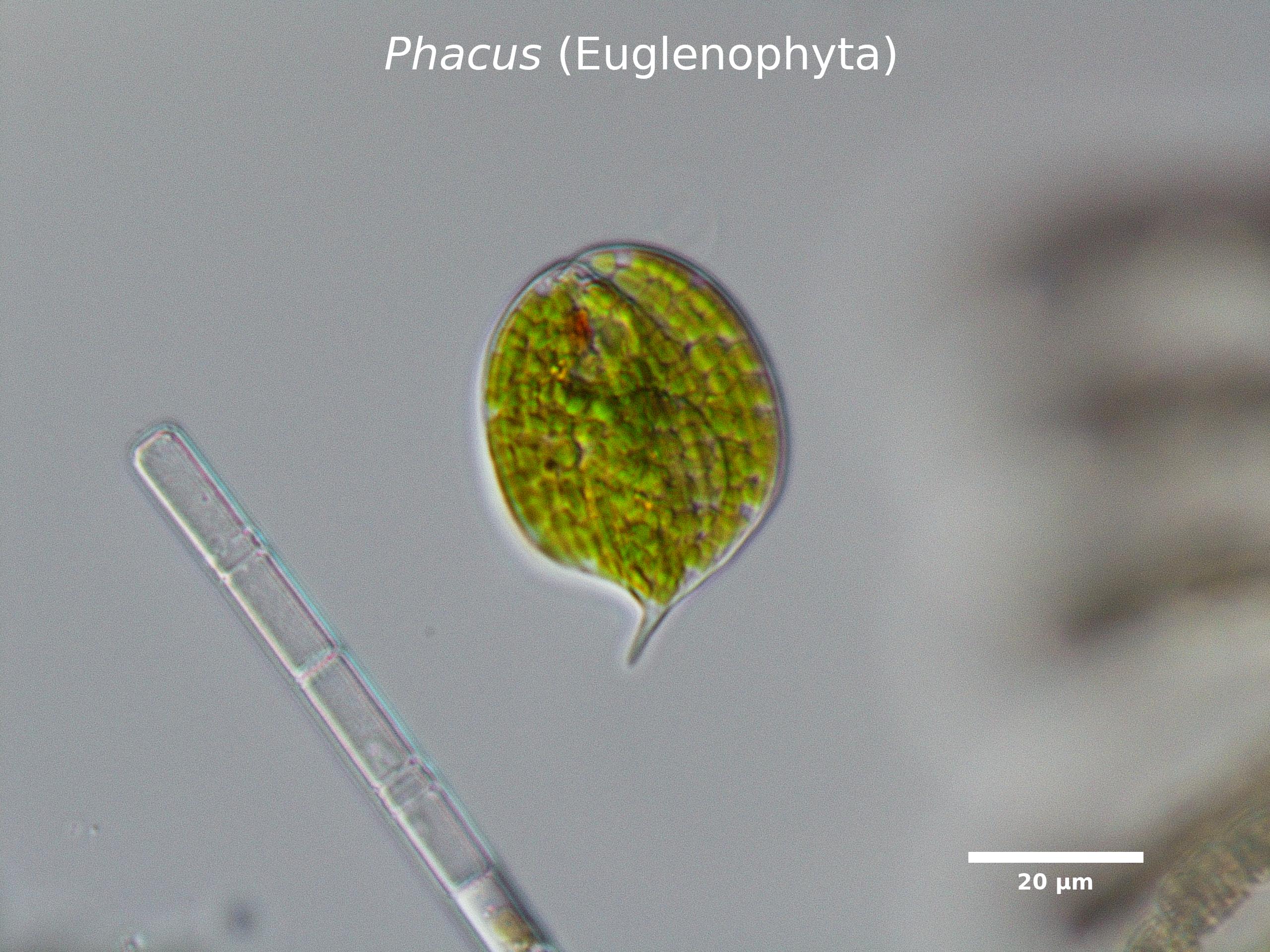
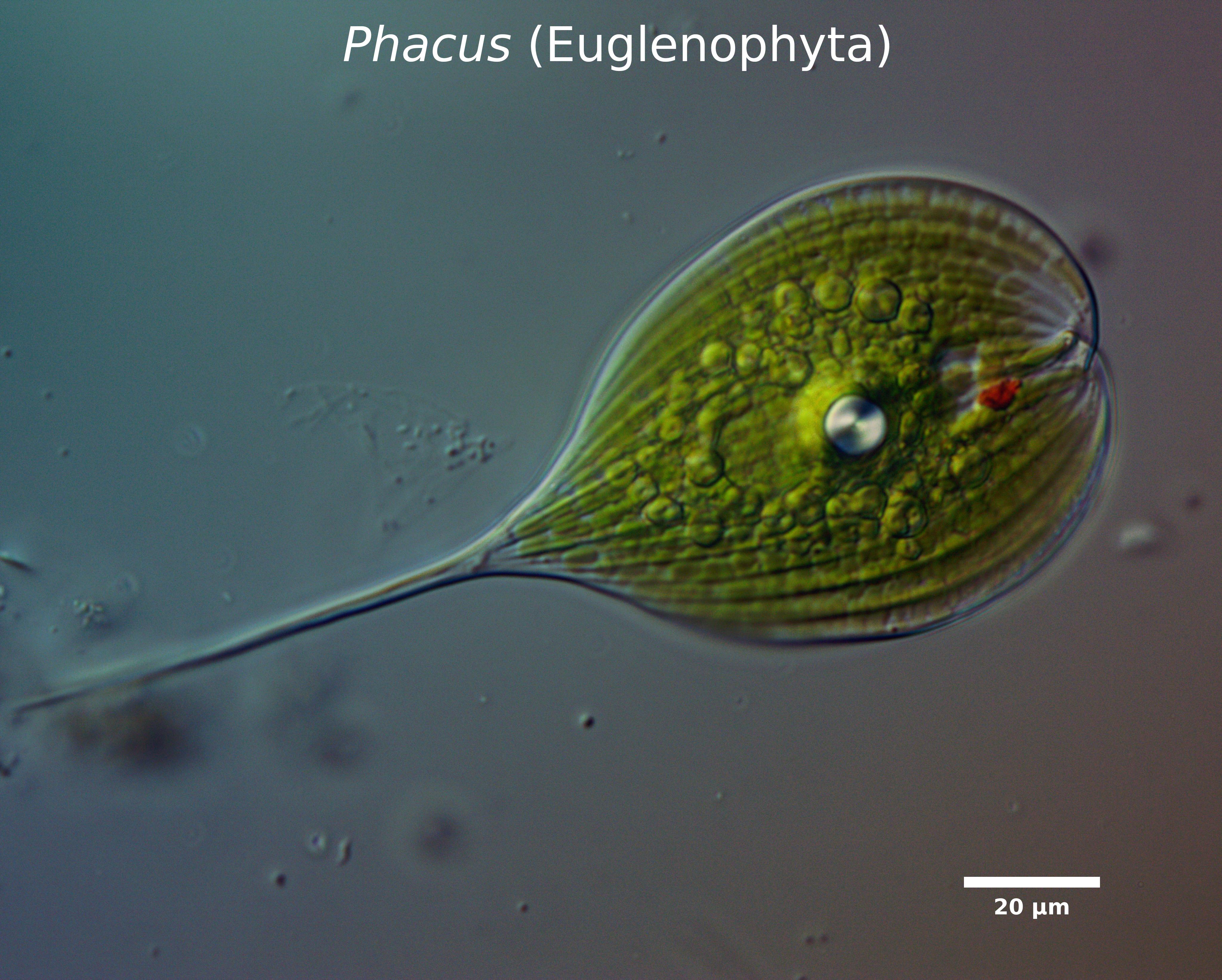
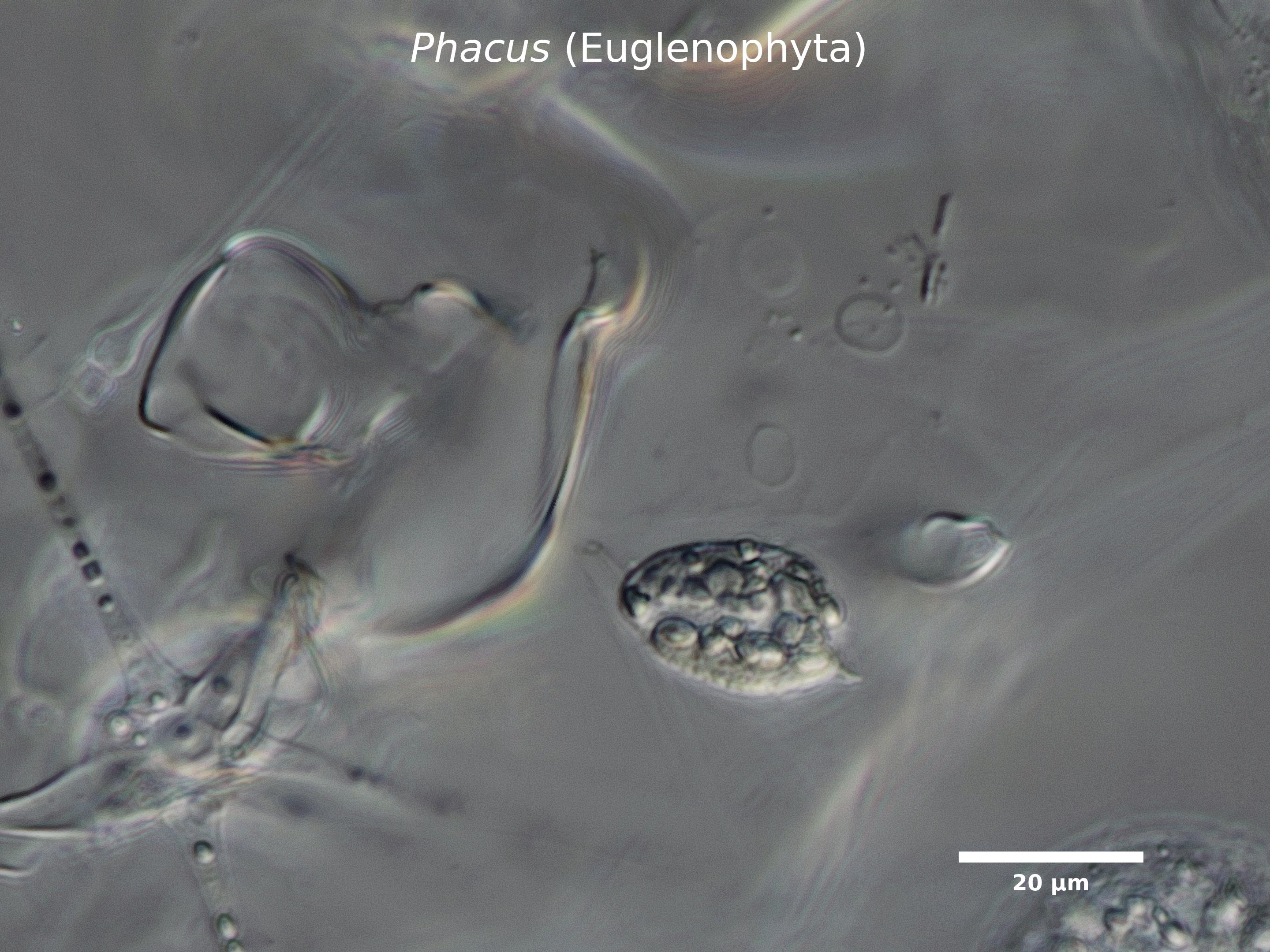
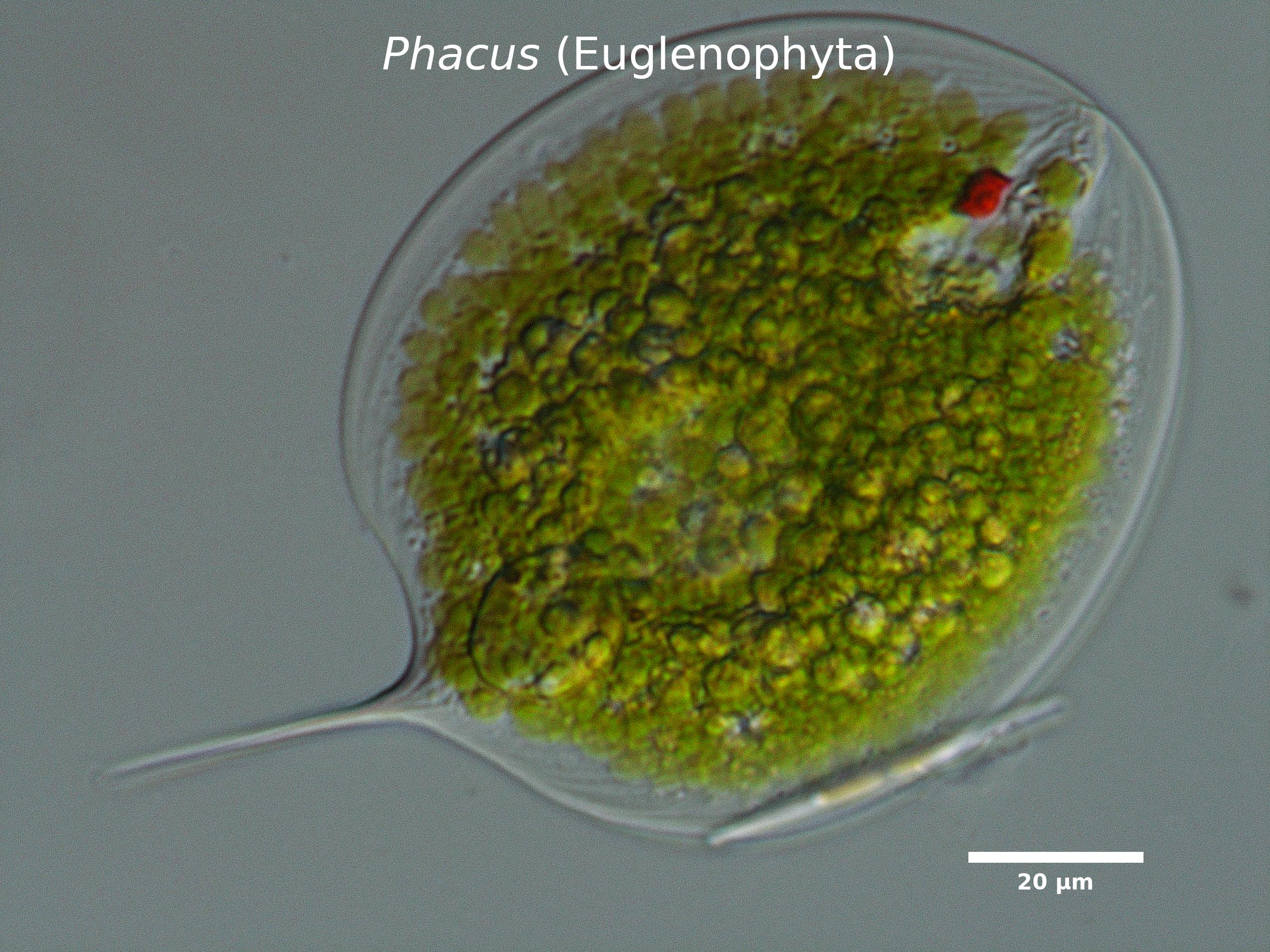
E1. Cells rigid and flattened, usually, but not always, with long posterior tail (caudus):
Phacus
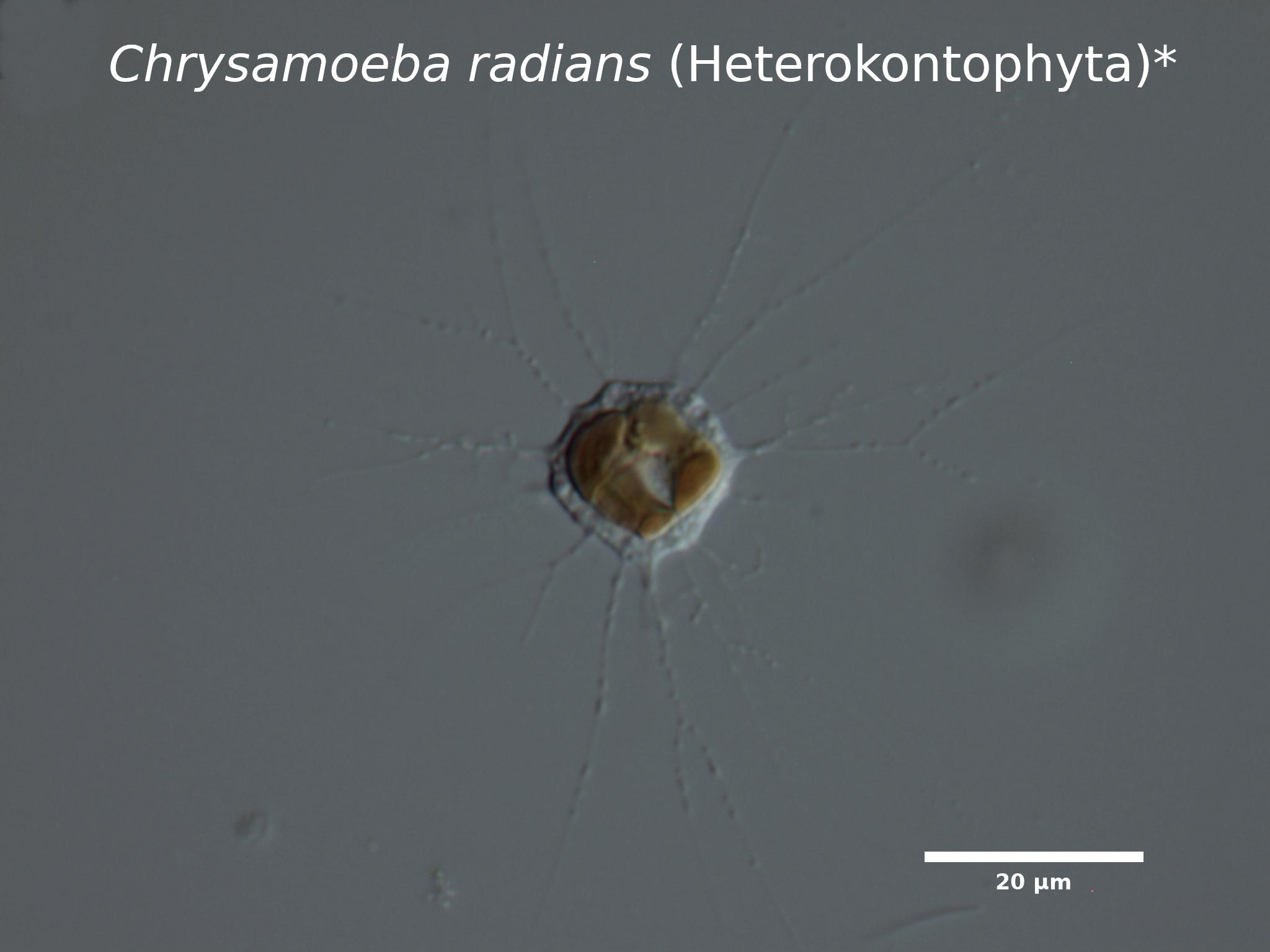
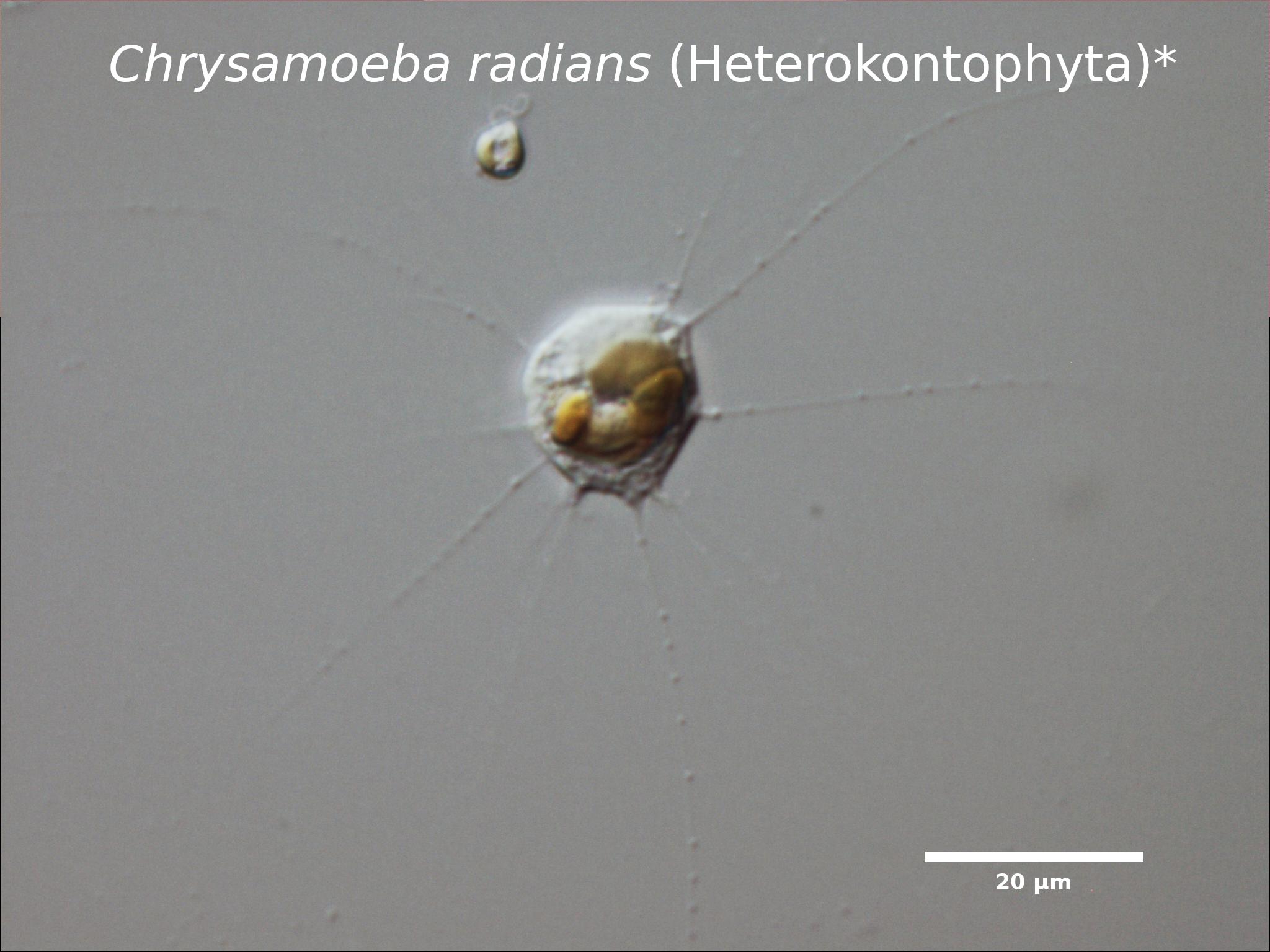
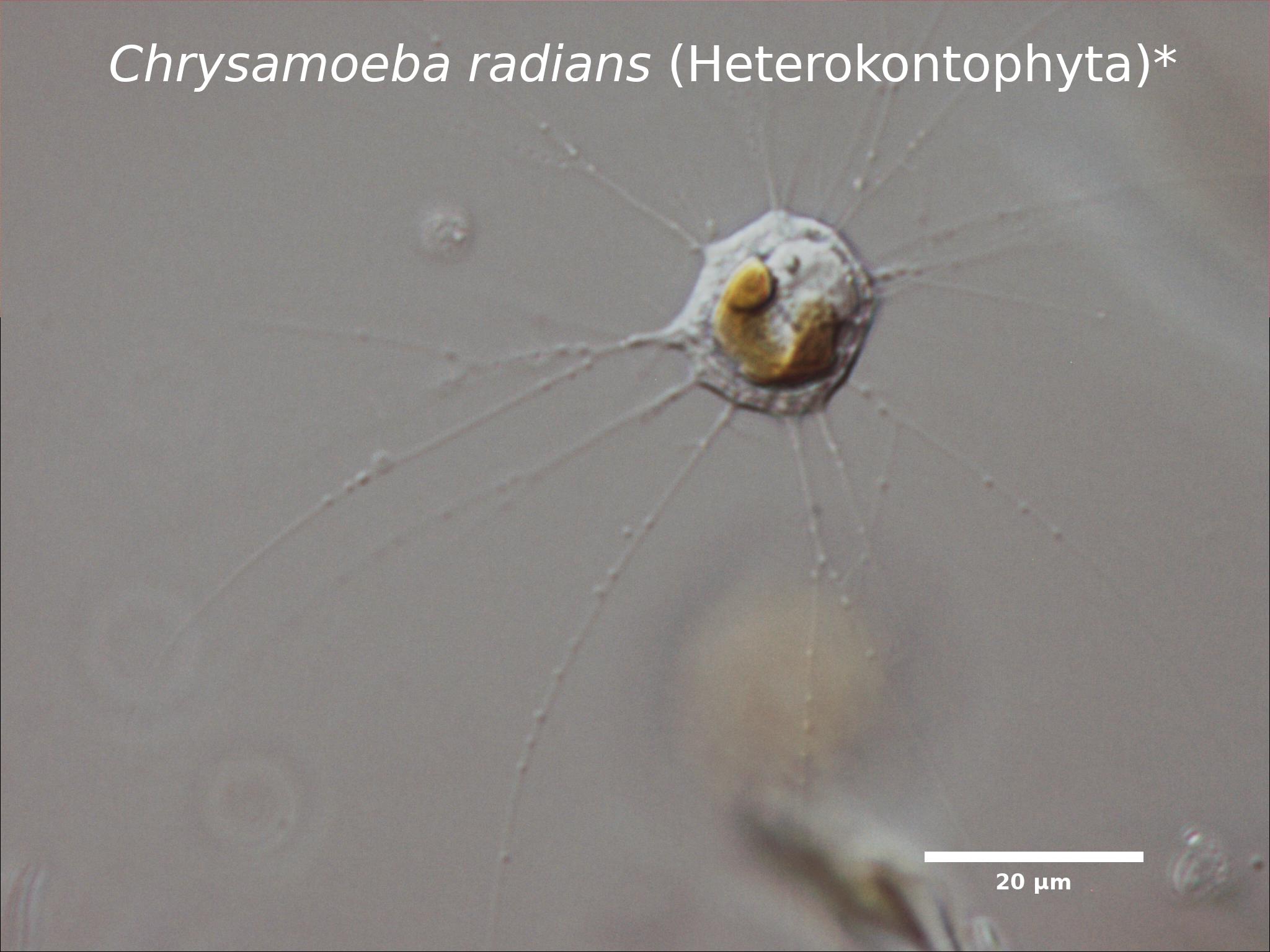
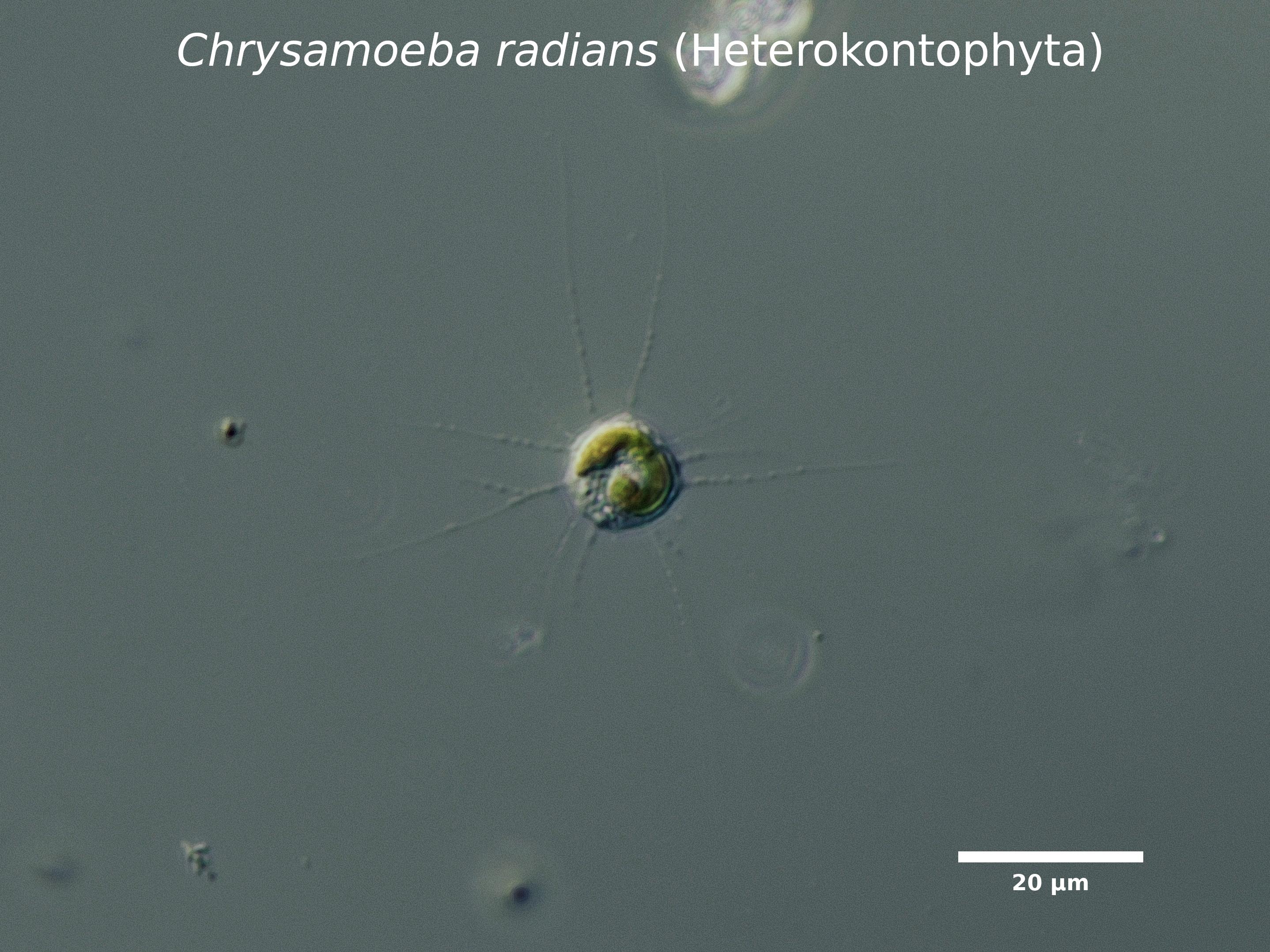
E2. Cell wall flexible; cells with long, thin pseudopods; cells may exhibit amoeboid movement:
Chrysamoeba
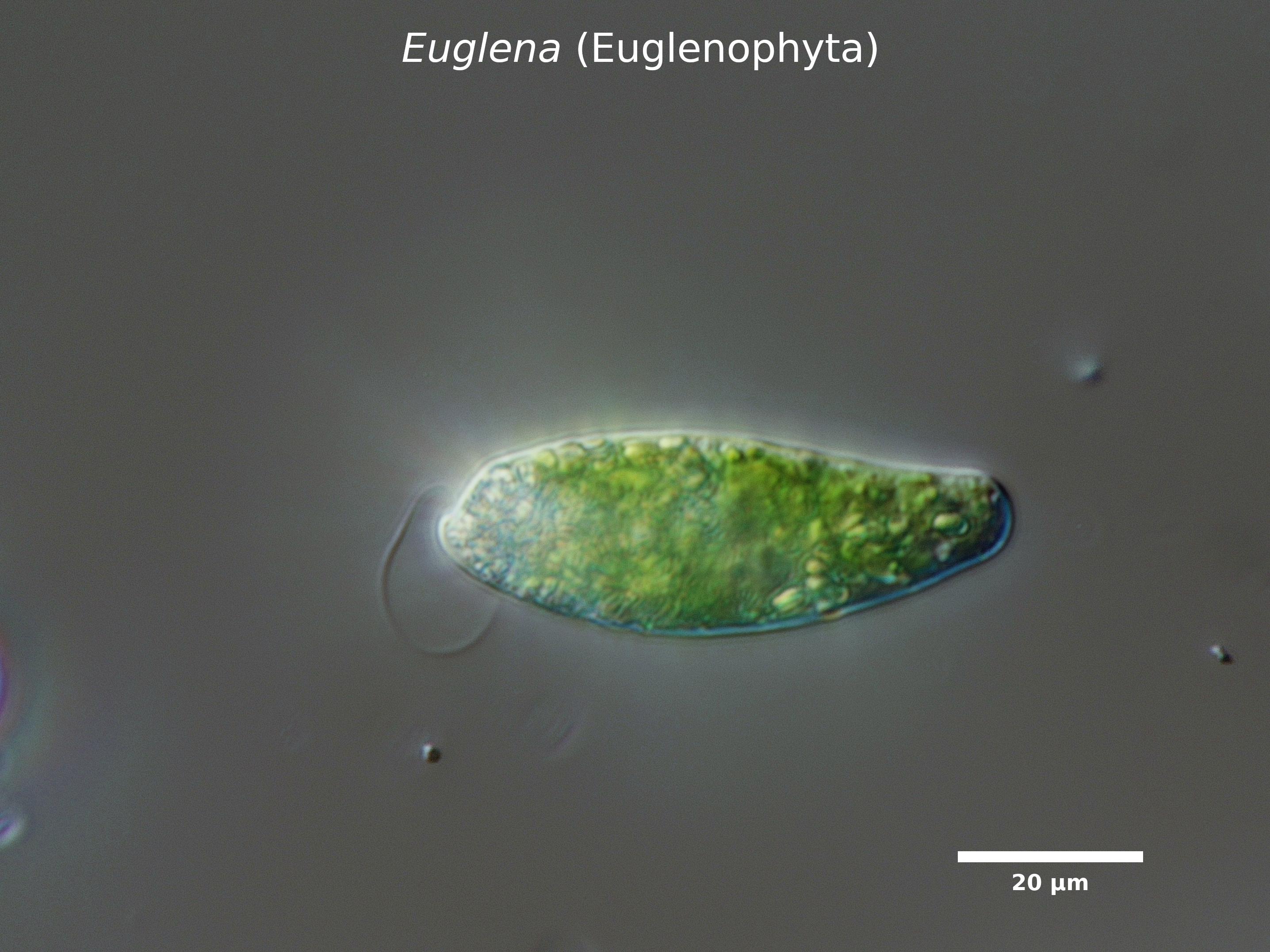
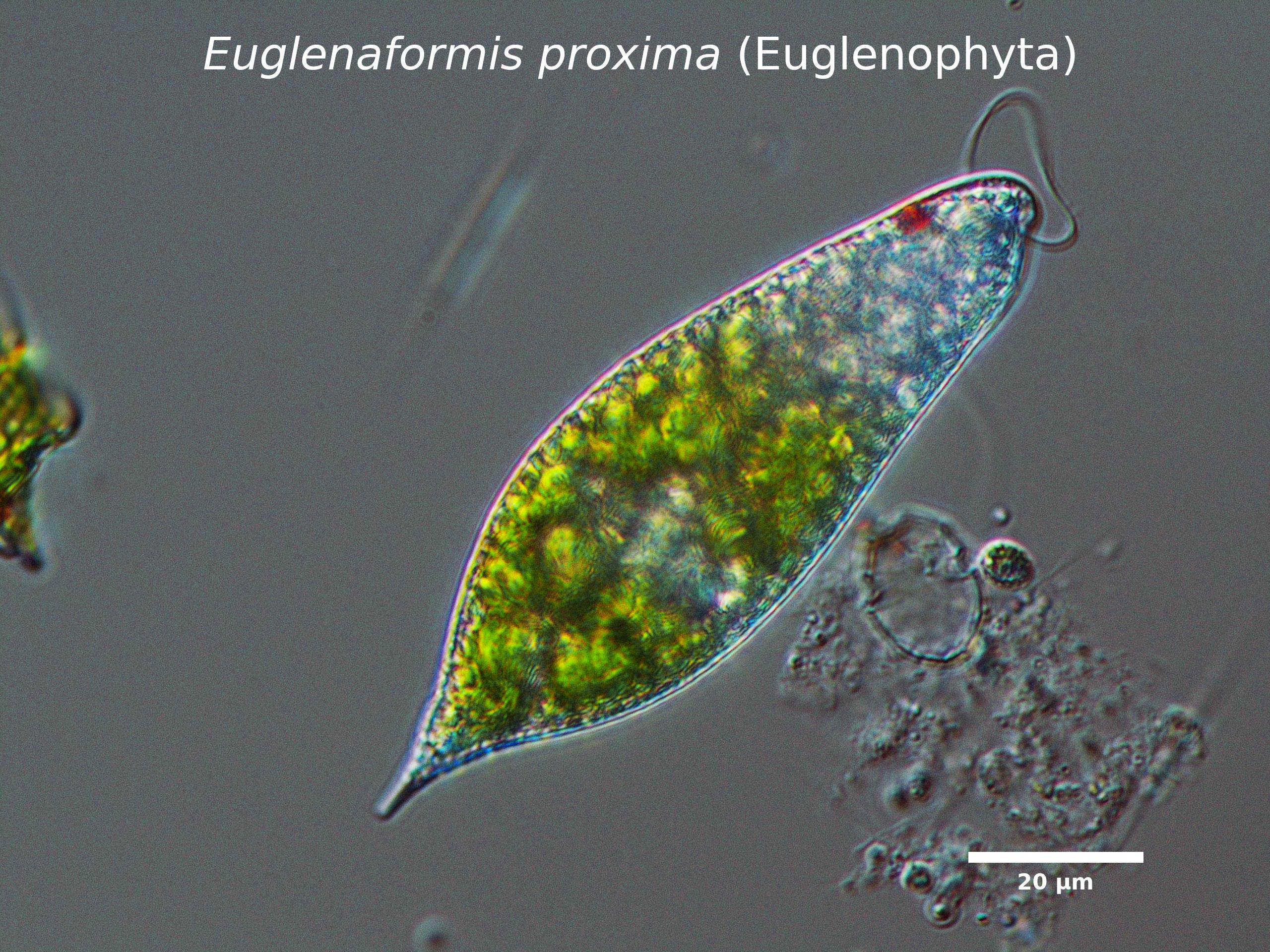
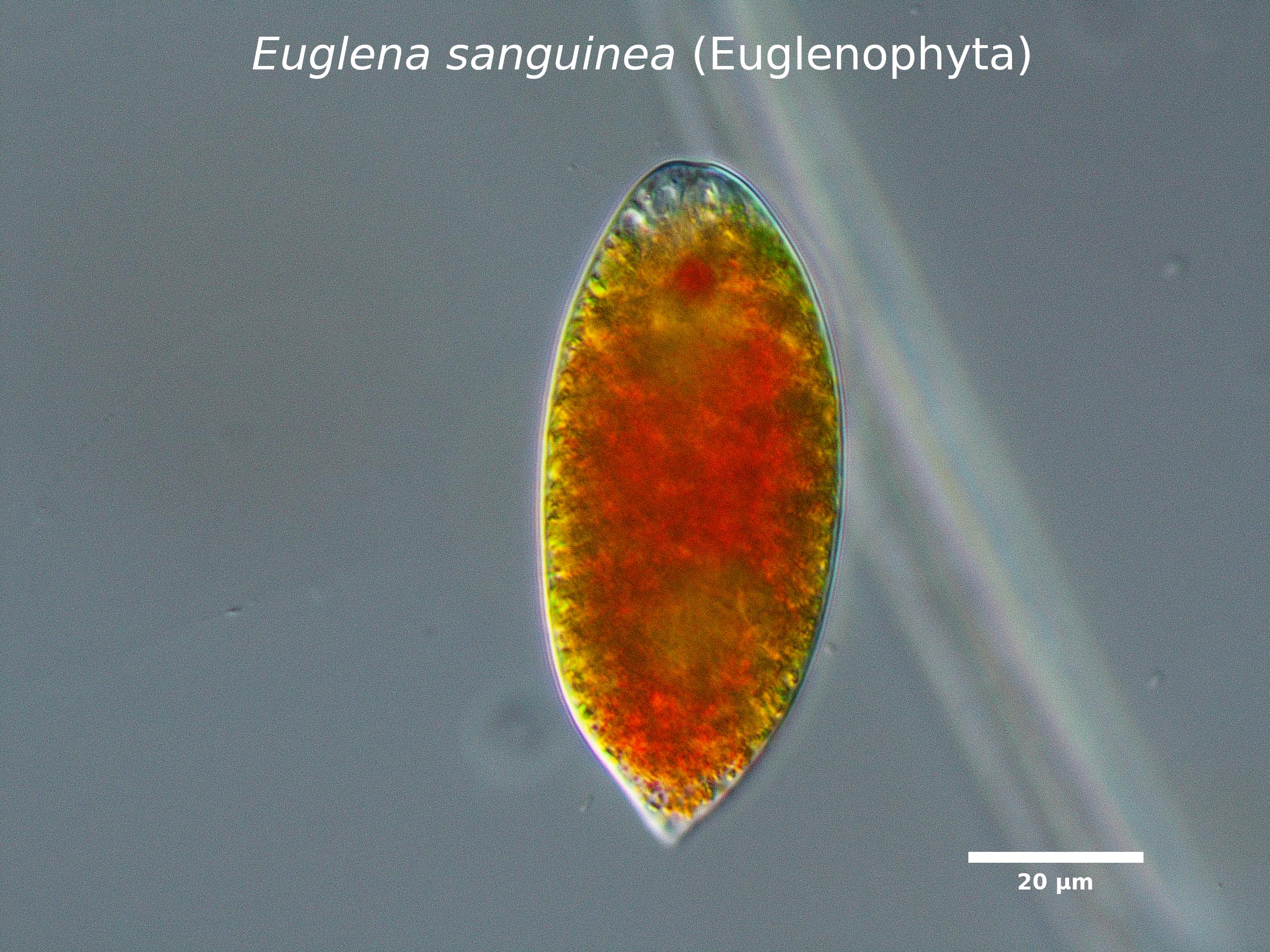
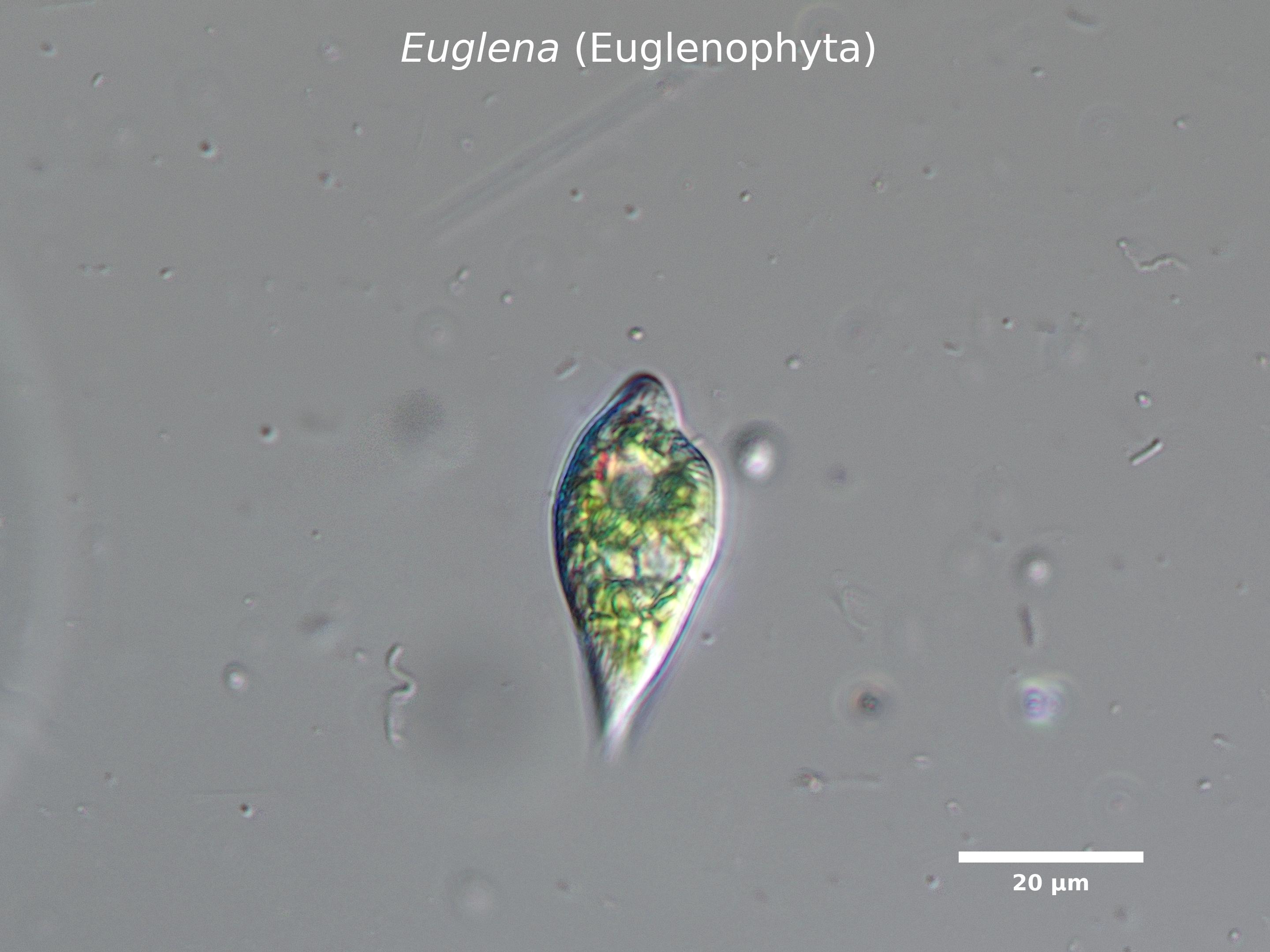
E3. Cells elliptical, cylindrical, or teardrop-shaped, with worm-like euglenoid movement:
Euglena
and similar
E4. Cell wall flexible; cells spherical, golden brown, often with warty surface:
Ochromonas
C2. Cells with two equal length flagella
C3. Cells with 2 dissimilar flagella
C4. Cells heart-shaped and flattened, with 4 equal flagella:
Tetraselmis
B2. Motile colonies with two or more cells
A4. Cells divided into paired semi-cells that are approximate mirror images of each other:
Desmids
A5. Cells enclosed in glassy, ornamental frustules; many species exhibit gliding movement:
Diatoms