Home
Info
Splash
TextTree
A1. Nonmotile algae without chloroplasts: Cyanobacteriophyta
A2. Nonmotile algae with chloroplasts
A3. Motile algae with chloroplasts and flagella
A4. Cells divided into paired semi-cells that are approximate mirror images of each other:
Desmids
A5. Cells enclosed in glassy, ornamental frustules; many species exhibit gliding movement:
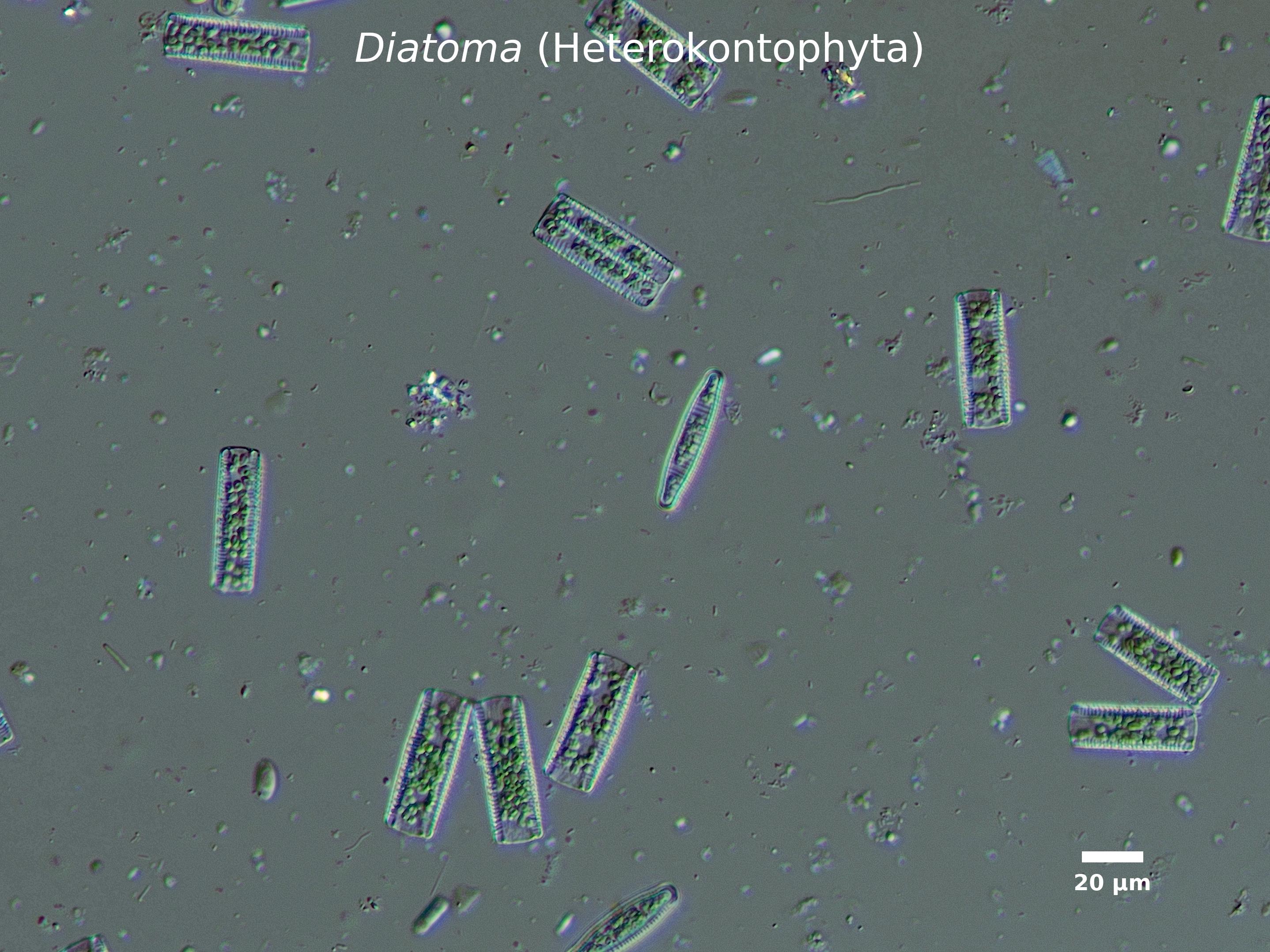
Diatoms
B1. Cells shaped like a disk or cylinder; circular in cross-section; raphe absent (mostly nonmotile):
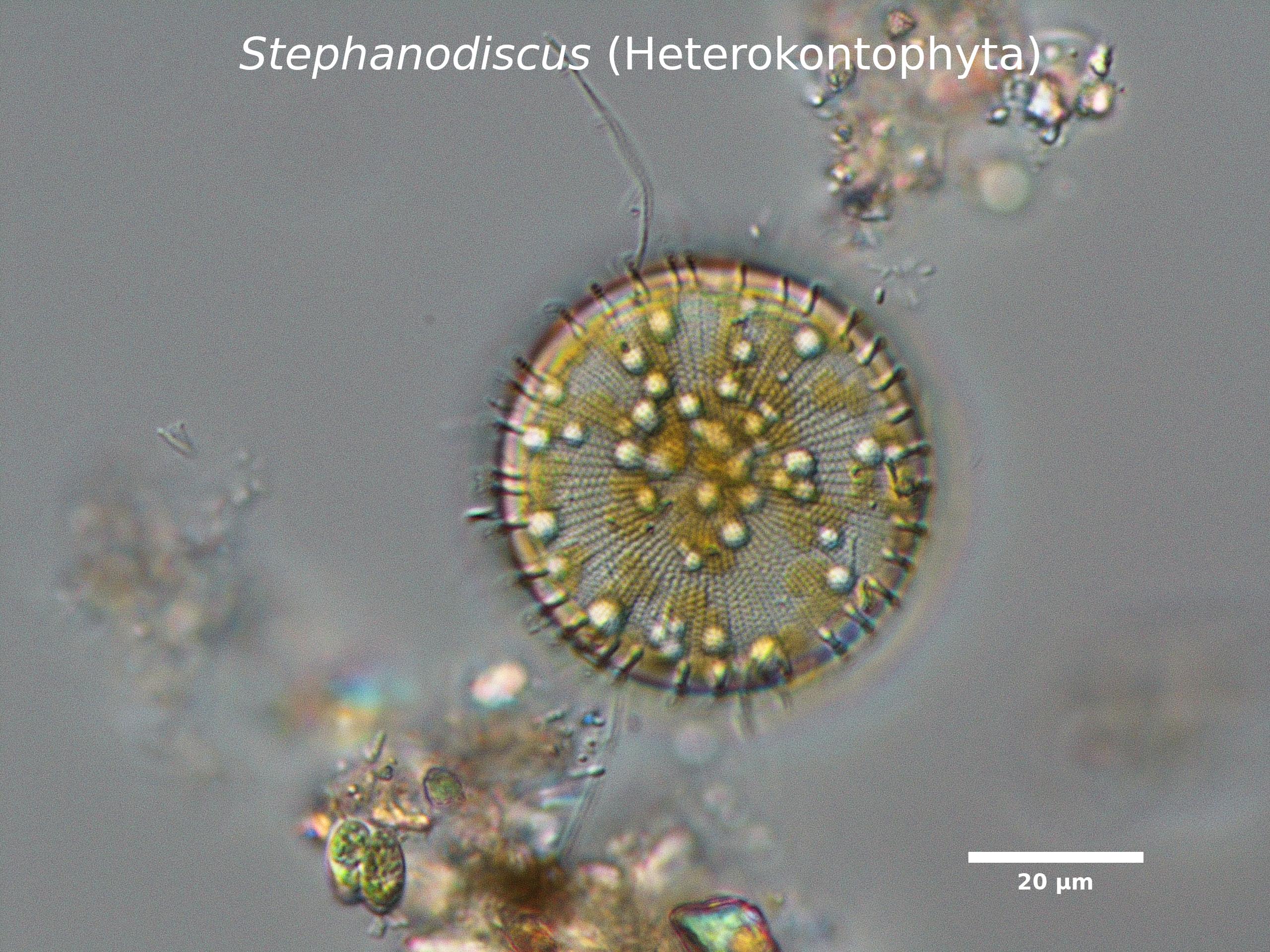
Centric Diatoms
B2. Cells mostly elongated and bilaterally symmetric; raphe absent (mostly nonmotile):
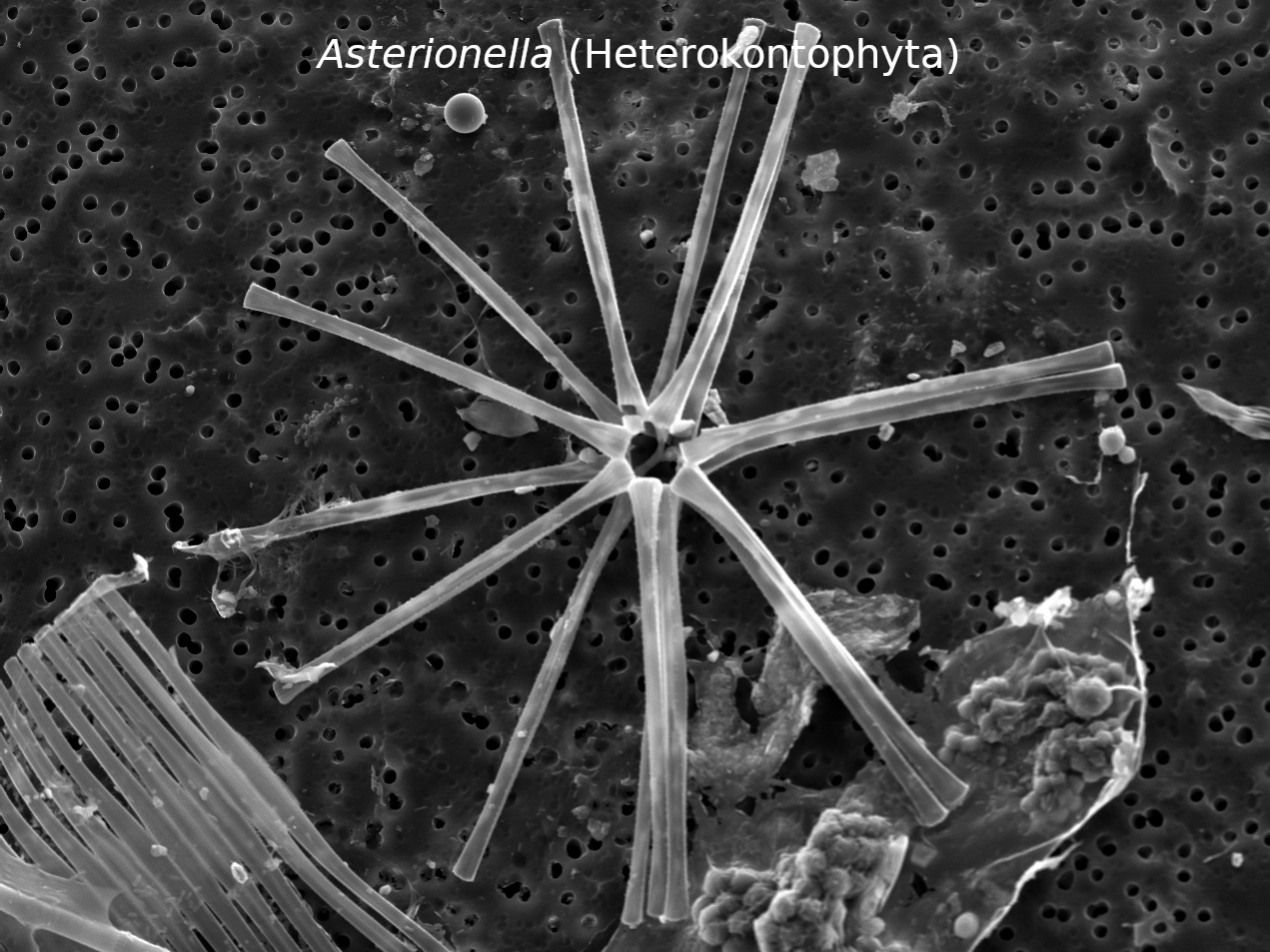
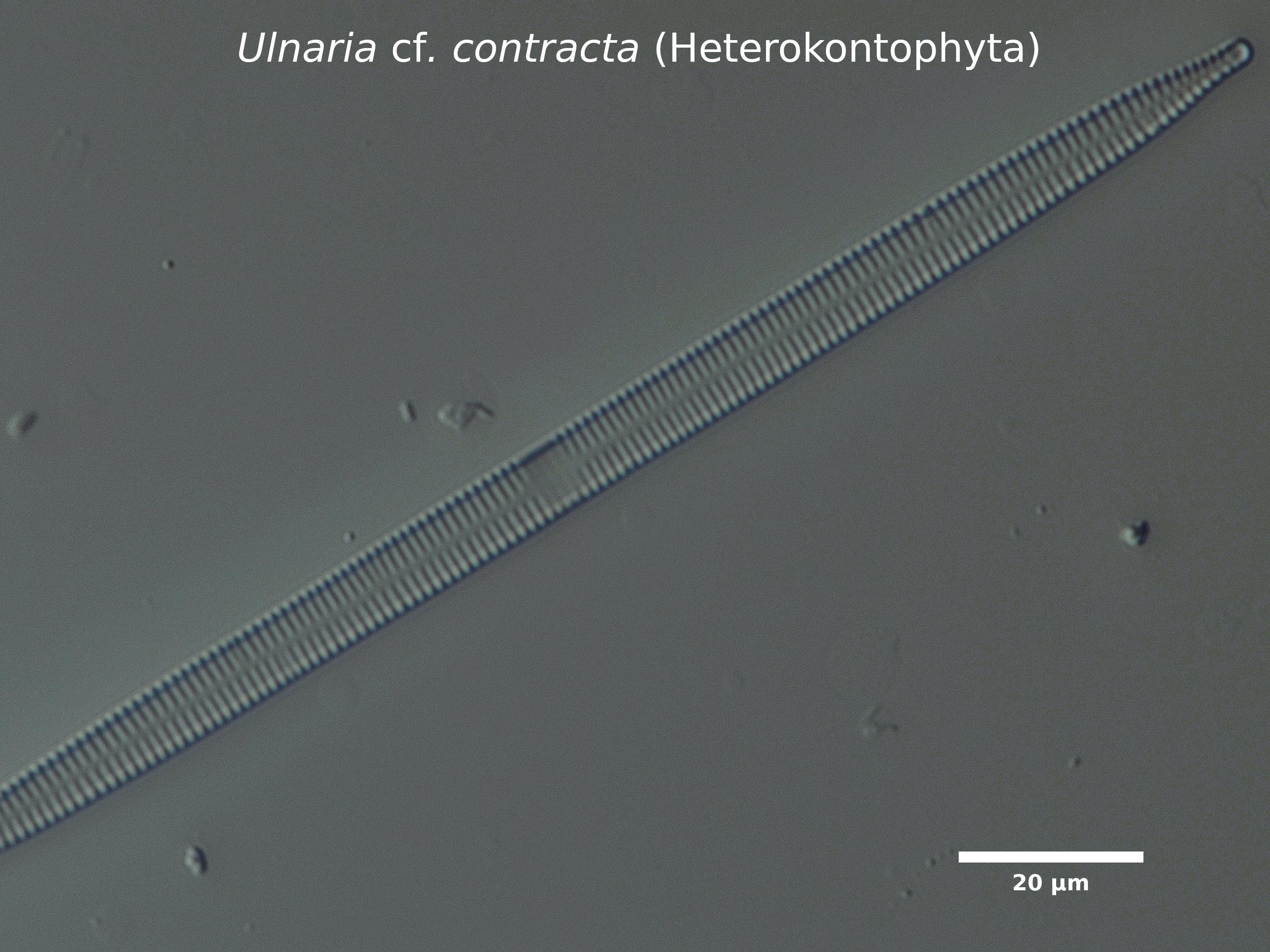
Araphid Diatoms
B3. Valve view asymmetric and often curved; side (girdle) view bilaterally symmetric; raphe weakly developed (minimal gliding movement):
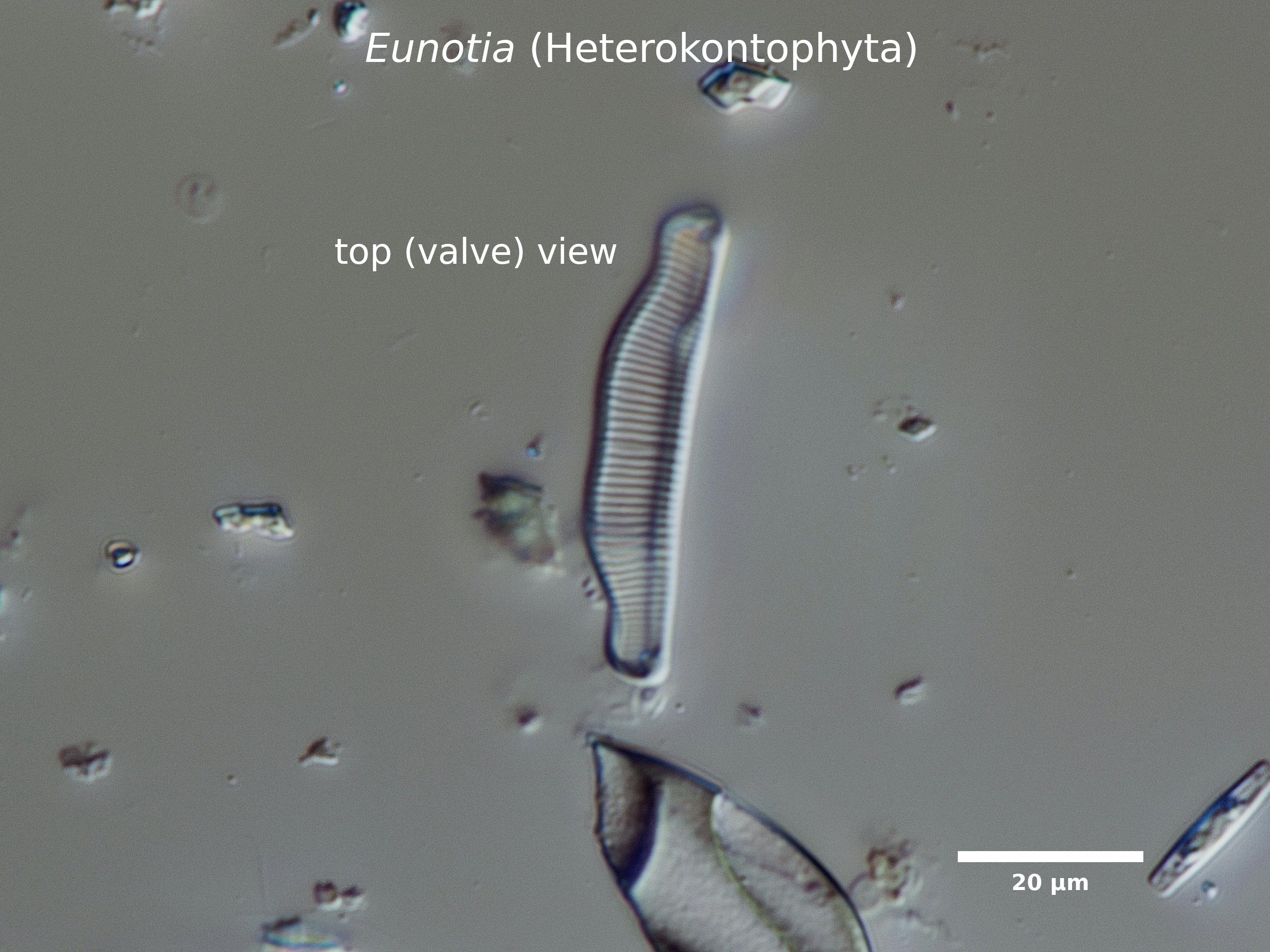
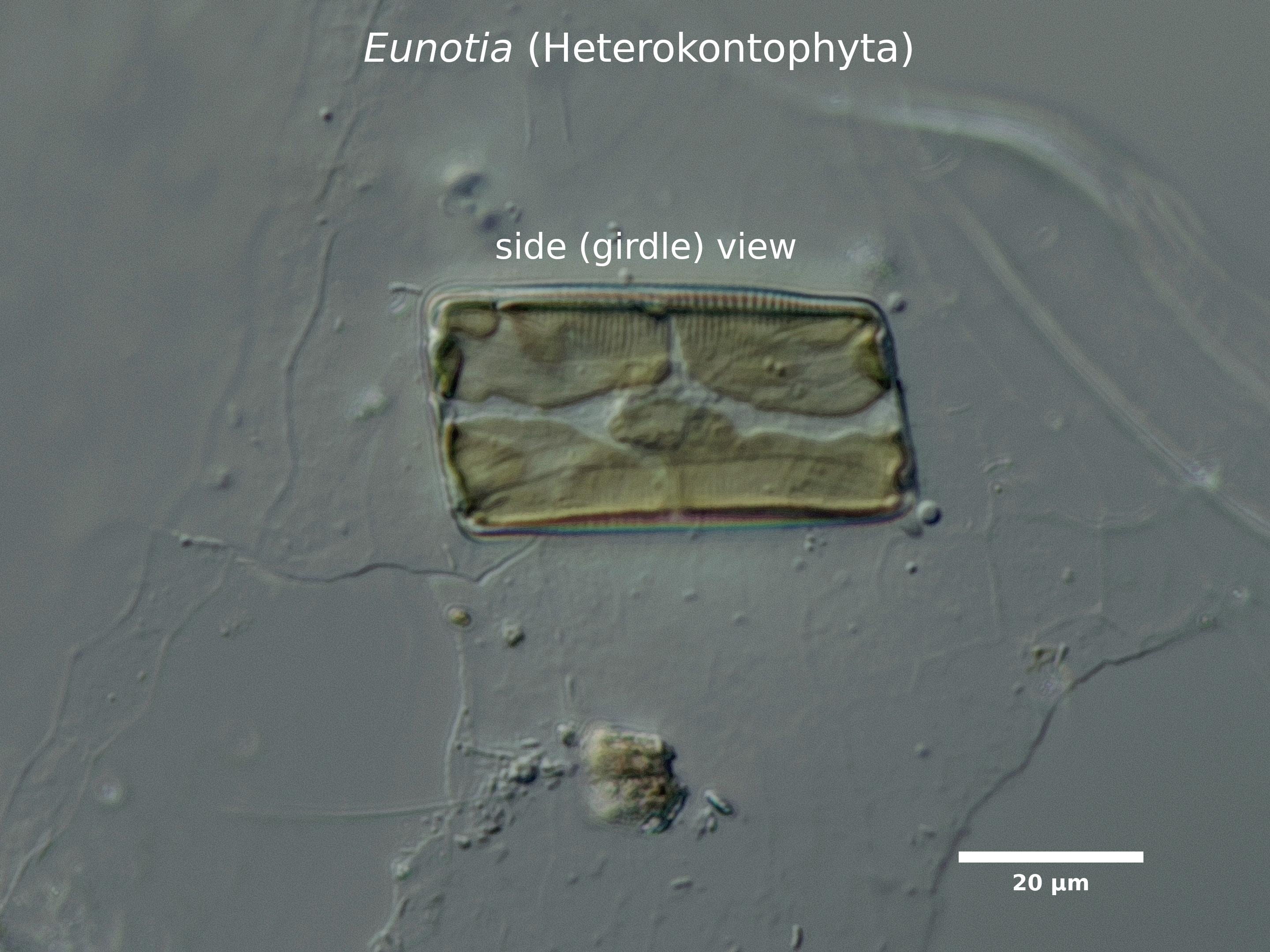
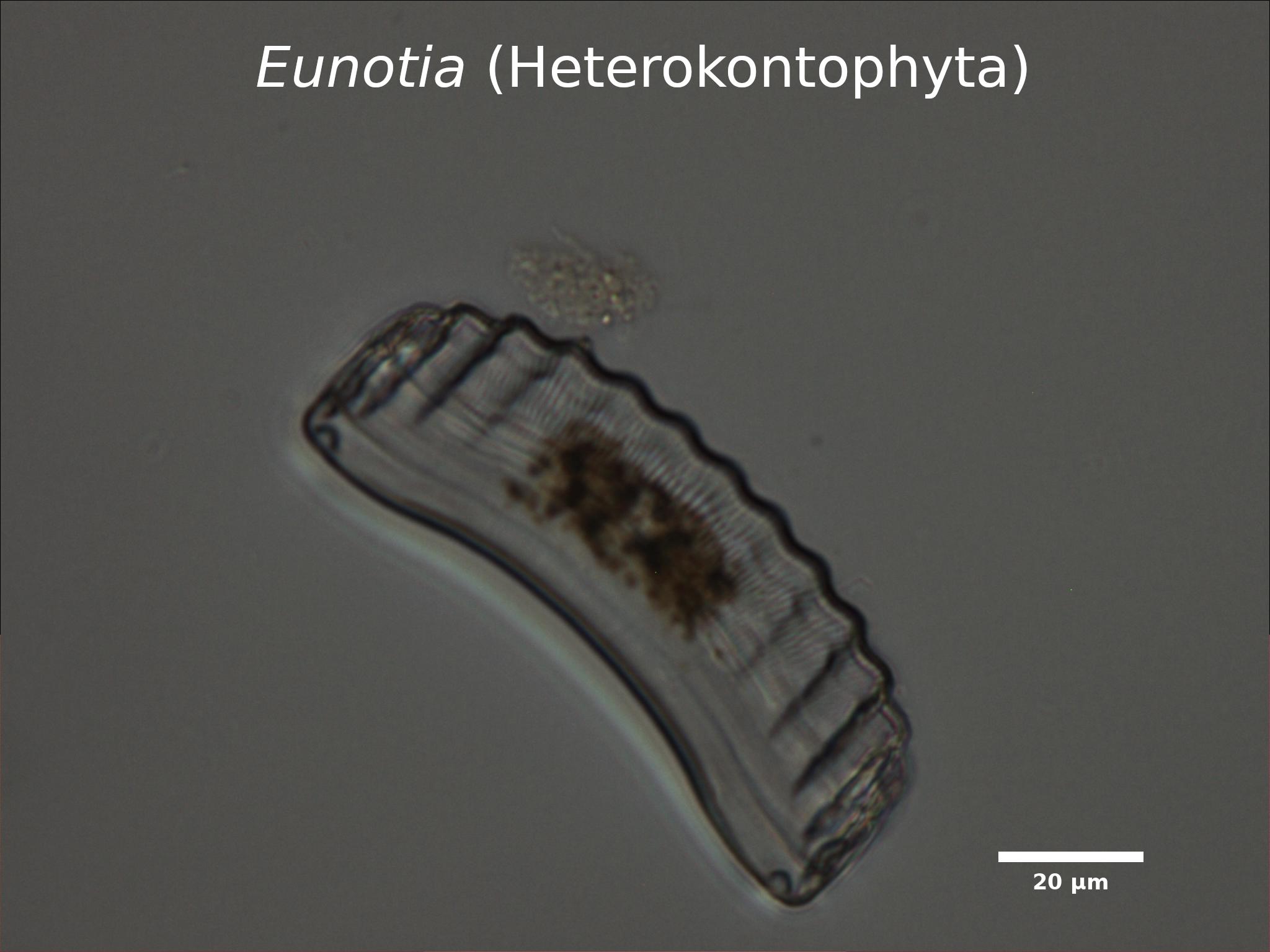
Eunotioid Diatoms
B4. Cells bilaterally symmetric in top (valve) and side (girdle) views; well developed raphe on both sides; very large, diverse group:
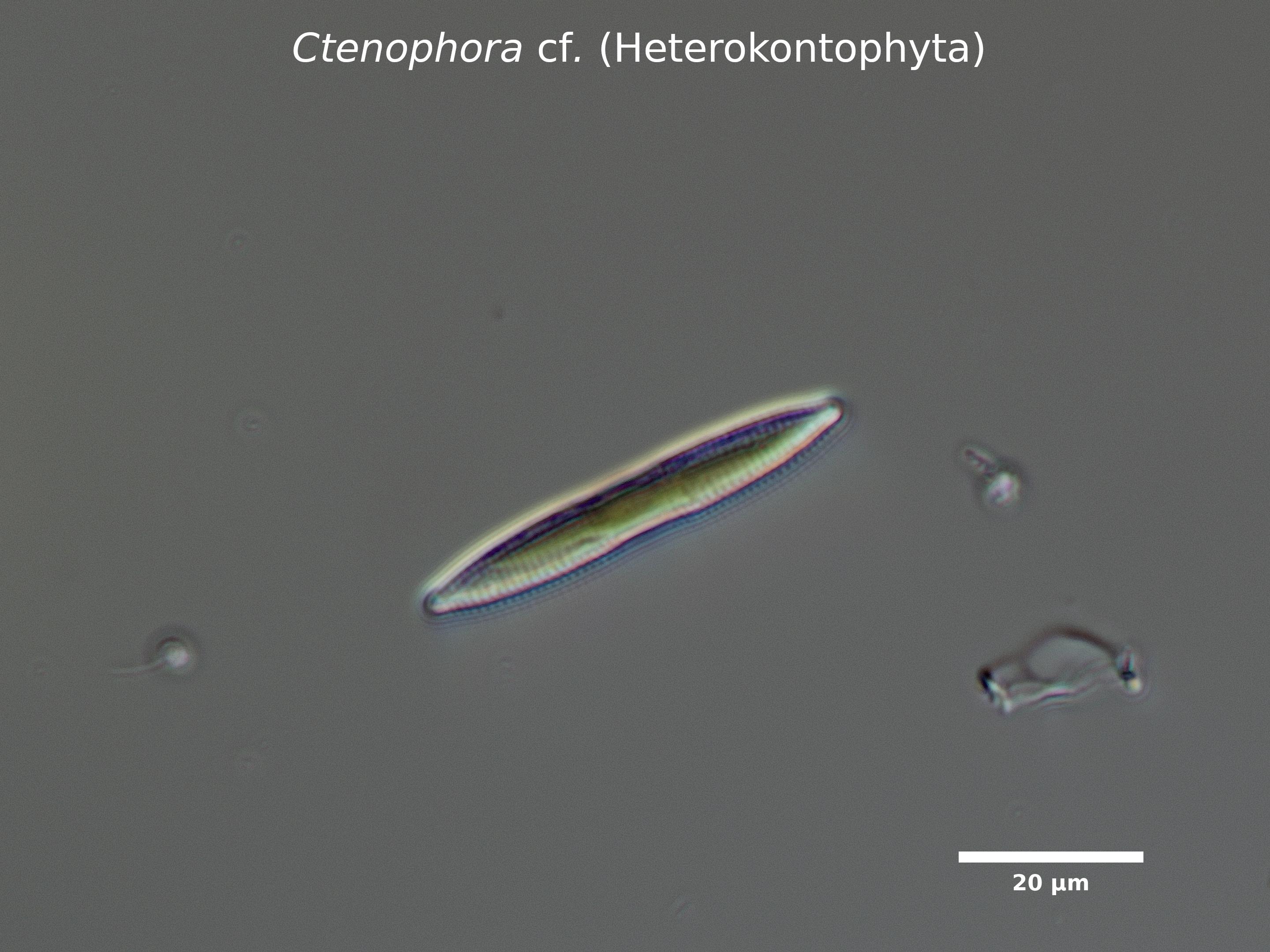
Symmetric Biraphid Diatoms
B5. Cells bilaterally symmetric in top (valve) view; well developed raphe on one side (other side lacks raphe):
Monoraphid Diatoms
B6. Cells bilaterally asymmetric in top (valve) or side (girdle) views, or in both views; well developed raphe on both sides; very large, diverse group:
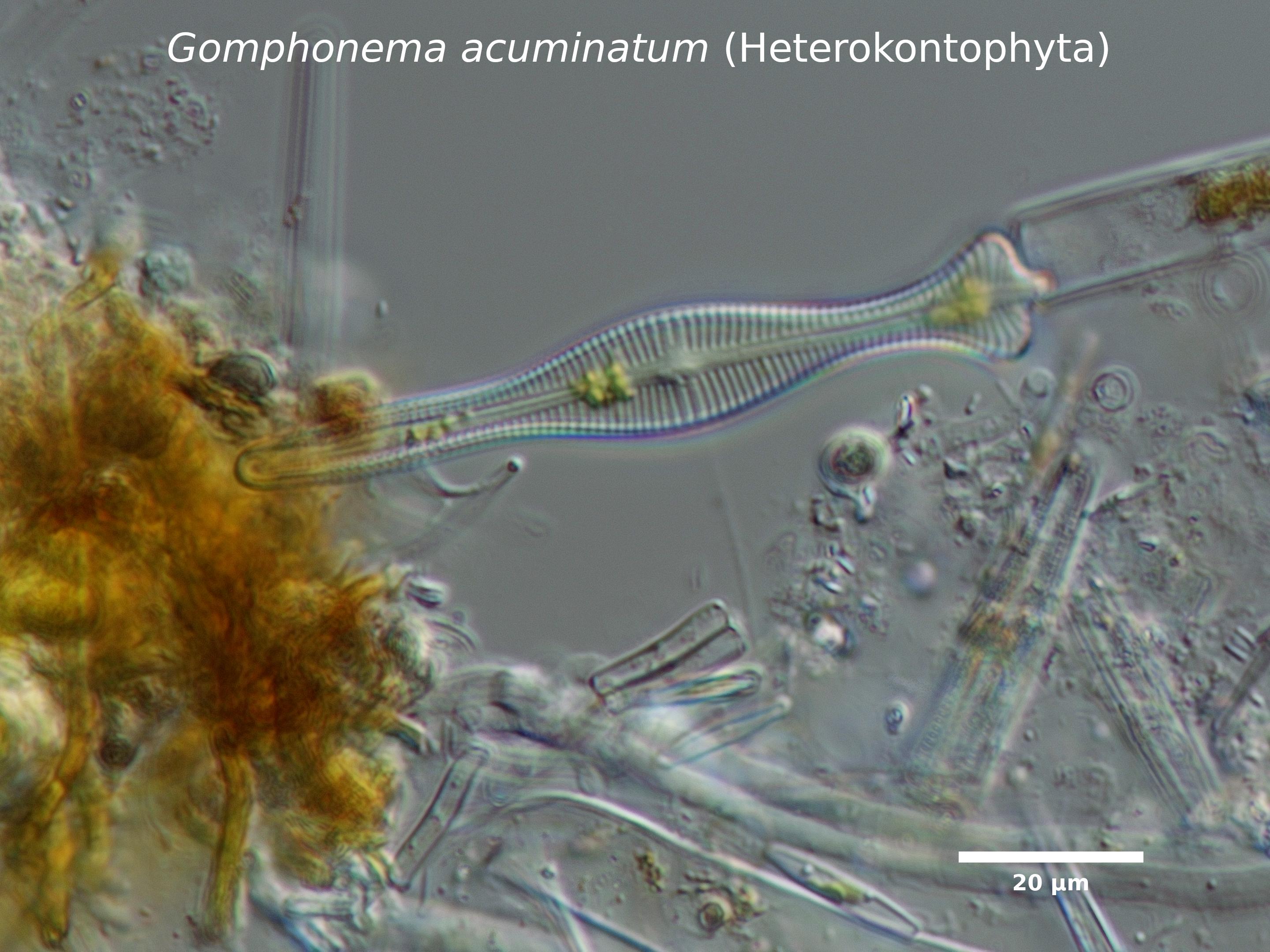
Asymmetric Biraphid Diatoms
B7. Cells asymmetric in valve view, with a curved raphe:
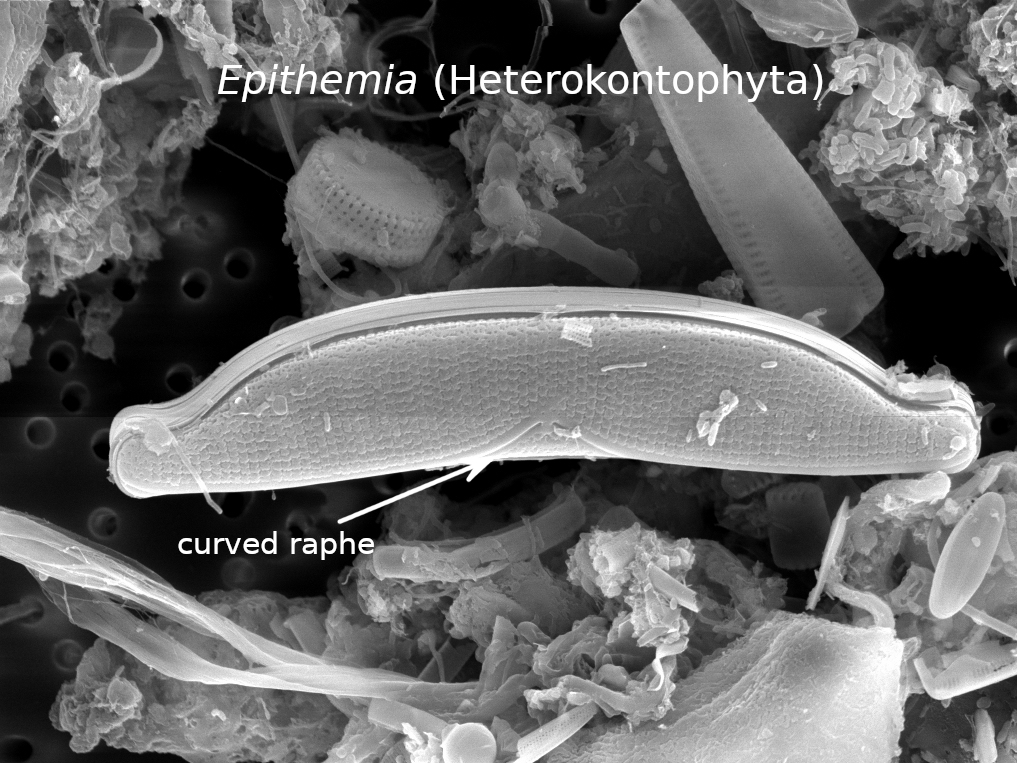
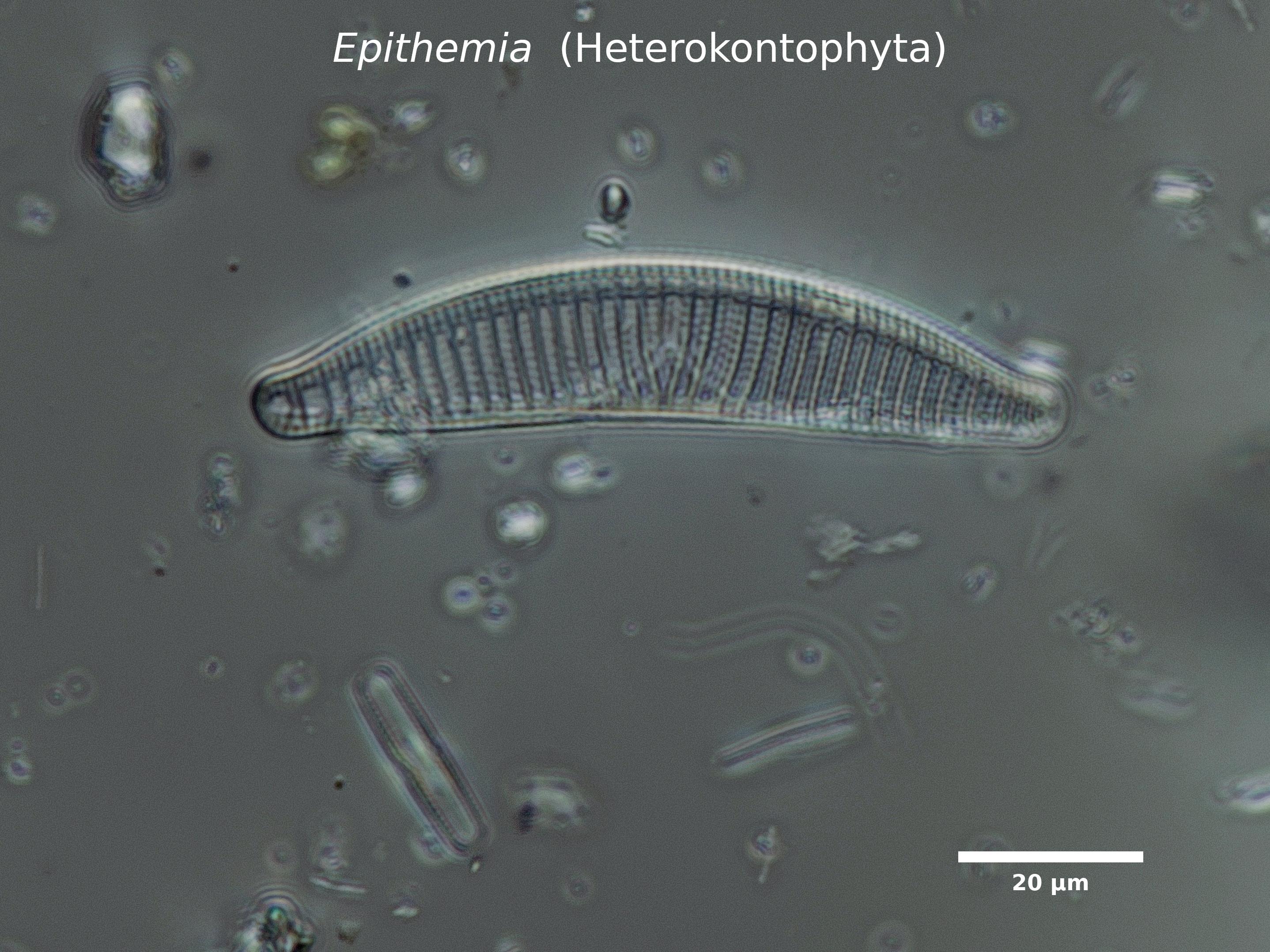
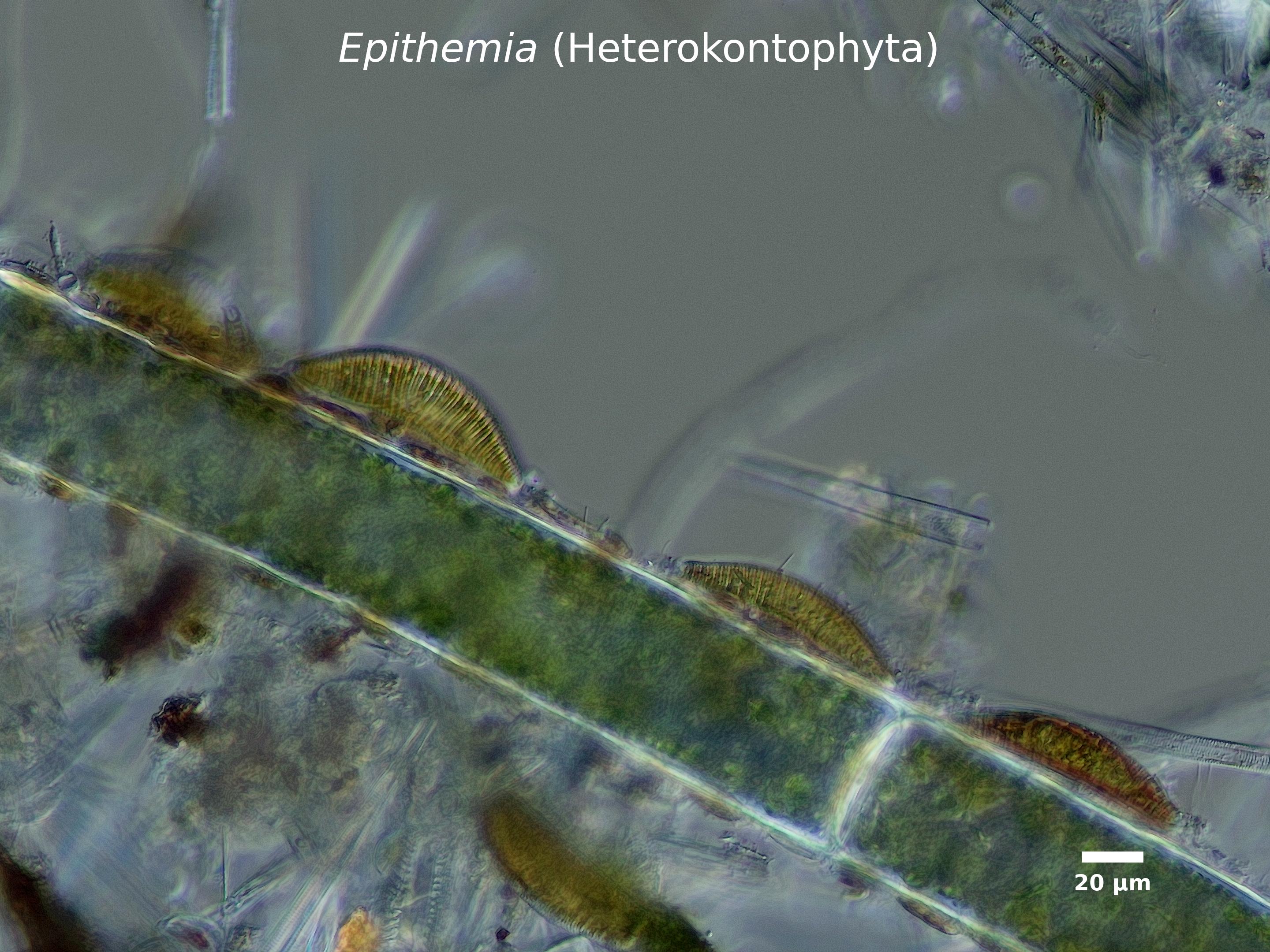
Epithemioid Diatoms
B8. Cells bilaterally symmetric or asymmetric, but with distinctive raphe that is either twisted or off-set to one side of valve:
Nitzschioid Diatoms
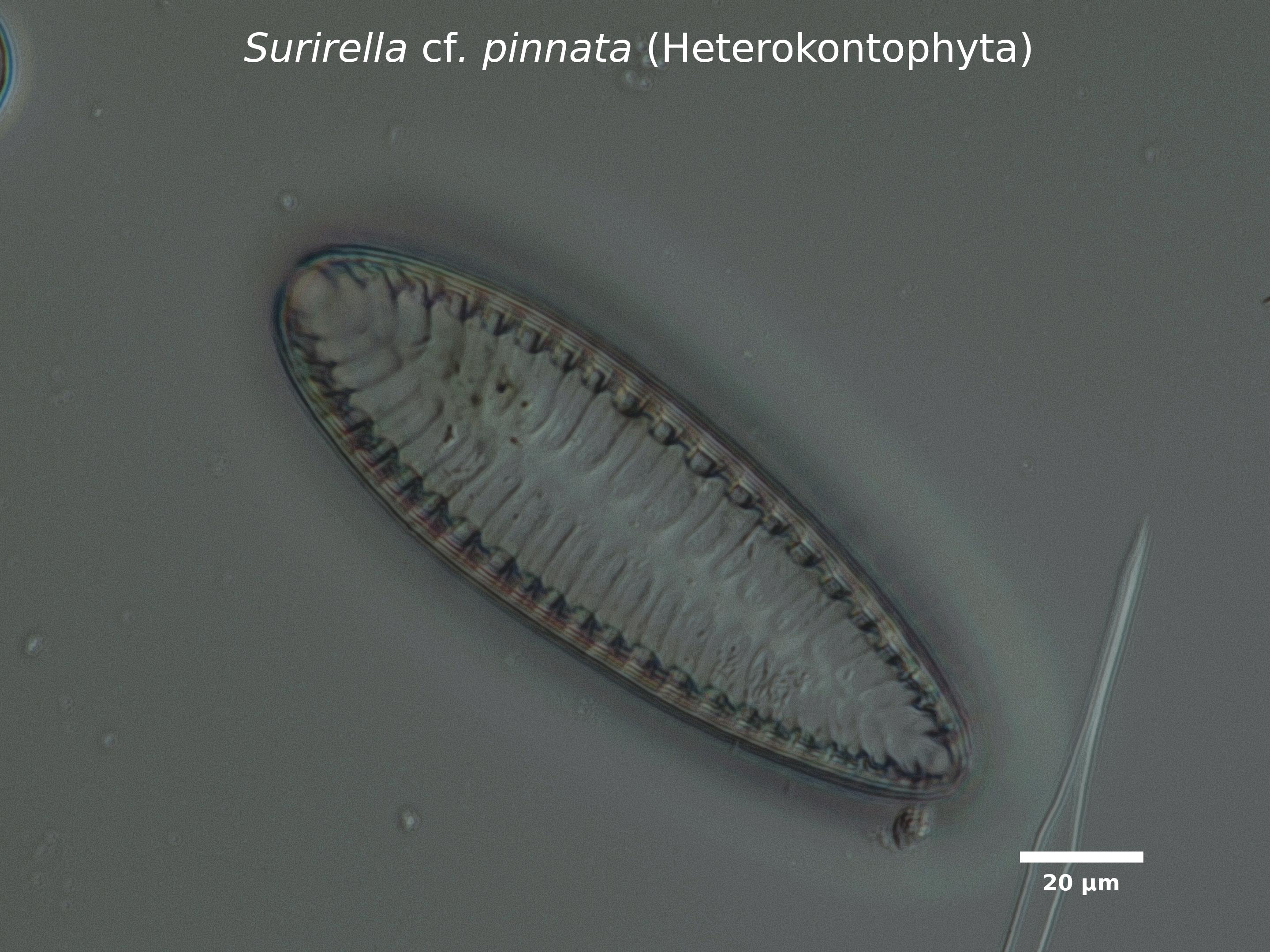
B9. Cells bilaterally symmetrical in valve view, but often curved; raphe often located along margin:
Surirelloid Diatoms